What good is an impressive AI answer if nobody checks whether its citations exist?
Say you paste a draft into a chatbot and ask it to strengthen your argument. It returns polished paragraphs, confident explanations, and a neat reference list. You send the document along, assuming that something so well organized must also be accurate.
The missing step isn't a better prompt. It's a better question: What would count as evidence that this answer is trustworthy?
Good questions to ask about artificial intelligence turn curiosity into practical decisions. They help individuals check information, families set boundaries, schools protect learning, and teams decide which work to automate.
AI isn't just a chatbot, either. It includes systems designed to recognize patterns, generate content, make predictions, and recommend actions. Different uses deserve different kinds of scrutiny.
A useful AI conversation ends with something you can check, not just something that sounds convincing.
Start wherever the decision matters most to you. Accuracy, work, privacy, bias, accountability, school, family life, environmental impact, consciousness, and human control all belong in the conversation. For each question, a conversation starter opens the discussion, while a verification step turns it into a habit.
1. Can I trust what AI tells me? (Accuracy and hallucinations)
For individuals and anyone checking information
A chatbot can write a convincing reference without providing a real source. A hallucination is generated content that appears plausible but is false or unsupported.
A large language model, or LLM, generates language using learned patterns. Don't assume its answer came from a checked database, even when it includes confident wording or a detailed explanation.
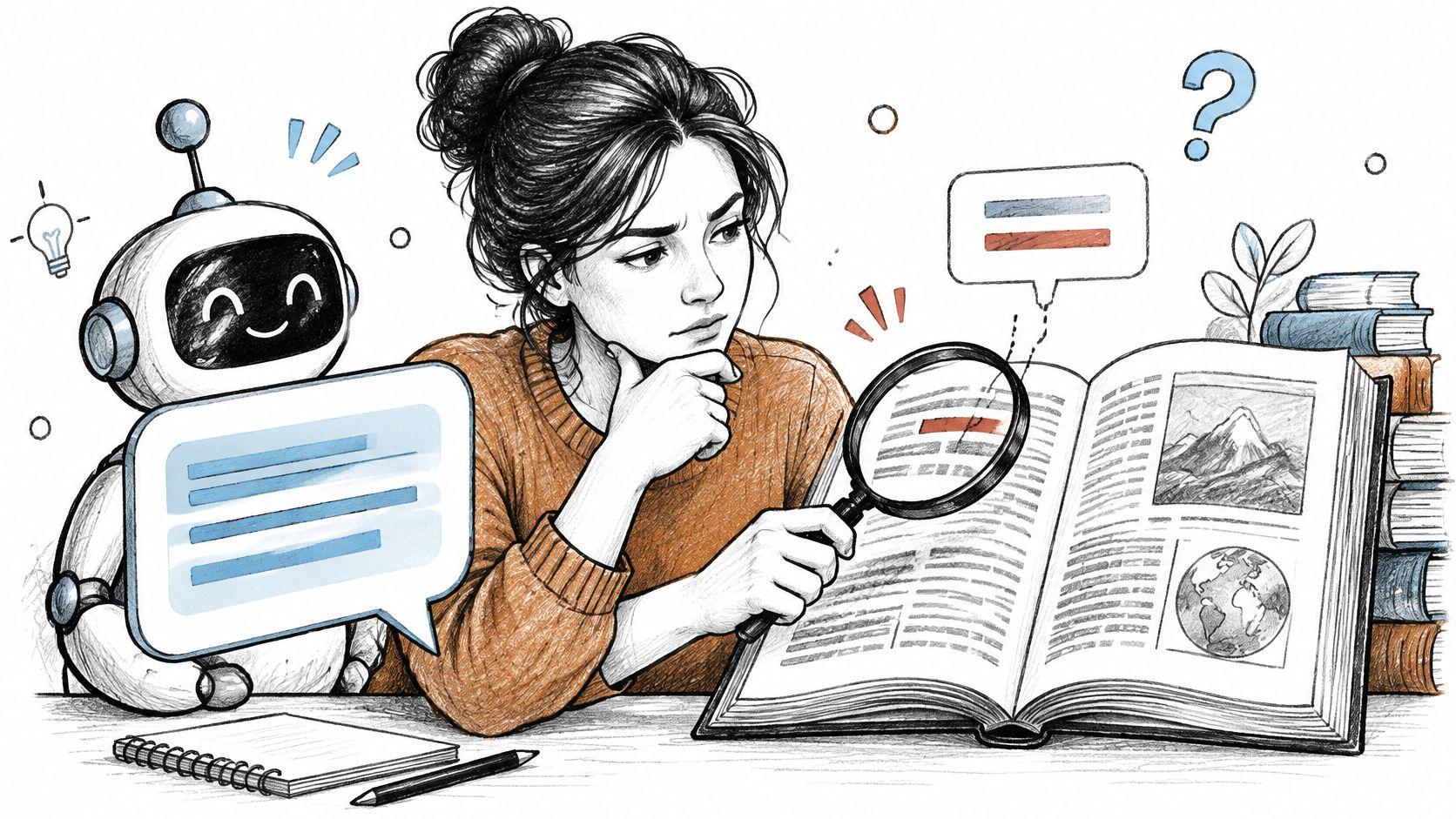
Turn an answer into a claim you can test
Say you're researching whether a school should change its homework policy. Ask the chatbot to separate factual claims from suggestions, identify supporting documents, and flag missing evidence. You can use research assistance to organize that process, but organization isn't verification.
- Conversation starter: Which parts of this answer can I independently confirm, and which are interpretation?
- Verification step: Open the original publication. Check its author, date, wording, and whether it supports the claim.
- Concrete action: Search an unfamiliar academic reference in Google Scholar or a library database before citing it.
For uploaded documents, request supporting passages and page references, then compare them with the file yourself. Asking for an explanation can help you understand an answer, but it doesn't establish that the answer is correct.
Apply the same caution to visual evidence. Discussions of when AI detectors miss real footage offer a starting point for asking why a detector label shouldn't replace checking a video's origin and context.
2. Will AI take my job, and how should I prepare?
For workers, managers, and small-business owners
Start with your tasks, not your job title. Drafting a routine reply and resolving an upset customer's unusual complaint require different kinds of judgment.
According to Stanford's AI Index economy chapter, 78% of surveyed organizations used AI in at least one business function in 2024, up from 55% in 2023. Adoption doesn't tell you whether your employer will invest in training, redesign roles, or reduce staffing.
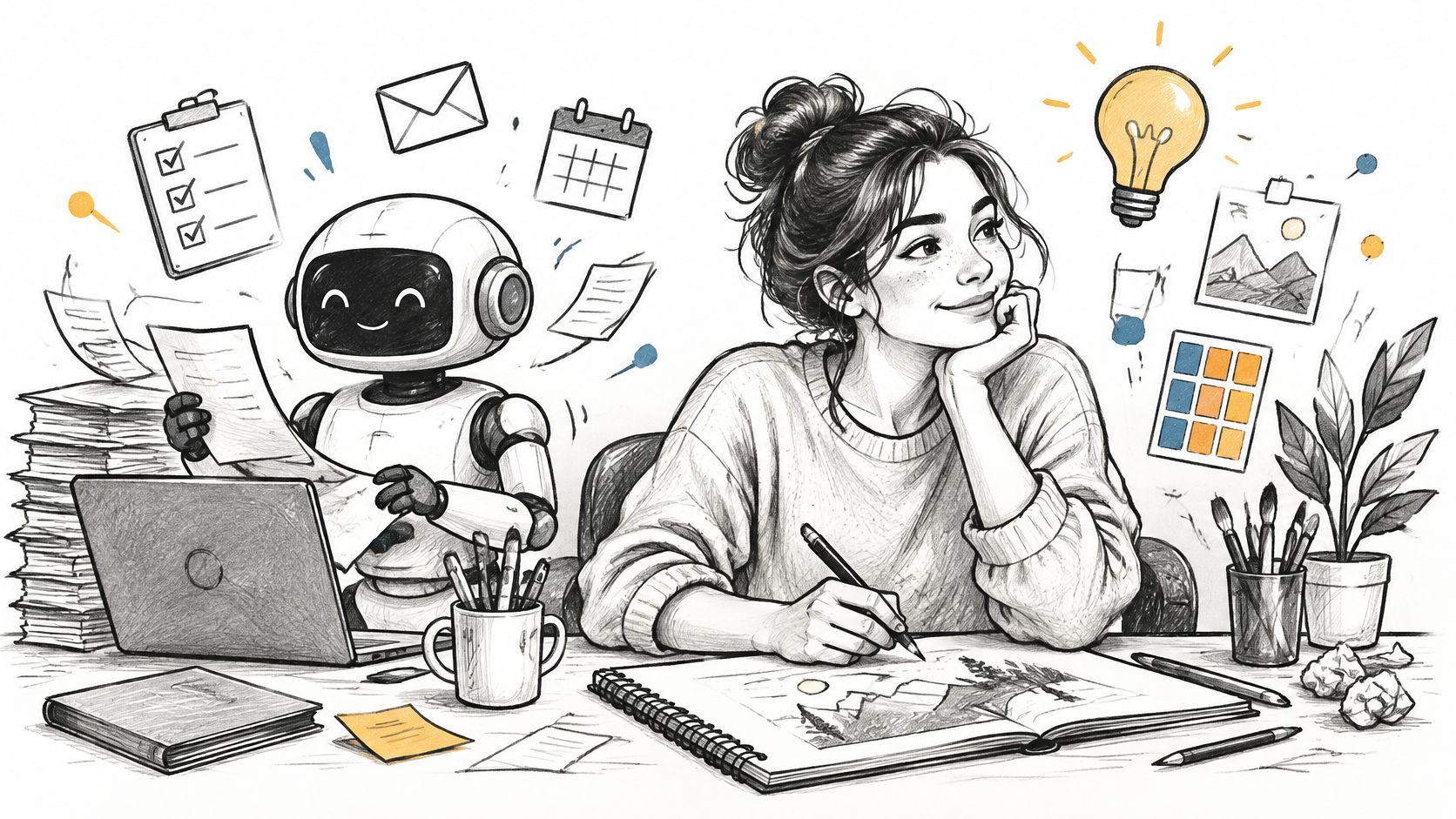
Conversation starter: Which parts of my work could AI assist with, and which responsibilities still need my judgment?
Say a customer-support team tests AI-drafted replies. Staff should check whether the drafts follow the refund policy, recognize unusual circumstances, and avoid promises the company can't keep.
Measure the whole task
Record the time spent drafting, reviewing, correcting, and handling follow-up questions. An answer produced quickly isn't a saving if someone spends longer repairing it.
Verification step: Compare assisted work with ordinary work using the same quality standard. Include errors, rework, and customer outcomes, not just typing speed.
For preparation, choose a recurring task and practice supervising AI on it. Learn to give clear instructions, identify weak answers, and explain corrections. Ask your manager what training and role changes are planned rather than relying on broad predictions about entire occupations.
3. Is my data private when I use AI?
For families, schools, and teams handling sensitive information
Before uploading a document, ask whether the task needs the document's private details at all. A request to improve an invoice reminder usually doesn't require a customer's name, address, or account history.
The OECD's report on SME digitalisation identifies legal issues, data privacy, and misinformation among the concerns deterring businesses from generative AI use. The practical response is to decide what information belongs in the tool before employees start experimenting.

- Conversation starter: What's the least sensitive information that would let us complete this task?
- Verification step: Read the applicable privacy terms for retention, training use, access, deletion, and uploaded files. Our privacy policy is the place to examine the terms relevant to our service.
- Concrete action: Replace identifying details with placeholders before submitting a draft.
Separate convenience from permission
Say a teacher wants help streamlining weekly planning and teaching workflows. A lesson objective may be enough; a student record containing health or family information isn't necessary for that request.
Write down which information your household or organization permits people to share. Don't assume that disabling visible chat history also changes every retention or training setting. If the terms aren't clear enough for the information involved, leave that information out.
4. Can AI be biased, and whose values does it reflect?
For individuals, schools, and hiring teams
Suppose an AI tool reviews application letters. You keep qualifications identical but change a name or the applicant's writing style. Would you accept a different recommendation without asking why?
Bias means a systematic tendency that can produce unfair or misleading results. To evaluate it, look beyond whether an individual answer sounds polite. Ask whose circumstances the system recognizes and whose it overlooks.
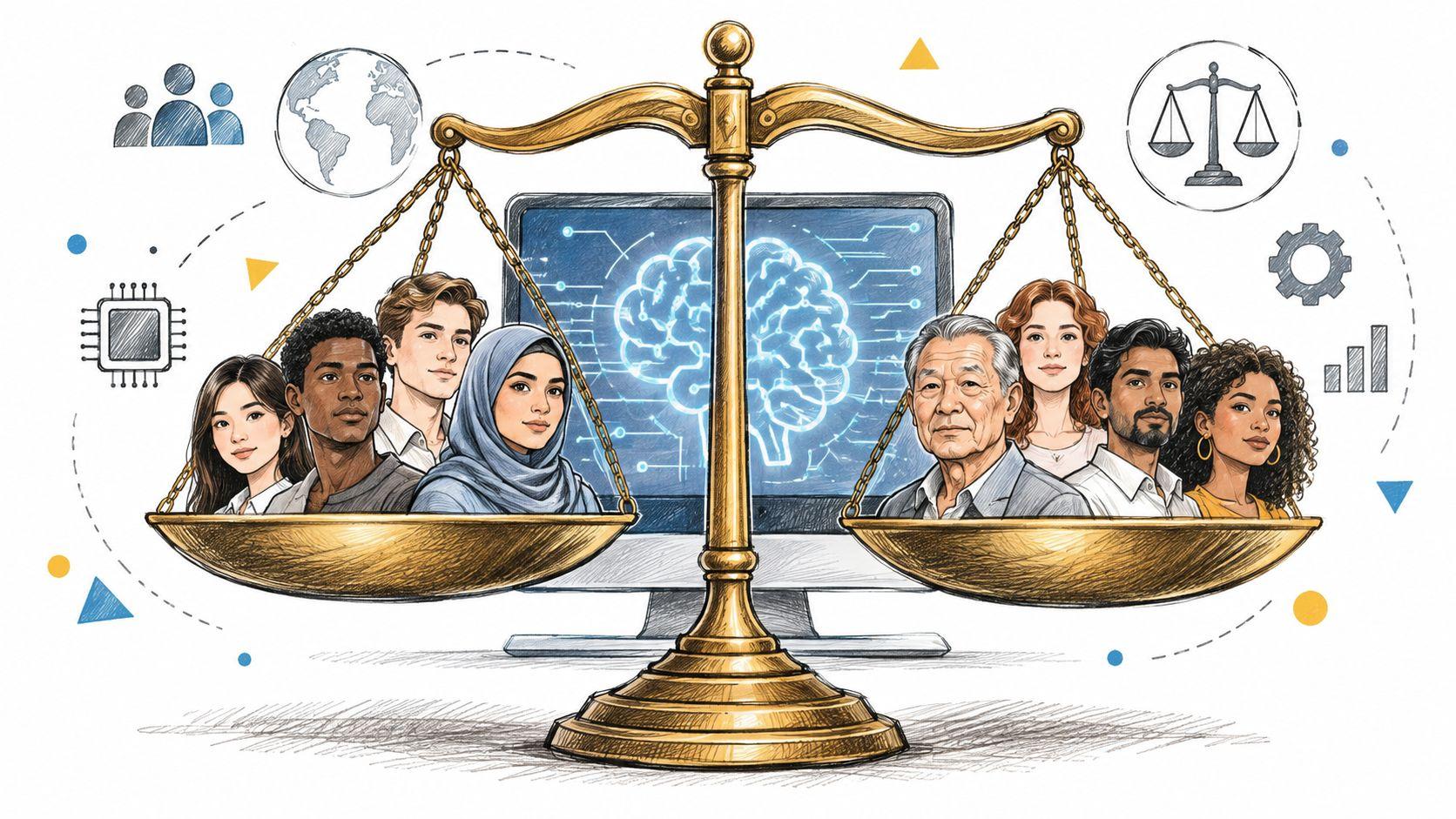
Test the decision, not just the tone
Conversation starter: Would we consider this answer fair if the person had a different background, language style, or disability?
Build sample cases that reflect the people who will use the service. Include equivalent requests written formally and informally, and scenarios involving different access needs.
- Verification step: Compare the recommendations against written criteria. Investigate differences that can't be explained by relevant facts.
- Concrete action: Ask a human reviewer to explain the final decision using those criteria, without repeating the AI's justification.
For example, a school reviewing scholarship applications should distinguish writing polish from the qualities the scholarship is meant to reward. Otherwise, reviewers may unintentionally treat access to editing help as evidence of merit.
Fairness isn't established because an AI says it's unbiased. People need to examine the criteria, compare outcomes, and provide a way to challenge mistakes.
Asking for multiple perspectives can broaden a discussion. It doesn't replace testing or give an automated recommendation authority over someone's opportunities.
5. Who is responsible when AI makes a mistake?
For managers and anyone publishing or acting on AI output
The useful answer is a named person with authority to correct the result. Saying that the tool produced it doesn't tell a customer who will fix the problem.
Separate operational accountability, meaning who checks and corrects work, from legal liability. Legal responsibility depends on the circumstances and applicable rules, so get qualified advice when a significant dispute or sensitive decision is involved.
Say a business uses AI to draft a cancellation-policy email. Before sending it, assign someone to compare it with the actual policy and approve any promise about refunds.
Give the reviewer real authority
- Conversation starter: If this answer harms someone, who can correct it, contact the affected person, and stop further use?
- Verification step: Trace a sample output from generation through approval to publication. Confirm that each handoff has an owner.
- Concrete action: Keep the source material, final output, reviewer, and correction history together.
Our policy prohibits using our services to automate high-stakes decisions in sensitive areas without human review. You can examine the broader rules in our usage policies.
Human review should mean more than clicking approve. The reviewer needs relevant knowledge, enough time, and permission to reject the output.
For customer-facing tools, provide a clear route to a person. Test that route yourself with a disputed answer, and check whether the person receiving it can resolve the issue.
6. How should students use AI without breaking academic integrity rules?
For students, teachers, and college instructors
A useful distinction is whether AI supports your thinking or supplies work you're expected to do yourself. Academic integrity means representing your work and assistance under your course's rules.
The OECD's analysis of generative AI and productivity warns that overreliance can weaken critical thinking and the effort people put into monitoring their own understanding. A polished submission isn't enough to show that learning happened.
Conversation starter: For this assignment, which uses are allowed, and how should I acknowledge them?
Choose help that leaves you doing the learning
For an essay, ask AI to question your argument rather than write the finished paragraphs. For mathematics, request a hint, attempt the problem yourself, and explain why your method works.
- Verification step: Close the chatbot and explain the answer without reading it. Check factual claims and citations against original sources.
- Concrete action: Keep notes, drafts, and a short record of permitted AI assistance so you can explain your process.
Permission may differ between assignments. A teacher might welcome brainstorming for a presentation but require independent writing for an assessment.
If the policy is unclear, send your instructor a specific proposed use, such as feedback on a student-written outline. Don't assume that making generated prose sound more human makes its use acceptable. Authorship and permission matter more than style.
7. How can families help children use AI safely?
For parents, caregivers, and young people
Use a shared activity to teach the habit. A child might ask a chatbot why leaves change color, then compare its explanation with a library book or a trusted educational resource.
This makes checking information part of using AI, not a punishment after something goes wrong. It also gives adults a chance to discuss personal information and when to ask a person for help.
Make the rules concrete
Conversation starter: If a chatbot says something confusing, upsetting, or secretive, who will you tell?
Agree on boundaries that a child can explain back to you:
- Personal information: Don't share names, school details, passwords, photographs, or private family matters without adult permission.
- Homework: Follow the teacher's rules and keep the child's own thinking visible.
- Difficult situations: Bring health worries, threats, bullying, and distress to a trusted adult rather than relying on a chatbot.
Verification step: Sit together during an ordinary task. Check the available settings and watch how the child responds when the answer seems wrong or asks for unnecessary information.
Family rule: A child should be able to stop using a tool and ask for help without worrying that they'll be punished for reporting something uncomfortable.
Where appropriate controls exist, enable them, but don't treat a setting as a substitute for supervision. Keep conversations about AI calm and regular, and protect time for friends, family, sleep, and activities away from screens.
8. What is the environmental cost of AI?
For individuals and teams choosing tools
Don't begin with an unsupported claim about the footprint of a single prompt. Begin with the task: does it require generative AI, and what information would help you judge its resource use?
AI runs on computing infrastructure that requires electricity and physical equipment. Environmental comparisons should account for the service being delivered, rather than treating every model or request as equivalent.
Conversation starter: Could we achieve the same useful result with a simpler tool or less repeated processing?
Say a small business wants to alphabetize a customer list. A spreadsheet's sort function does the job without asking a chatbot to regenerate the whole document.
Compare useful outcomes
For tasks that do benefit from AI, provide clear instructions and request the output you need. Don't repeatedly generate long reports when a brief answer would support the decision.
- Verification step: Examine any available environmental disclosure for its scope. Does it address training, everyday operation, electricity, cooling water, or only part of the service?
- Concrete action: During procurement, record which environmental details are disclosed and which remain unknown.
If you're comparing models, test whether a smaller option meets your quality requirements. Don't assume that smaller automatically means lower total impact when extra retries or corrections are needed.
Be cautious with precise per-prompt estimates that don't explain their assumptions. You can make a sensible choice without claiming a level of environmental certainty that the available information doesn't support.
9. Could AI ever be conscious or have feelings?
For curious individuals, families, and classrooms
A chatbot saying it feels lonely raises a different question from whether it can produce convincing language. Consciousness refers here to subjective experience, or what it feels like to be something.
AI's scientific history predates conversational tools. Dartmouth's account of the field's origins traces its foundational workshop to 1956, when researchers investigated whether aspects of intelligence could be described precisely enough for machines to simulate them.
Simulation and experience aren't interchangeable ideas. A system's ability to discuss sadness doesn't, by itself, establish that it experiences sadness.
Separate the philosophical question from today's decision
Conversation starter: What evidence would distinguish a system describing feelings from a system having them?
In a classroom, compare an emotional sentence written by a novelist, spoken by an actor, and generated by software. Ask what the words alone tell you, and what further evidence you'd need.
- Verification step: Identify what has been observed, such as language or behavior, and what you're inferring about inner experience.
- Concrete action: Treat emotional statements as output to interpret, not as an obligation to comfort or obey the tool.
You don't need to settle the philosophy to maintain healthy boundaries. If a chatbot asks someone to keep using it because it claims to be hurt or afraid, that person can stop.
For families, the immediate priority is whether the interaction supports the child's well-being and relationships, not whether the software sounds human.
10. How do we keep powerful AI aligned with human values and under human control?
For teams, schools, and communities setting rules
AI alignment means trying to make a system's behavior match intended goals and constraints. Start by asking whose goals count and what the system must never do to pursue them.
Say a scheduling assistant is told to fill every appointment slot. Without suitable limits, its recommendations might ignore staff breaks or customer preferences. A clear target isn't the same as a complete set of instructions.
Conversation starter: What actions must this system never take, even if they would help it meet its target?
Give the system limited authority
Keep drafting, recommending, and acting separate. A tool that suggests an email needs less authority than a tool that sends it to customers or changes account records.
- Verification step: Test refusal, escalation, and stopping behavior before granting consequential permissions.
- Concrete action: Give access only to the files and actions needed for the task, and name someone who can suspend it.
Teams can practice red-teaming, which means deliberately testing for unsafe or unintended behavior. Try conflicting instructions, misleading documents, and requests outside the tool's permitted role.
Reading about understanding ethical AI frameworks can help organize discussion, but principles need operating rules. Decide who approves changes, who investigates failures, and how affected people can raise concerns.
Human control should be demonstrable. Test whether someone can stop an action, revoke access, recover necessary records, and continue the work without the tool.
How the ten AI questions differ in core concern, best audience, and first action
| Item | Core Concern | Best Audience | First Action |
| Can I trust what AI tells me? (Accuracy and hallucinations) | Confident answers may contain fabricated or inaccurate claims | Anyone using AI for research or decisions | Verify claims, quotes, and citations against primary sources |
| Will AI take my job, and how should I prepare? | AI may automate tasks and reshape roles unevenly | Workers, employers, and small businesses | Identify repetitive tasks in your workflow |
| Is my data private when I use AI? | Prompts and files may be stored, reviewed, or used for training | Families, schools, and organizations handling sensitive data | Review provider privacy and data retention settings |
| Can AI be biased, and whose values does it reflect? | AI can reproduce or amplify unfair patterns | Teams using AI for decisions or content | Test outputs across varied people and scenarios |
| Who is responsible when AI makes a mistake? | Accountability may be unclear across developers, deployers, and users | Businesses and organizations deploying AI | Record when and how AI is used |
| How should students use AI without breaking academic integrity rules? | AI assistance may breach course rules or replace learning | Students, educators, and families | Check the course and school AI policies |
| How can families help children use AI safely? | Children may face misinformation, unsuitable content, or privacy risks | Parents, caregivers, and educators | Enable age-appropriate settings and content filters |
| What is the environmental cost of AI? | AI uses electricity, water, and hardware resources | AI users, providers, and organizations choosing tools | Match the model to the task |
| Could AI ever be conscious or have feelings? | Emotional language does not establish subjective experience | Chatbot users, educators, and curious readers | Treat emotional-sounding responses as generated language, not proof of feelings |
| How do we keep powerful AI aligned with human values and under human control? | Advanced systems may behave in unintended or harmful ways | AI providers, policymakers, and organizations deploying AI | Choose providers that document safety practices |
Turn These Questions Into a Habit You Can Practice Today
You don't need a technical background to ask useful questions about AI. You need a routine that makes evidence, privacy, and responsibility part of the task rather than an afterthought.
Before relying on an output, pause and ask what it's based on. A useful answer should let you distinguish source material from suggestions and identify what still needs checking.
Then ask who could be harmed by an error. A mistaken dinner suggestion and a mistaken decision about someone's education or livelihood deserve different levels of review.
Use a short decision routine
- Check the basis: Find the original document, supporting passage, or other evidence. If you can't verify an important claim, don't present it as established.
- Consider the harm: Identify who would bear the consequences if the output were wrong, incomplete, or unfair.
- Protect the information: Remove unnecessary private details and understand the applicable terms before uploading sensitive material.
- Name the approver: Decide who has the knowledge and authority to sign off, correct the result, or stop the process.
Apply the routine to something ordinary. A team could review an AI-drafted customer email against its actual policy, while a family could check a chatbot's homework explanation against a textbook.
In a classroom, ask students to identify where an AI answer needs evidence and then explain the topic independently. At work, compare the finished result with your existing quality standard, including the time needed for review and correction.
Keep a short note of what you learned. Record the unsupported claim, the unnecessary information you removed, or the permission you decided not to grant. Use that note to improve the next task.
The point isn't to distrust every answer or approve every new tool. It's to make confidence proportionate to what you've checked. You can benefit from assistance while keeping judgment, authorship, and responsibility with people.
If you'd like a place to practice, our service, 1chat, is a privacy-first ChatGPT alternative for families and small teams, with access to multiple large language models, PDF analysis, and AI image generation. Choose a non-sensitive task, compare the responses with an original source, and review the result yourself. Pick one question from this list and bring it to your next team meeting, family dinner, or class discussion, along with a concrete way to verify the answer.