You've probably run into this already. A teacher writes “be more literal” in the margin of your essay. A parent says, “I was joking,” after you answered a question seriously. Or an AI tool gives you a strange response because your prompt sounded clear to you, but not to the system reading it.
That confusion happens because literal language meaning sounds simple at first, yet it sits at the center of how people understand one another. It affects reading, writing, instructions, jokes, arguments, school assignments, and even the way AI tools handle your words.
When you understand literal language well, you get better at two things. First, you become clearer. Second, you become better at noticing when language is doing something more than stating facts.
What Is Literal Language Really
A common classroom moment goes like this. A student writes, “My backpack weighs a ton,” and the teacher circles it. The problem isn't grammar. The problem is that the sentence isn't literal.
Literal language means the words say exactly what they mean on the surface. There's no hidden comparison, no exaggeration, and no need to decode a second meaning. If you say, “My backpack is heavy,” that can be literal. If you say, “My backpack weighs a ton,” you're probably exaggerating.
A simple way to think about it
Literal language is like a clear window. You look through it and see the message directly.
Figurative language is more like stained glass. It still shows you something meaningful, but it uses color, pattern, and suggestion. You have to interpret it.
Practical rule: If a reader can understand your sentence by taking the words at face value, you're probably using literal language.
That's why literal language matters so much in directions, instructions, school explanations, and factual writing. When a recipe says “bake for 20 minutes,” readers need direct meaning. When a science report says “the liquid changed color,” readers need the same.
Literal doesn't mean boring
Many students hear “literal” and think “plain” or “dull.” That's not quite right. Literal language can still be strong, vivid, and precise.
Compare these:
- Less clear: “The classroom was a zoo.”
- More literal: “The classroom was noisy, crowded, and hard to control.”
The second sentence may sound less flashy, but it tells the reader exactly what happened. That's often the better choice when your goal is accuracy.
If you enjoy learning how language works in both writing and technology, the 1chat blog often explores communication topics in practical ways.
Why this concept matters now
Literal meaning isn't just a school term. It's one of the building blocks of communication. When people misunderstand one another, the issue is often this simple question: were the words meant in their literal sense, or not?
That question matters even more when you type a prompt into AI. If your wording is direct, the system has a better chance of giving you a direct answer. If your wording is vague, playful, or metaphorical, the result can drift away from what you wanted.
Literal vs Figurative Language A Core Comparison
The fastest way to understand literal language meaning is to place it beside its opposite.
Literal meaning is the direct, dictionary-based, context-free sense of words.
That definition is useful, but it's only the start. In real reading and listening, people constantly move between literal and figurative meanings.
What figurative language does
Figurative language goes beyond the surface meaning of the words. It creates comparison, emotion, emphasis, or imagery.
A few common examples:
- Metaphor: “Time is a thief.”
- Simile: “She ran like the wind.”
- Hyperbole: “I've told you a million times.”
- Idiom: “Break a leg.”
None of those are meant to be taken exactly as stated. They ask the reader to infer another meaning.
Psycholinguistic research found that people processed literal sentences such as “The car is red” in about 450 milliseconds, while figurative sentences such as “The car is a rocket” took about 620 milliseconds, a 38% increase in processing time, according to the Glucksberg study summary. That doesn't mean figurative language is bad. It means direct meaning is often easier to access quickly.
A side by side view
| Phrase | Literal Meaning (What it says) | Figurative Meaning (What it implies) |
| The ice is cold. | The ice has a low temperature. | Usually none. This is direct. |
| She has a heart of stone. | Her heart is made of rock. | She seems emotionally cold or unfeeling. |
| I'm so hungry I could eat a horse. | The speaker could eat an entire horse. | The speaker feels extremely hungry. |
| The sun set at 8 p.m. | The sun went below the horizon at that time. | Usually none. This is direct. |
| He exploded when he heard the news. | He physically burst apart. | He became very angry. |
How to tell which one you're seeing
Ask yourself three questions:
- Could this sentence be true exactly as written?
- Would a reasonable reader expect a deeper implied meaning?
- Is the writer aiming for precision or effect?
If you want more practice spotting expressions that don't mean exactly what they say, it's helpful to discover Irish cultural expressions and see how idioms depend on shared culture as much as word definitions.
Students who want to explore how language, meaning, and interpretation connect in modern systems may also find the 1chat research library useful.
Seeing Literal Language in Action
Literal language becomes easiest to understand when you watch it at work in different settings. It doesn't always sound the same, because the goal changes.
Everyday conversation
Suppose a friend asks where the library is.
If you say, “Go straight for two blocks, then turn left at the traffic light,” that's literal language doing exactly what it should do. It gives usable information.
If you say, “It's just around the corner from the heart of town,” that may sound pleasant, but it's less precise. A listener might still understand, yet the message is less direct.
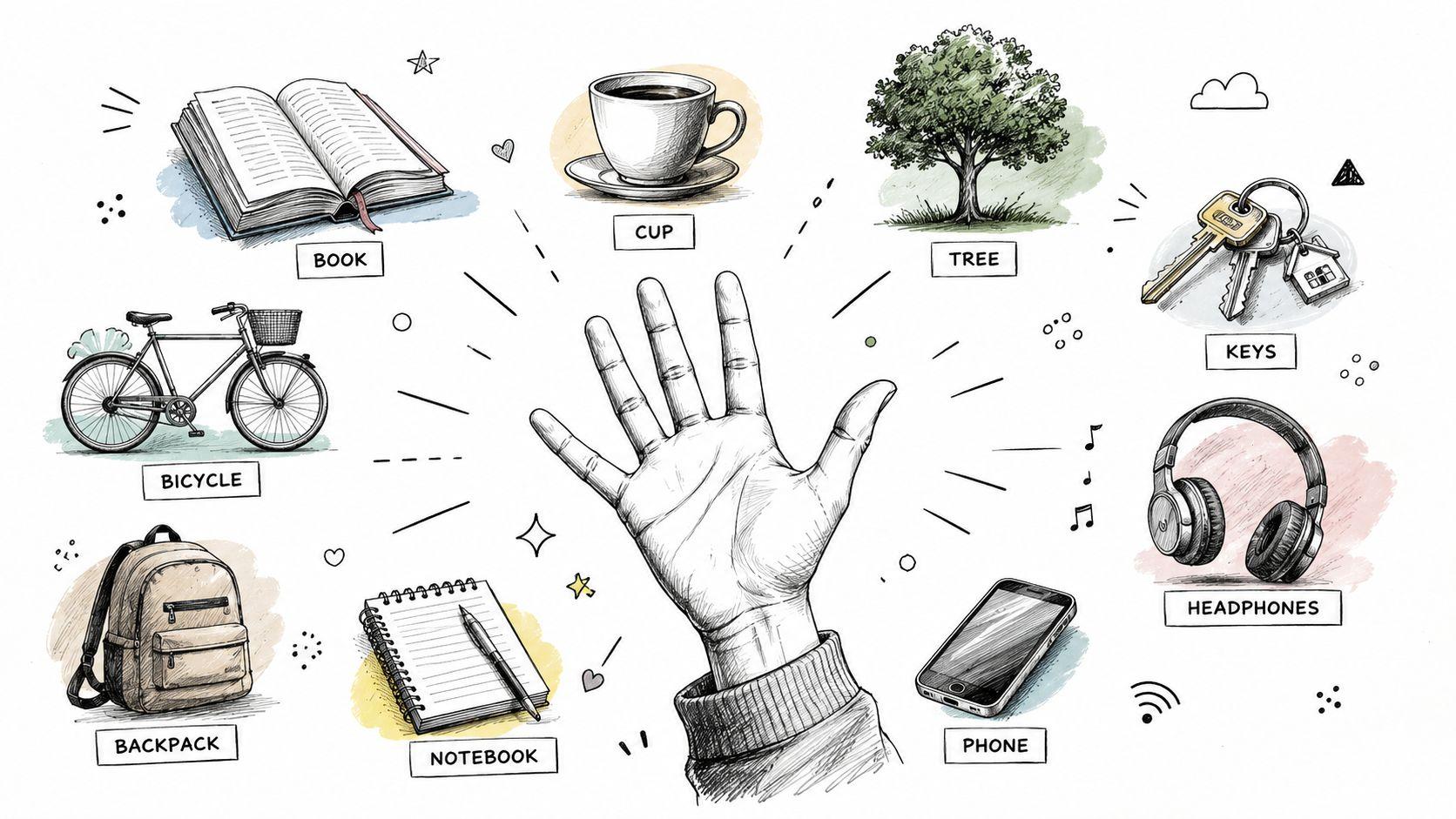
Literal language works especially well in:
- Directions: “The blue folder is on the second shelf.”
- Schedules: “Class starts at 9 a.m.”
- Requests: “Please email me the final draft by Friday.”
- Safety instructions: “Keep the door closed during the test.”
Literature and description
Writers don't stop using literal language when they write stories. They mix it with figurative language.
A literal description might say, “The house stood at the end of a narrow road. Its paint was peeling, and two windows were broken.” That gives the reader a clear picture.
A figurative description might say, “The house frowned at the road with broken eyes.” That creates mood, but it depends on interpretation.
In literature, literal language builds the scene. Figurative language often deepens the feeling.
Strong readers learn to notice both. They ask, “What is the text directly stating?” before asking, “What else might it suggest?”
Academic, technical, and legal uses
Some kinds of writing depend on literal meaning almost completely. In a lab report, a contract, a school rubric, or software instructions, readers need words that don't wander.
That's why a teacher may prefer “Use three examples from the text” over “Support your thinking well.” The first is easier to follow because it tells students exactly what to do.
Here's where literal language becomes a tool, not a style preference:
| Context | Why literal language helps |
| Science writing | It reports observations clearly |
| Math instructions | It reduces confusion about steps |
| Legal writing | It lowers the risk of multiple interpretations |
| Technical support | It helps people solve problems faster |
| Classroom directions | It tells students what action to take |
When the goal is accuracy, direct wording often does the hardest work.
Common Misconceptions About Literal Meaning
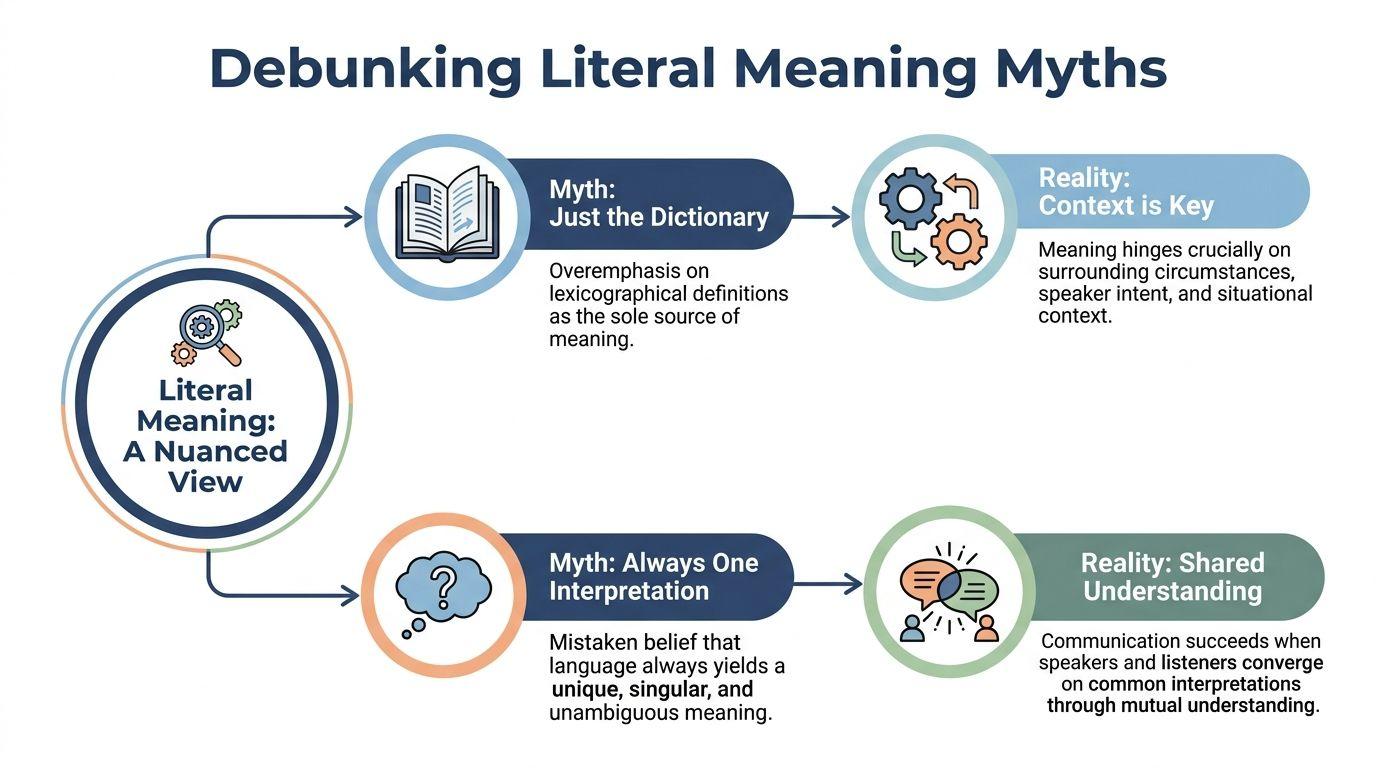
Many people learn a basic rule early on: literal means “just what the dictionary says.” That rule helps beginners, but it leaves out something important. Real communication depends on more than word definitions.
Misconception one: literal meaning is always fixed
Words don't float around by themselves. People use them in situations.
For example, “The window is open” may describe a fact. But in the right context, it can also function as a request to close it. The sentence stays close to its literal meaning, yet the full message depends on shared understanding.
This is one reason language study became more nuanced over time. The distinction between literal and figurative language was formally codified in linguistic theory through Michael Reddy's 1979 paper The Conduit Metaphor, which argued that while traditional linguistics treats the two as distinct modes, many modern linguists deny that a valid, universal distinction exists between them, as summarized in this overview of literal and figurative language.
Misconception two: literal and figurative are always separate boxes
In school worksheets, the categories often look neat. A sentence is either literal or figurative. In real life, the line can blur.
Some expressions become so familiar that people barely notice their metaphorical roots. Others sit somewhere in the middle. They feel direct in one context and imaginative in another.
That doesn't make the concept useless. It means you should treat it as a helpful framework, not a rigid law.
Misconception three: context only matters for figurative language
Context matters for literal interpretation too. The same sentence can land differently depending on tone, situation, and shared knowledge.
Consider these quick examples:
- “Nice job.” This can be sincere praise or sarcasm.
- “It's cold in here.” This can be a statement, a complaint, or an indirect request.
- “We should talk.” The words are plain, but the meaning can feel very different depending on when and how they're said.
Literal meaning gives you the starting point. Context tells you how that starting point functions in real communication.
This matters in AI as well. A system can process the surface meaning of a sentence, but if it misses context, the answer may sound oddly narrow or overly confident.
Practical Tips for Clearer Communication
Knowing the idea is useful. Using it well is what changes your writing, your conversations, and your AI prompts.
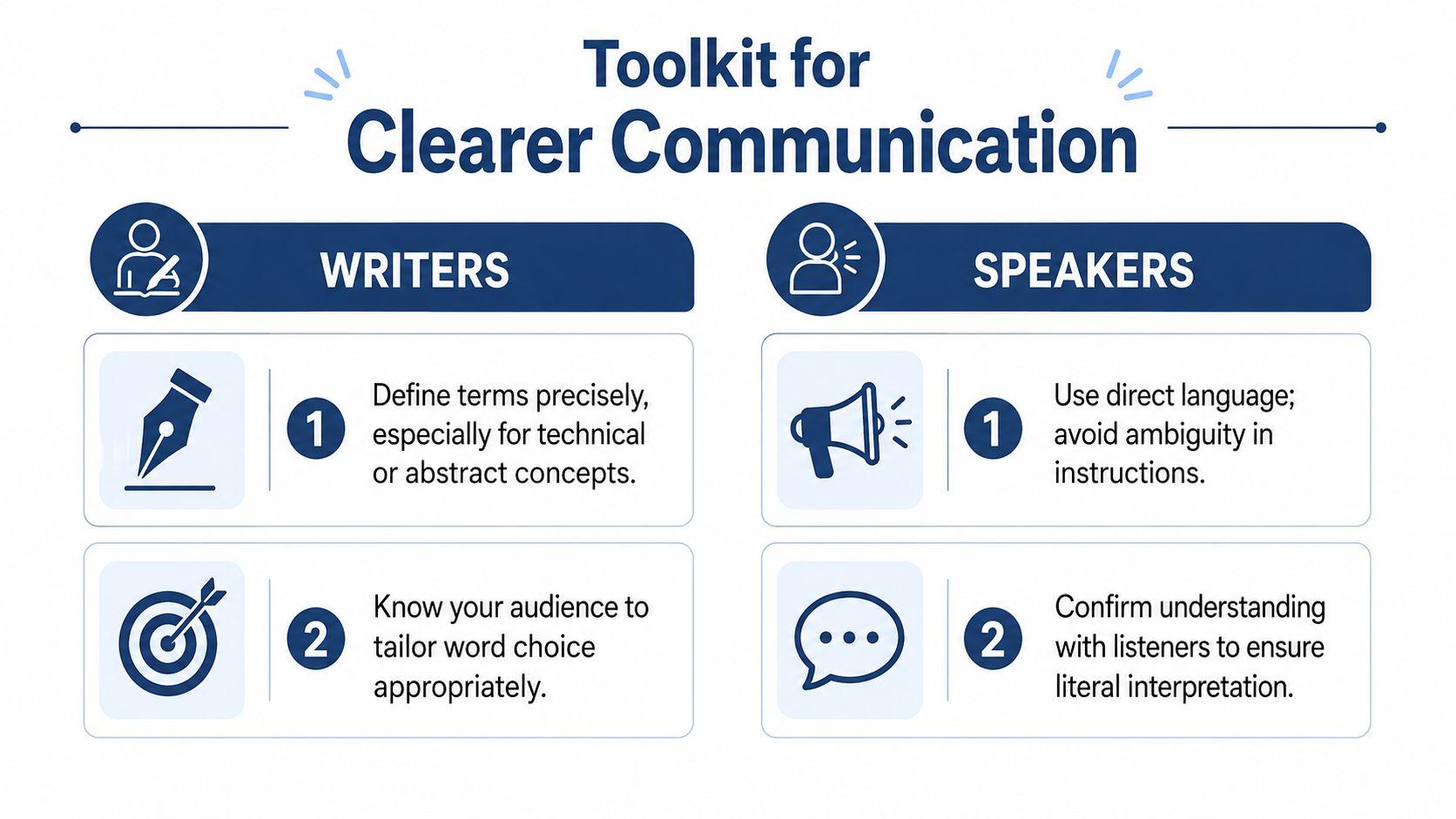
For writers and students
If your goal is clarity, start by making your nouns and verbs do more work.
- Choose concrete words: Write “Submit the worksheet by noon” instead of “Get it in soon.”
- Cut unnecessary exaggeration: “The hallway was crowded” is clearer than “The hallway was bursting at the seams.”
- State the task directly: “Compare the two characters” works better than “Discuss what stands out.”
- Define tricky terms: If you use a technical or abstract word, explain it once in simple language.
Try a quick exercise when revising. Underline every sentence that could be misunderstood if read too strictly. Then rewrite the ones that need more precision.
For speakers and parents
Speech creates extra chances for misunderstanding because listeners have only a few seconds to interpret what you mean.
These habits help:
- Say the action clearly. “Put your shoes by the door” is easier to follow than “Be more organized.”
- Check for understanding. Ask, “Can you tell me what you're going to do first?”
- Adjust for age and experience. Younger children and some learners do better with direct language before implied meaning.
- Save figurative phrases for moments when playfulness helps, not when accuracy matters.
If you work with children, Soul Shoppe on effective child communication offers useful ideas about making communication more understandable and supportive.
For using AI tools well
Research in pragmatics describes a literal-first processing bias, where literal meaning functions as the foundational default interpretation before context-dependent pragmatic processing resolves figurative deviations, as outlined in this literal meaning overview. That idea matters when you write prompts.
AI systems respond better when your request is specific and denotational. Instead of “Make this pop,” try “Rewrite this paragraph in plain English for a ninth-grade reader.” Instead of “Fix my paper,” try “Correct grammar, keep my tone, and list unclear sentences in bullets.”
The more literal your prompt, the easier it is for an AI tool to identify the task you actually want done.
For prompt help, troubleshooting, and common usage questions, the 1chat FAQ is a practical place to start.
Your Literal Language Questions Answered
Is literal language always better?
No. It's better when your goal is clarity, accuracy, or instruction.
If you're writing a poem, a speech, a story, or a personal reflection, figurative language can add emotion and depth. The key is matching the style to the purpose. A fire drill instruction should be literal. A novel opening doesn't have to be.
Can a sentence be both literal and figurative?
Sometimes, yes. A sentence can carry a direct surface meaning and also suggest something more.
Take “She walked out into the storm.” In one context, that may describe weather. In another, the storm may also reflect conflict in the story. Readers can process the literal event and notice the symbolic layer at the same time.
Why do some people prefer very literal communication?
People vary in how they process language. Some readers and listeners find direct wording easier, safer, and less tiring to interpret. That's one reason clear communication matters so much in classrooms, families, and workplaces.
Neurodivergent people, including some autistic people, may experience figurative expressions as harder to interpret than direct ones. That doesn't mean they can't understand non-literal language. It means communicators should be thoughtful about when hidden meaning helps and when it gets in the way.
Why does AI sometimes struggle with implied meaning?
AI works with patterns in language, but it still benefits from explicit wording. If your prompt includes jokes, vague idioms, or broad emotional shorthand, the system may choose an interpretation you didn't intend.
That's why literal language meaning matters beyond English class. It helps you write prompts that are easier for a system to handle accurately.
What should I practice first if I want to improve?
Start with a simple habit. For every sentence you write, ask:
- What do my words directly say?
- Could someone misunderstand this?
- Am I aiming for precision or effect?
Those three questions sharpen both writing and reading.
Literal language isn't the whole of communication, but it is one of its strongest foundations. When you can spot direct meaning, you read more carefully, write more clearly, and give better instructions to both people and machines.
If you want a privacy-first place to practice clearer prompts, compare responses across models, or get help with writing and documents, you can explore 1chat.