The correct spelling is ninety, and ninty is a common but incorrect variation. If you've paused mid-sentence and wondered which one to use, you're in the right place, because this mistake is easy to make and easy to fix.
A lot of people type ninty because it sounds close enough to be right. English spelling can be slippery, especially when a word seems like it should follow a simple pattern, so it's completely understandable to second-guess yourself.
The Quick Answer to Ninty or Ninety
If you are writing the number 90, the correct spelling is ninety. Ninty is a misspelling, and it is not standard English. If you want a quick place to review basic spelling questions like this, 1chat's FAQ is a simple reference point.
The confusion makes sense. Ninty sounds close to the way people say the number, so the spelling can feel natural even when it is wrong. English number words often seem to follow a pattern, and that pattern can make the incorrect form feel familiar before you stop to check it.
A simple rule helps here. Use ninety for 90 every time.
Why the Misspelling Ninty Feels So Right
Sound and pattern pressure
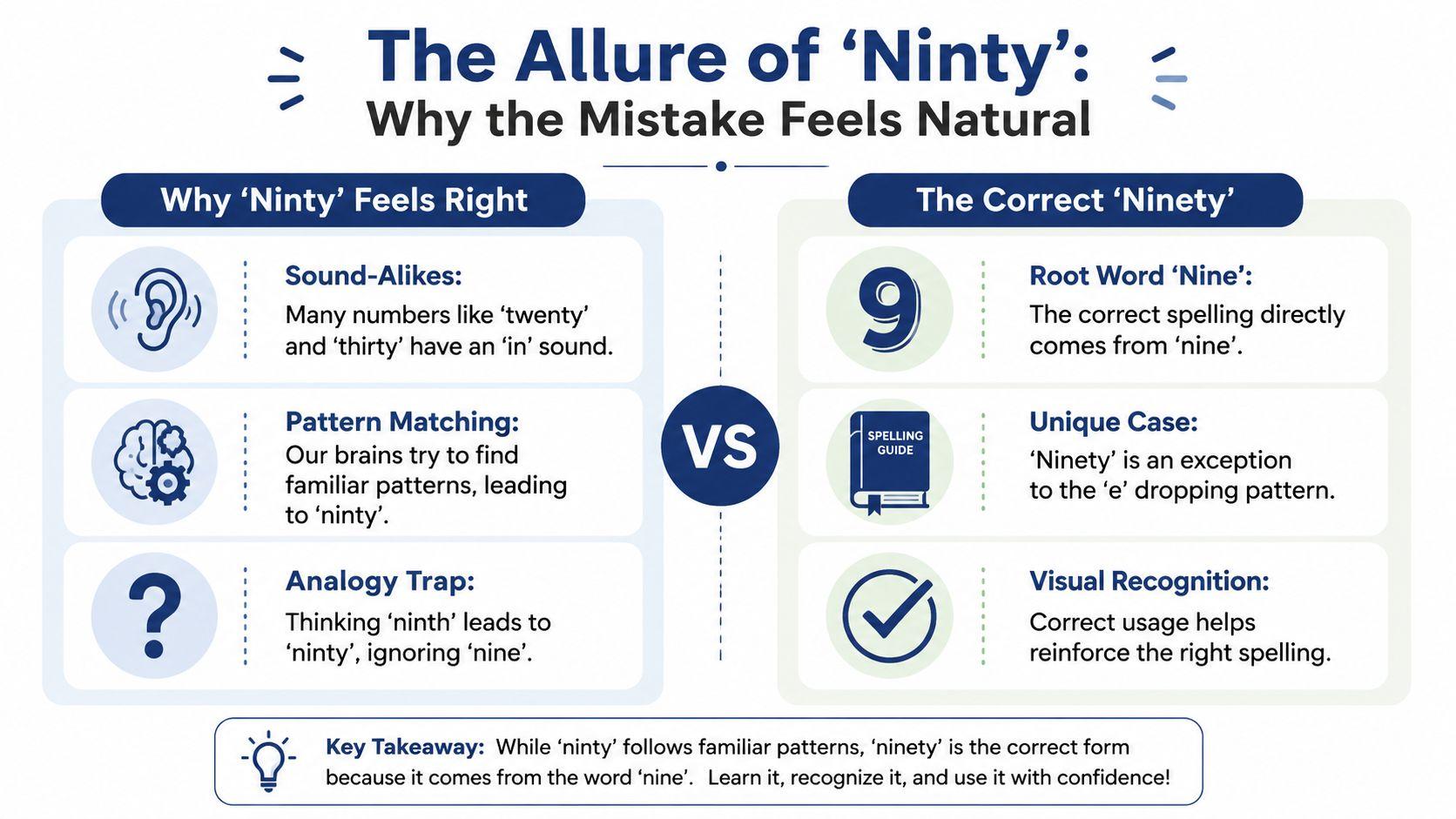
Ninty feels believable because English number words often change shape when they turn into tens. Words like sixty and seventy don't look exactly like their base forms, so your brain starts expecting a reduced spelling. That expectation can push you toward ninty, even though ninety is spelled differently.
The problem is that the mind is trying to be efficient. It hears nine-ty and wants to compress the spelling, just as it does with other familiar forms. That's a sensible guess, but spelling isn't always a perfect reflection of sound.
Why the pattern breaks
The spelling trap proves memorable. The word ninety keeps the root nine visible, instead of trimming it down. That's why the middle e matters, and why the incorrect version looks so tempting on the page.
The quickest way to see the difference is to compare expected pattern with actual spelling.
| Base Number | Expected Pattern | Correct Spelling |
| nine | drop the vowel | ninety |
| six | change to a tens form | sixty |
| seven | change to a tens form | seventy |
English number spellings don't behave like a single neat rulebook. That's why a learner can make a very reasonable guess and still land on the wrong form.
If you've ever browsed research on common spelling confusion, the takeaway is usually the same, brains like patterns, but English preserves older forms in some number words.
Unpacking the Correct Spelling Ninety
The word ninety is the standard spelling for 90. Major dictionaries treat it as the correct form, and ninty is a misspelling. That removes the guesswork right away. There is no standard English version with the missing e.
The root word stays visible
The easiest way to see why ninety is spelled this way is to look at nine inside the word. The base number is still there, so the spelling keeps a clear link to its root. That is why the middle e belongs in the correct form.
This also explains why ninty can look plausible at first glance. The mind wants a shorter, cleaner shape because the word sounds compressed when spoken. English spelling does not always follow that shortcut, and ninety keeps the full root visible on the page.
Why the spelling makes sense
Ninety works as nine plus a tens ending. The base word stays intact, and the ending shows that the number is in the tens. That structure gives the spelling a logical shape, even if the pronunciation makes it feel smaller than it looks.
The pattern becomes easier to remember if you compare it with the written form of the number itself. The spelling protects the connection to nine, rather than trimming it down the way your ear might expect. A small detail like that can make a big difference for spelling confidence.
Memory cue: the correct spelling keeps the e from nine.
If you want more plain-English spelling help like this, a short guide to common number-word mistakes can make the pattern easier to spot. Once the root word stands out, ninty starts to look incomplete instead of natural.
Putting Ninety into Practice with Examples
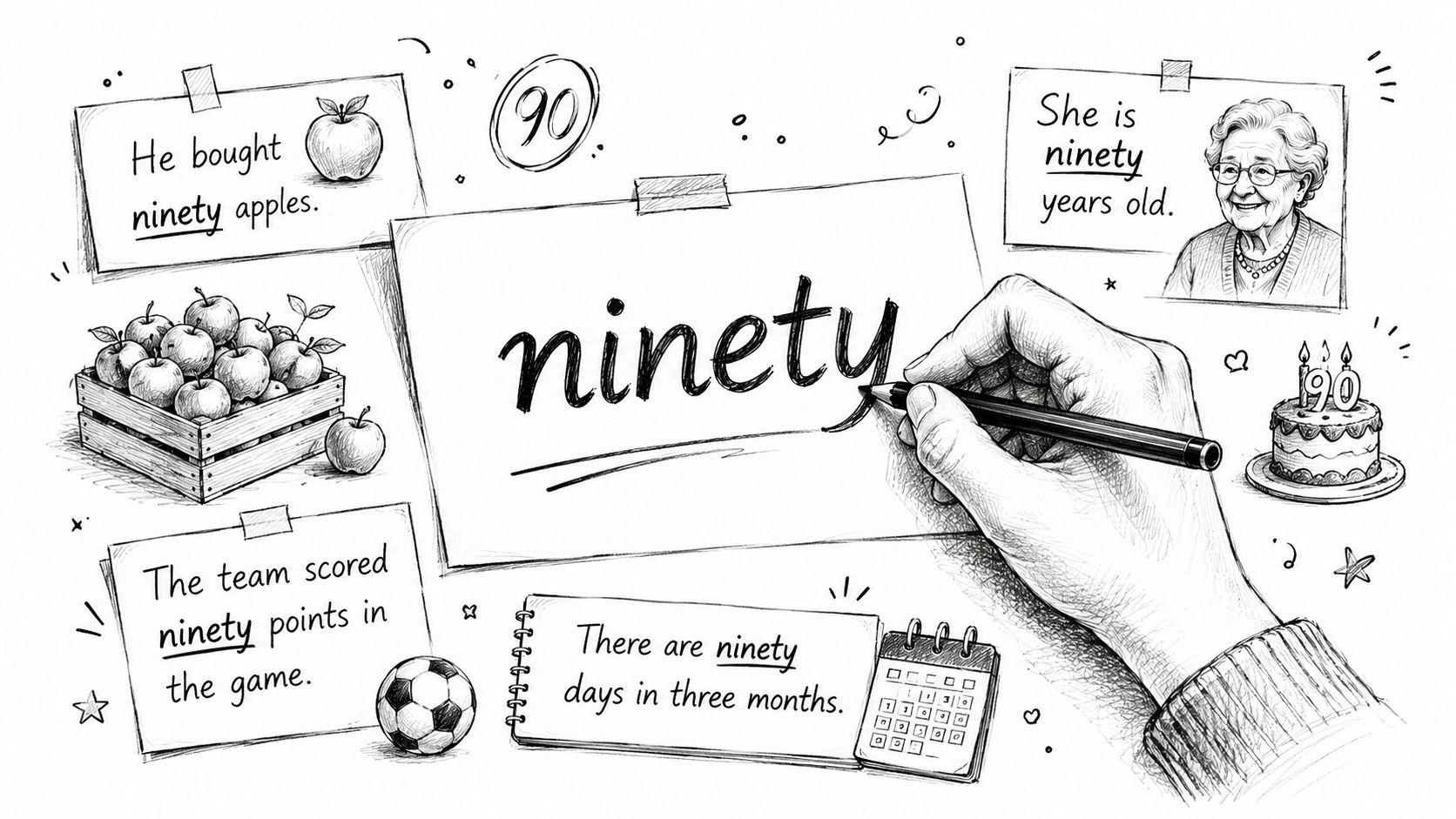
A word becomes easier to trust after you see it in real use. Ninety shows up in everyday writing as a quantity, a measure, and a number in formal contexts, so the sentence examples below help make the spelling feel familiar. For a broader set of writing tips and examples, you can also explore the 1chat blog alongside CapitalizeMyTitle's explanation of ninety.
Everyday sentence examples
- She paid ninety dollars for the coat.
- He scored ninety percent on the test.
- My grandfather is ninety years old.
- The angle measures ninety degrees.
- Music in the nineties sounded different.
These examples show the word in settings people write about, from schoolwork to daily conversation to formal notes. The spelling does not change just because the sentence changes, and that consistency is part of what makes ninety worth remembering.
A practical reading habit
Reading the word aloud can be helpful, but sound alone can also be misleading. Ninty and ninety may seem close in speech, which is why the eye matters more than the ear here. If you can spot the e in nine, the correct spelling usually starts to feel natural.
That habit works especially well when you are typing quickly and your brain tries to shorten the word. A small visual check can stop the mistake before it settles in. Teachers often use repetition, written examples, and fun spelling games for first graders because repeated exposure helps the correct form become the one that feels normal.
Simple Tricks to Always Remember Ninety
The easiest memory trick is also the most honest one: keep the e from nine. If you start with the root word and refuse to drop that letter, you're already on the right path.
Three fast memory checks
- Say “nine” first. Then add ty. The full root stays visible, so the spelling becomes ninety.
- Look for the missing e. If the word seems to say ninty, stop and restore the e.
- Use the family link. Nine, nineteen, ninety, and nineties all keep the root clear.
A visual trick helps too. Some writers imagine the word nine sitting inside ninety, like the base number is still there holding the meaning together. That picture is simple, but it's surprisingly effective when you're typing quickly.
Quick self-check: if the spelling no longer looks like nine, it's probably wrong.
If you want a digital backup while you learn, tools such as spell checkers and writing assistants can help catch slips, and some people also use privacy-focused options like 1chat to review text and questions in one place. Still, the strongest habit is learning the pattern well enough to spot the mistake yourself.
Frequently Asked Questions About Spelling Numbers
Is it forty or fourty
Forty is correct, not fourty. Like ninety, it breaks an intuitive pattern and keeps its own established spelling. English number words can be inconsistent, so it's better to learn each one as a trusted form instead of guessing from sound alone.
How do you write 90th as a word
The ordinal form is ninetieth. It keeps the same root idea as ninety, so the e remains part of the spelling. That makes it easy to connect the number, the word form, and the ordinal form in one family.
Are there other numbers that break spelling rules
Yes, several number words don't behave the way learners expect. That's why spelling numbers can feel frustrating at first. The safest strategy is to memorize the standard forms one by one and check your own writing when a spelling looks “almost right.”
For a broader way to gauge your comfort with English vocabulary and spelling, you can also use a tool to evaluate English word knowledge. It won't replace careful reading, but it can help you notice where you still second-guess yourself.
The bottom line is simple. Ninety is correct, ninty is not, and the spelling becomes much easier once you remember the e belongs to nine. If this word has tripped you up before, bookmark this page, then practice writing ninety in a few sample sentences today so the correct form starts feeling automatic.