In today's dynamic environments, from remote offices and student project groups to busy family households, effective teamwork is no longer a soft skill; it is the critical engine for success. Simply putting talented individuals together is not enough. True collaboration requires a deliberate framework of shared principles and modern tools. Without them, teams face meeting fatigue, miscommunication, and wasted effort, hindering progress and creating unnecessary friction.
This guide moves beyond generic advice to provide a comprehensive roundup of 10 essential team collaboration best practices. Each one is designed with the unique needs of small businesses, student teams, and even family coordination in mind, offering actionable steps, real-world examples, and fresh perspectives. We will explore how to build a resilient, efficient, and innovative group by mastering key strategies that are vital for modern work and learning.
You will learn specific techniques for:
- Establishing clear asynchronous communication protocols.
- Implementing structured feedback loops for continuous improvement.
- Leveraging shared AI tools to enhance productivity and creativity.
- Creating a culture of psychological safety where everyone can contribute.
Prepare to transform how your team works together. These practices will help you clarify roles, streamline workflows, and ultimately achieve your goals with greater speed and less stress. Let's dive into the new rules that define high-performing teams.
1. Asynchronous Communication Protocols
Asynchronous communication is the practice of exchanging information without requiring an immediate response. Team members can collaborate effectively across different schedules and time zones by sharing messages, documents, and updates that can be reviewed and addressed later. This approach empowers individuals with flexibility, deep focus time, and autonomy, making it a cornerstone of modern team collaboration best practices. Instead of constant interruptions from real-time meetings and instant messages, teams can maintain momentum and productivity on their own terms.
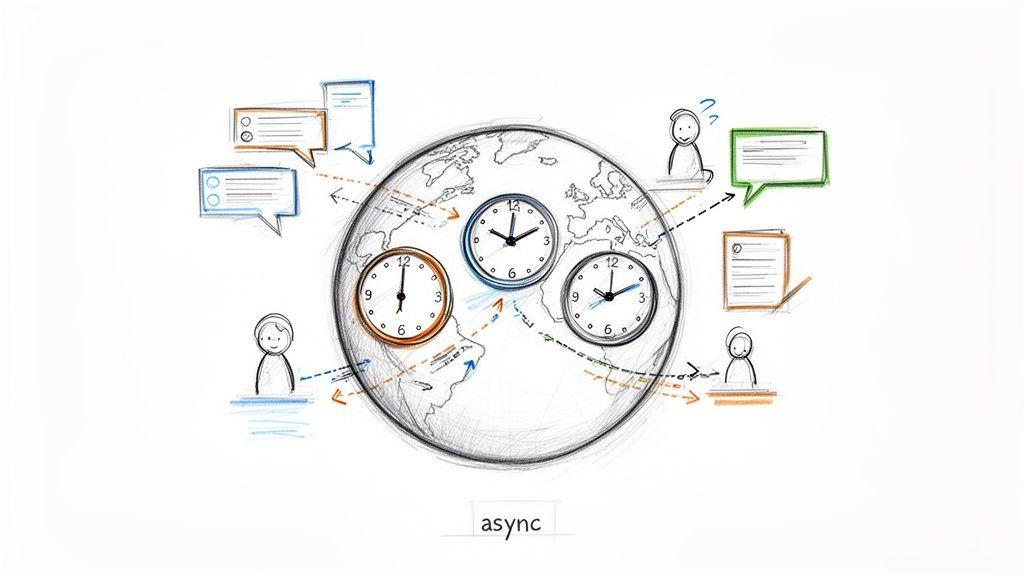
Pioneered by companies like GitLab and Automattic, this method is ideal for distributed workforces, student project groups with conflicting class schedules, or families coordinating complex activities. It shifts the focus from presence to output, measuring success by what is accomplished rather than when someone is online.
How to Implement Asynchronous Protocols
To make this work, teams must establish clear and intentional communication habits. Simply using chat tools isn't enough; the key is creating a system that everyone understands and follows.
- Set Clear Response Times: Establish a team-wide expectation for acknowledging and responding to non-urgent messages, such as within 24 hours. This eliminates the anxiety of waiting for an instant reply.
- Leverage Threaded Discussions: Use tools like Slack or Microsoft Teams to keep conversations organized by topic. This prevents important details from getting lost in a single, chaotic channel.
- Utilize AI for Summaries: Instead of scheduling a meeting to discuss a long document, use a tool like 1chat to generate an AI-powered summary and analysis. Share this summary in a team channel for focused, written feedback, saving everyone valuable time.
- Create Communication Templates: For recurring tasks like project updates or bug reports, create standardized templates. This ensures all necessary information is included upfront, reducing back-and-forth questions.
- Archive Key Decisions: Maintain a centralized, searchable knowledge base or wiki where important decisions, project outcomes, and process documents are stored for easy access.
2. Shared AI Tools for Collaborative Work
Shared AI tools for collaborative work involve integrating a centralized AI platform into team workflows, allowing all members to access, utilize, and build upon its capabilities. Instead of each person using separate, individual AI accounts, a shared tool democratizes access to advanced features like document analysis, content generation, and research assistance. This approach creates a unified, collaborative environment where AI-powered insights and outputs are transparent and accessible to the entire group, fostering better team collaboration best practices.
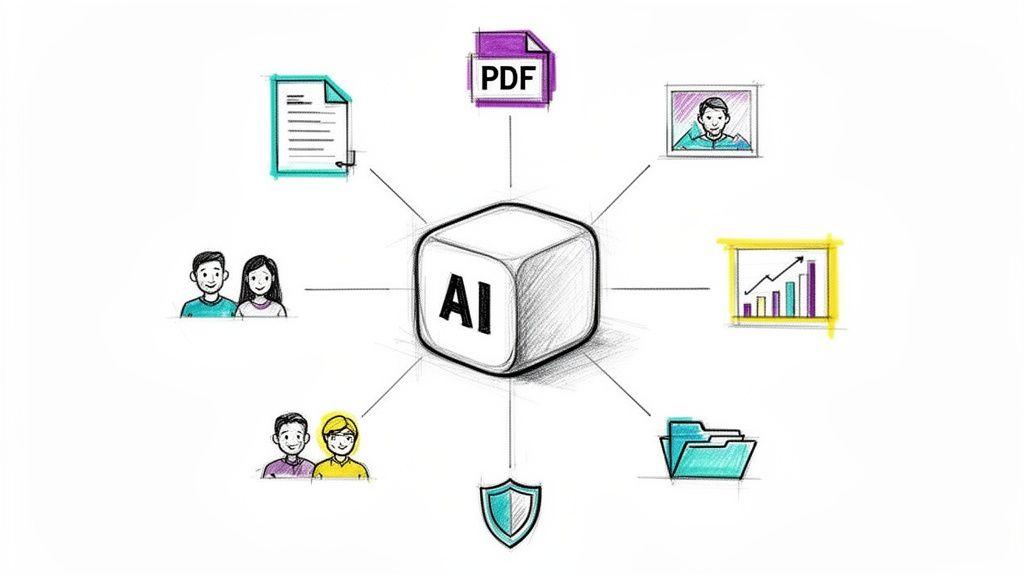
This model, popularized by platforms like 1chat, is highly effective for diverse groups. A small marketing team can use it to collectively brainstorm campaign copy and analyze competitor PDFs, while a student study group can collaborate on analyzing complex research papers. It streamlines workflows by consolidating AI resources, reducing costs from multiple individual subscriptions, and creating a single source for AI-assisted projects.
How to Implement Shared AI Tools
Effective implementation requires more than just providing access; it involves creating structured processes for how the team interacts with the AI and each other. The goal is to make AI a seamless part of the collaborative fabric.
- Establish Clear Usage Guidelines: Define when and how AI should be used. Create rules around fact-checking, human oversight, and the ethical use of AI-generated content to ensure quality and accountability.
- Create Shared Workspaces: Use features like team folders or channels within the AI tool to organize projects. This keeps all relevant AI-generated materials, from research summaries to draft proposals, in one accessible location.
- Document Effective Prompts: Create a living document or a shared library of prompts that have proven effective for your team's specific tasks, such as generating reports or summarizing meetings. This helps standardize output quality.
- Use PDF Analysis for Group Research: Leverage features that allow your team to upload documents like research papers or business reports. The AI can extract key insights and data points, saving hours of manual reading and providing a common foundation for discussion.
- Implement Version Control: For AI-generated content that requires multiple revisions, establish a simple version control system. This ensures that edits are tracked and the team is always working from the most current iteration.
3. Clear Documentation and Knowledge Management
Clear documentation is the practice of creating a centralized, accessible system for all essential team information. This includes processes, project plans, meeting notes, and key decisions. By building a shared knowledge base, teams reduce their reliance on any single individual, prevent knowledge loss when members leave, and empower everyone with the information they need to work effectively. This approach transforms scattered information into a valuable, long-term asset that supports consistent and informed team collaboration best practices.
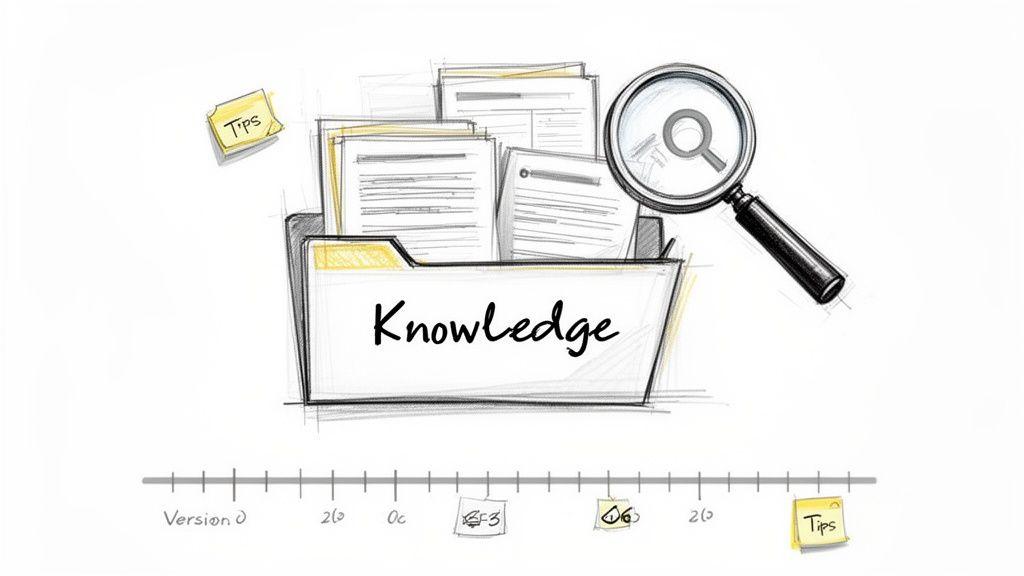
Popularized by platforms like Notion and Atlassian's Confluence, this method is crucial for scaling businesses, remote teams needing a single source of truth, and student groups wanting to ensure all members are on the same page. It creates an institutional memory that outlasts any single project or team member, making onboarding faster and decision-making more transparent.
How to Implement Clear Documentation
Effective knowledge management goes beyond simply writing things down; it requires a structured and intentional system that is easy to use and maintain. Building these habits ensures your documentation remains a living, useful resource.
- Create Standardized Templates: For recurring documents like project briefs, meeting notes, or bug reports, use templates. This ensures consistency and guarantees that all critical information is captured every time.
- Use Consistent Naming Conventions: Establish a clear system for naming files and pages (e.g.,
ProjectName-Task-Date). This makes information searchable and prevents confusion. - Document AI Prompts and Workflows: If your team uses AI tools like 1chat, create a dedicated section to store effective prompts, their specific use cases, and the outputs they generated. This helps the entire team leverage AI more efficiently.
- Assign a Documentation Steward: Designate a person or a rotating role to periodically review, update, and organize the knowledge base. This prevents information from becoming outdated.
- Archive, Don't Delete: Instead of deleting old documents, move them to an archive folder. This preserves historical context that might be valuable later. You can learn more by exploring these knowledge management best practices.
4. Transparent Goal Setting and Progress Tracking
Transparent goal setting is the practice of establishing clear, shared objectives that everyone on the team can see and understand. By regularly tracking progress toward these goals, teams remain aligned, motivated, and focused on the same priorities. This approach transforms abstract ambitions into concrete, measurable actions, ensuring that every individual's effort contributes directly to the team's collective success. This is one of the most critical team collaboration best practices for preventing wasted work and boosting morale.
Popularized by companies like Google through its use of Objectives and Key Results (OKRs), this framework is highly adaptable. It works for startups defining their quarterly sprints, student groups tracking project milestones, or even families setting shared financial or household goals. Transparency ensures everyone understands how their individual tasks connect to the bigger picture.
How to Implement Transparent Goal Setting
Effective goal setting requires more than just writing down what you want to achieve; it demands a system for creation, tracking, and review that the whole team buys into.
- Choose a Clear Framework: Adopt a recognized system like OKRs or SMART goals. This provides a common language and structure for defining what success looks like.
- Utilize AI for Brainstorming: During planning sessions, use a tool like 1chat to brainstorm ambitious but achievable goals. It can generate different frameworks, provide examples, and help refine objectives based on your team's input.
- Create a Centralized Dashboard: Use a shared document, project management tool, or a simple spreadsheet to display all team goals and their real-time progress. This single source of truth keeps everyone informed and accountable.
- Link Individual and Team Goals: Ensure that each team member's personal objectives clearly support the broader team and organizational goals. This connection provides a powerful sense of purpose. For teams juggling multiple objectives, learning how to manage multiple projects simultaneously is key to maintaining focus.
- Conduct Regular Reviews: Set aside time weekly or bi-weekly to review progress. Use these meetings to celebrate wins, identify roadblocks, and adjust priorities as needed, not to assign blame.
5. Structured Feedback and Continuous Improvement Culture
A culture of structured feedback is one where team members regularly give and receive constructive input to foster growth, improve performance, and strengthen relationships. This practice moves beyond occasional, unstructured comments to create a predictable system for continuous improvement. By formalizing the process, teams can build psychological safety, prevent resentment from festering, and align individual development with collective goals. It turns feedback from a source of anxiety into a powerful tool for collaboration.
This approach is essential for any team aiming for high performance, whether it's a small business, a student project group, or a family coordinating tasks. It’s a foundational element of team collaboration best practices that ensures everyone is learning and adapting together. Companies like Netflix and Google have famously built their success on a bedrock of open, honest, and systematic feedback, proving its value in driving innovation and excellence.
How to Implement a Feedback Culture
Creating a safe and effective feedback loop requires more than just good intentions; it needs clear guidelines and consistent habits. The goal is to make feedback a normal, expected part of the workflow.
- Schedule Regular Feedback Cycles: Don't wait for annual reviews. Implement regular one-on-ones, monthly check-ins, or quarterly 360-degree reviews to make feedback timely and actionable.
- Use Proven Frameworks: Train your team on simple, effective models like SBI (Situation-Behavior-Impact). This structure helps keep feedback focused on specific, observable actions rather than personal judgments.
- Draft Feedback with AI Assistance: Giving difficult feedback can be challenging. Use a tool like 1chat to help you draft messages that are balanced, constructive, and empathetic, ensuring your point is delivered in the most effective way possible.
- Create Safe Spaces: For more sensitive topics, use anonymous surveys or dedicated retrospectives to gather honest input without fear of reprisal. This is especially useful for uncovering systemic issues.
- Focus on Action Plans: Feedback is only valuable if it leads to change. Always follow up with a clear action plan, documenting the agreed-upon steps and scheduling a time to review progress.
6. Cross-Functional Collaboration and Skill Sharing
Cross-functional collaboration is the practice of breaking down organizational silos to bring together individuals from different departments, specialties, and skill sets to work on a common goal. This approach fosters innovation by blending diverse perspectives, from technical and creative to marketing and operations, leading to more holistic and robust solutions. Instead of passing projects from one department to another, teams work concurrently, sharing insights and expertise in real-time. This dynamic is a key element of modern team collaboration best practices, enabling faster problem-solving and more comprehensive outcomes.
This method, championed by innovative companies like Google, Spotify, and IDEO, is highly effective for complex projects like product development, where engineering, design, and business strategy must be tightly aligned. It is equally valuable for student teams tackling interdisciplinary assignments or small businesses where employees wear multiple hats. The core principle is to leverage the collective intelligence of the entire group rather than relying on the isolated knowledge of a few.
How to Implement Cross-Functional Collaboration
Successful cross-functional work requires more than just putting people in the same virtual room; it demands intentional structure and tools that bridge communication gaps. The goal is to create a shared understanding and a collaborative environment where every contribution is valued.
- Create Shared Project Spaces: Use collaborative platforms to establish a central hub where team members from all disciplines can share files, track progress, and communicate. This ensures everyone has access to the same information.
- Establish Clear Roles and Authority: Define each person's responsibilities and who has the final say on specific decisions. This clarity prevents confusion and ensures accountability, especially when expertise overlaps.
- Schedule Knowledge-Sharing Sessions: Hold regular, informal "brown bag" sessions or workshops where experts can teach non-experts about their domain. This builds empathy and improves the team's overall skill set.
- Pair Experts with Non-Experts: Intentionally assign tasks to pairs of individuals with different skills. For instance, a designer and a developer can work together on a user interface, allowing for direct skill transfer and immediate feedback.
- Document Successful Patterns: Keep a record of which collaborative processes, meeting formats, and communication styles work best for your team. This creates a playbook for future cross-functional projects.
7. Psychological Safety and Inclusive Communication
Psychological safety is the shared belief that team members can take interpersonal risks without fear of negative consequences. When present, individuals feel comfortable speaking up with ideas, admitting mistakes, asking questions, and challenging assumptions. This environment is the bedrock of effective collaboration, as it unlocks innovation and prevents costly errors by encouraging open dialogue. Instead of self-censoring, team members contribute fully, leading to better decision-making and stronger collective outcomes.
First identified in organizational studies, this concept was famously highlighted by Google's "Project Aristotle," which found psychological safety to be the single most important dynamic in high-performing teams. It's also visible in creative powerhouses like Pixar, where a culture of candid feedback is essential to the filmmaking process, and in student cohorts that prioritize peer learning and mutual support. This practice shifts the focus from individual perfection to collective growth.
How to Cultivate Psychological Safety
Building a safe and inclusive environment requires deliberate and consistent effort from leaders and team members alike. It's about creating habits that reinforce trust and respect.
- Model Vulnerability: Leaders should be the first to admit their own mistakes or knowledge gaps. This signals that it's okay for others to do the same.
- Respond with Curiosity, Not Blame: When a mistake happens, frame the conversation around learning. Ask questions like, "What can we learn from this?" instead of "Whose fault was this?"
- Create Multiple Channels for Input: Recognize that not everyone is comfortable speaking up in a large meeting. Offer alternative ways to contribute through surveys, one-on-one check-ins, or written feedback in shared documents.
- Actively Solicit Ideas: Make a point to ask quieter team members for their thoughts directly. A simple, "What's your perspective on this?" can ensure valuable insights aren't overlooked.
- Acknowledge and Credit Contributions: Publicly recognize good ideas and hard work, making sure to credit the individuals involved. This reinforces that all contributions are valued.
- Address Exclusionary Behavior: Intervene immediately and constructively if you witness microaggressions or other behaviors that undermine a team member's sense of belonging.
8. Efficient Meeting Management and Decision Making
Meetings are often the most expensive and disruptive part of a team’s day, consuming valuable time and cognitive energy. Efficient meeting management is one of the most impactful team collaboration best practices because it treats meetings as a last resort, not a default action. This approach involves intentional design with clear agendas, defined outcomes, and carefully selected attendees. The goal is to shift from meetings as information-transfer sessions to high-value discussions and decision-making forums.
This philosophy transforms collaboration by protecting focused work time and ensuring that when meetings do occur, they are productive and conclusive. Instead of defaulting to a 30-minute call to discuss a document, teams are encouraged to ask, "Could this meeting be a written document instead?" This mindset forces clarity and preparation, ultimately leading to better and faster decisions.
Pioneered by companies like Basecamp and Stripe, this practice is essential for any team looking to reclaim its schedule. It’s perfect for businesses trying to reduce operational drag, student groups needing to make decisions without constant video calls, and even families planning complex events who need to avoid endless back-and-forth discussions.
How to Implement Efficient Meeting Practices
Effective meeting management requires a deliberate system that prioritizes written communication and makes synchronous time count. The key is to build a culture where meetings serve a specific, high-value purpose.
- Question Every Meeting: Before scheduling, always ask if the goal can be achieved asynchronously with a detailed document, email, or chat thread.
- Generate Agendas with AI: Use a tool like 1chat to generate a structured meeting agenda based on a project brief or a list of discussion points. Share this agenda with all attendees at least 24 hours in advance so everyone arrives prepared.
- Timebox All Discussions: Assign a specific time limit to each agenda item and stick to it. This practice keeps the conversation focused and ensures all critical topics are covered.
- Document and Share Outcomes: Assign one person to capture key decisions, action items, and unresolved questions. After the meeting, use an AI tool to generate a concise summary from the notes and distribute it to all stakeholders, including those who couldn't attend.
- Record High-Stakes Meetings: For critical discussions or training sessions, record the meeting and make it available for asynchronous review. This allows team members in different time zones or with scheduling conflicts to stay informed.
9. Remote and Hybrid Work Infrastructure
Modern collaboration extends beyond a shared office space, requiring a robust infrastructure that supports remote and hybrid teams. This involves more than just software; it's an ecosystem of reliable tools, clear communication norms, and intentional culture-building that empowers distributed teams. This approach ensures that collaboration is seamless and equitable, regardless of a team member's physical location. By investing in the right digital foundation, organizations can unlock the benefits of flexibility and a global talent pool.
This model is a cornerstone of team collaboration best practices for any group operating across different locations, whether it's a global business, a student project team with members in different dorms, or a family coordinating activities from multiple places. Companies like GitLab and Automattic have built their entire operations around this principle, proving that high performance does not depend on a centralized physical location. It’s about creating a virtual environment that fosters connection and productivity.
How to Implement Remote and Hybrid Infrastructure
Building an effective distributed work environment requires deliberate planning and consistent effort. The goal is to replicate the clarity and camaraderie of an office while embracing the unique advantages of remote work.
- Establish "Core Hours": Designate a few hours each day when everyone, regardless of time zone, is expected to be online and available for synchronous communication. This protects focus time while ensuring opportunities for real-time collaboration.
- Invest in Quality Equipment: Provide team members with high-quality webcams, microphones, and reliable internet access. This simple investment dramatically improves the quality of virtual meetings and reduces communication friction.
- Use AI for Asynchronous Clarity: Leverage tools like 1chat to share complex information without needing a meeting. You can generate a summary of a research document or an analysis of customer feedback and share it for team review, ensuring everyone is on the same page.
- Create Informal Communication Channels: Set up dedicated channels in your chat app for non-work conversations, such as #pets, #hobbies, or #random. These virtual "water coolers" are crucial for building personal connections and team morale.
- Document Everything: Make it a rule to document all important decisions, meeting notes, and project plans in a centralized, accessible location. This practice is vital for keeping asynchronous participants informed and engaged. For more guidance, learn how to manage remote teams effectively.
10. Collaborative Problem-Solving and Innovation Practices
Structured approaches to problem-solving and innovation bring teams together to identify challenges, generate solutions, and test ideas. These methodologies create a psychologically safe environment where members can freely explore "what if" scenarios without fear of judgment. This practice shifts the team mindset from merely executing tasks to actively shaping outcomes, making it one of the most impactful team collaboration best practices for driving growth and improvement. By establishing a formal process, teams can channel their collective creativity into tangible results.
Popularized by firms like IDEO (design thinking) and Google Ventures (Design Sprints), these methods provide a roadmap for navigating complex problems. They are highly effective for business teams developing new products, student groups tackling a hackathon, or even a family planning a major project. The goal is to move from ambiguity to clarity through a collaborative, iterative process of understanding, ideating, prototyping, and testing.
How to Implement Collaborative Problem-Solving
To turn creative energy into progress, teams need a framework that guides their efforts. This involves setting the stage for open ideation and providing the tools to bring those ideas to life, transforming abstract concepts into actionable plans.
- Establish a Clear Framework: Adopt a recognized methodology like a Design Sprint or a simplified version of design thinking. This provides a shared vocabulary and a step-by-step process, ensuring everyone is aligned.
- Generate Diverse Ideas with AI: Use a tool like 1chat to kickstart brainstorming sessions. Ask it to generate diverse solutions based on a problem statement or analyze competitor approaches for inspiration. This provides a broad foundation for the team to build upon.
- Create a Safe Space for "Bad Ideas": Explicitly state that all ideas are welcome during the initial ideation phase. Often, an impractical or "bad" idea can spark a more innovative and viable solution from another team member.
- Prototype and Test Rapidly: Move from ideas to low-fidelity prototypes quickly. For a marketing campaign, this could mean using AI to generate multiple ad copy samples. For a product feature, it could be a simple wireframe. The aim is to get feedback early and often.
- Document and Iterate: Use a shared document or wiki to capture key insights, decisions, and learnings from each problem-solving cycle. This creates an institutional memory that informs future innovation efforts.
Top 10 Team Collaboration Best Practices Comparison
| Practice | 🔄 Implementation Complexity | ⚡ Resource Requirements | 📊 Expected Outcomes | 💡 Ideal Use Cases | ⭐ Key Advantages |
| Asynchronous Communication Protocols | Medium 🔄 — set norms, SLAs, tooling | Low ⚡ — messaging, docs, storage | High ⭐ — better flexibility, searchable audit trails | Distributed teams, async reviews, documentation-heavy workflows | ⭐ Flexibility, fewer meetings, clear audit trail |
| Shared AI Tools for Collaborative Work | Medium 🔄 — integration, governance, training | Moderate ⚡ — platform seats, compute, privacy setup | High ⭐ — faster content, unified outputs, scalable insights | Marketing, research, PDF analysis, team brainstorming | ⭐ Cost-effective AI access, democratized capabilities |
| Clear Documentation & Knowledge Management | High 🔄 — taxonomy, governance, continual upkeep | Moderate ⚡ — repos, search, maintenance effort | High ⭐ — faster onboarding, reduced knowledge loss 📊 | SOPs, compliance, prompt libraries, onboarding programs | ⭐ Institutional memory, consistency, searchable records |
| Transparent Goal Setting & Progress Tracking | Medium 🔄 — frameworks, cadence, review rituals | Low-Moderate ⚡ — dashboards, tracking tools | High ⭐ — alignment, accountability, data-driven choices | OKRs, quarterly planning, performance tracking | ⭐ Improved alignment, measurable progress |
| Structured Feedback & Continuous Improvement Culture | Medium-High 🔄 — training, regular cycles, tooling | Low-Moderate ⚡ — survey tools, time for reviews | High ⭐ — professional growth, early issue detection 📊 | 360 reviews, retrospectives, one-on-ones | ⭐ Continuous development, increased retention |
| Cross-Functional Collaboration & Skill Sharing | High 🔄 — coordination, role clarity, facilitation | Moderate ⚡ — cross-training, workshops, shared spaces | High ⭐ — more innovation, fewer silos 📊 | Product development, R&D, interdisciplinary projects | ⭐ Diverse perspectives, resilience, engagement |
| Psychological Safety & Inclusive Communication | High 🔄 — culture change, leadership modeling | Low-Moderate ⚡ — training, safe channels | High ⭐ — increased trust and idea diversity 📊 | Creative teams, high-stakes decisions, change initiatives | ⭐ Trust-building, better decisions, error reporting |
| Efficient Meeting Management & Decision Making | Medium 🔄 — agenda discipline, roles, follow-up | Low ⚡ — templates, summarization, recording tools | High ⭐ — less meeting time, clearer outcomes 📊 | Status syncs, decision reviews, cross-team meetings | ⭐ Time savings, focused discussions, documented decisions |
| Remote & Hybrid Work Infrastructure | High 🔄 — tooling, norms, onboarding processes | High ⚡ — subscriptions, equipment, bandwidth | High ⭐ — access to global talent, flexible work models 📊 | Fully distributed orgs, hybrid teams, global hiring | ⭐ Talent access, retention, reduced office costs |
| Collaborative Problem-Solving & Innovation Practices | Medium-High 🔄 — facilitation, iterative cycles | Moderate ⚡ — workshops, prototyping, testing tools | High ⭐ — validated ideas, faster learning 📊 | Design sprints, hackathons, product ideation | ⭐ Rapid experimentation, buy-in, reduced risk |
From Principles to Practice: Building Your Collaborative Future
Mastering the art and science of teamwork isn't a destination you arrive at overnight; it's a continuous journey of refinement. The ten team collaboration best practices we've explored provide a comprehensive blueprint for transforming how your group connects, communicates, and creates value together. From establishing clear asynchronous communication protocols to fostering a culture of psychological safety, each principle serves as a foundational building block for a high-performing, resilient team.
The true power of this guide lies not in passively reading the concepts, but in actively putting them into practice. The leap from knowledge to action is where genuine transformation happens. It’s about cultivating an operational rhythm where structured feedback is as natural as a morning check-in and where transparent goal tracking keeps everyone aligned and motivated, whether you're launching a new product, planning a family reunion, or tackling a group research paper.
Your Action Plan for Implementing Collaboration Best Practices
Moving forward can feel overwhelming, so don't try to boil the ocean. Instead, adopt a strategic, incremental approach. Lasting change is built through small, consistent efforts that gain momentum over time.
Here is a practical roadmap to get you started:
- Conduct a Team Self-Audit: Gather your team and honestly assess your current collaborative strengths and weaknesses. Which of the ten practices represents your biggest pain point? Is it chaotic meeting management or a lack of clear documentation? Pinpoint the area that will deliver the most immediate impact.
- Select Your "First Two": Choose just one or two practices to implement initially. For example, you might decide to focus on Efficient Meeting Management by creating mandatory agendas and action items, while simultaneously improving Clear Documentation by centralizing all project files in a single, accessible location.
- Communicate the "Why": Before you introduce new processes, explain the reasoning behind them. Frame the change as a solution to a shared problem. For instance, "To reduce confusion and save everyone time, we're going to start using a central knowledge base for all project information."
- Leverage Enabling Technology: The right tools can act as a powerful catalyst. Platforms that integrate shared AI, like 1chat, can amplify your efforts by providing a secure, collaborative space for everything from drafting documents and analyzing data to brainstorming innovative solutions. This makes sophisticated collaboration accessible and affordable for businesses, students, and even families.
- Schedule a Review: Set a specific date (e.g., 30 or 60 days later) to check in on your progress. What’s working? What isn’t? This creates a built-in mechanism for continuous improvement, turning the principles themselves into a living part of your team's culture.
The Lasting Impact of True Collaboration
Ultimately, investing in these team collaboration best practices is about more than just boosting productivity or hitting deadlines. It’s about building a sustainable ecosystem of trust, transparency, and shared purpose. When team members feel heard, respected, and empowered, they bring their best selves to the table. This positive dynamic unlocks deeper levels of creativity, enhances problem-solving capabilities, and makes the work itself more engaging and rewarding for everyone involved.
By thoughtfully integrating these principles and tools, you are not just optimizing workflows; you are cultivating an environment where remarkable outcomes become the norm. You are building a future where your team, no matter its size or mission, can consistently achieve more, together.