What makes an argumentative speech feel current, specific, and worth listening to from the first minute?
Usually, the difference starts with the topic. A weak topic forces students to stretch for relevance. A strong topic gives them built-in tension, clear stakeholders, and evidence they can test. It works like a good debate resolution. The question already contains a real conflict, so the speaker can spend less time trying to create interest and more time proving a claim.
The strongest arguments in 2026 will center on technology, AI, privacy, access, safety, transparency, and the tools shaping how people learn and work. Those subjects are not abstract. They show up in classrooms, hiring decisions, family rules, software budgets, and public policy. That makes them especially useful for speeches because a modern audience can see the stakes right away.
This list takes a more useful approach than a generic roundup of overused debate prompts. Instead of broad topics that stop at a title, these 10 technology-focused argumentative speech topics are built to be debate-ready. Each one includes a sample thesis, a pro and con path, and research guidance so you can move from idea to argument without guessing what comes next. If you need help turning a topic into a clear claim with reasons and evidence, this guide on how to structure an argumentative essay gives you a solid framework.
Evidence still matters. Numbers, examples, expert commentary, and case studies give a speech its backbone. A claim without support is like a table with one leg. It may stand for a moment, but it will not hold under pressure. Public speaking instruction has long stressed that statistics become persuasive only when the speaker explains what the numbers mean and why the audience should care, as noted earlier.
You will also notice that these topics reflect current disputes over AI platforms and digital tools, not just old classroom debates with new labels. Questions about student privacy, model comparison, accessible design, and platform safety are active issues across education and industry. Even niche concerns can produce strong speeches when they point to a wider principle. For example, debates about creator protection connect to broader questions of platform responsibility and consent, including concerns raised by resources such as Privacy for AI video creators.
Pick a topic that gives you friction. Friction creates argument, and argument gives your speech a reason to exist.
1. AI Privacy and Data Protection in Educational Settings
Schools now use AI for tutoring, writing help, brainstorming, feedback, and document analysis. That convenience creates a serious question: should schools favor privacy-first AI tools over mainstream systems that may collect more student data? This is one of the strongest argumentative speech topics for students because it blends ethics, policy, and everyday classroom reality.
A clear thesis could be: Schools should adopt privacy-first AI platforms because student data deserves stronger protection than convenience alone can justify.
How the debate works
On the pro side, you can argue that students often enter sensitive material into AI systems without fully understanding where that information goes. A privacy-first platform may give schools more control over retention, moderation, and account management. That matters even more in K-12 settings, where minors need stronger safeguards than adult users.
On the con side, critics may say mainstream tools are often more familiar, more capable in some tasks, and easier for teachers to adopt quickly. They may also argue that schools can reduce risk through policy rather than switching platforms.
Practical rule: If your speech argues for “privacy-first,” define what that means. Data retention policy, account controls, moderation standards, and vendor transparency all matter more than a vague promise of safety.
A real-world example might compare a district choosing a family-oriented AI tool for classroom writing support versus a teacher informally letting students use any public chatbot. The first approach creates rules. The second leaves data decisions to teenagers.
If you need help turning this into a claim-and-evidence structure, study a strong argumentative essay structure example.
Research angle
Don't stop at marketing language. Compare platform privacy pages, student-data policies, and whether the tool is designed for school use or general consumer use. You can also examine whether the system allows teacher oversight, separate student accounts, or content filtering suitable for minors.
For a broader lens on why privacy matters beyond schools alone, this discussion of Privacy for AI video creators can help you think about how user-generated content and sensitive inputs travel across AI systems.
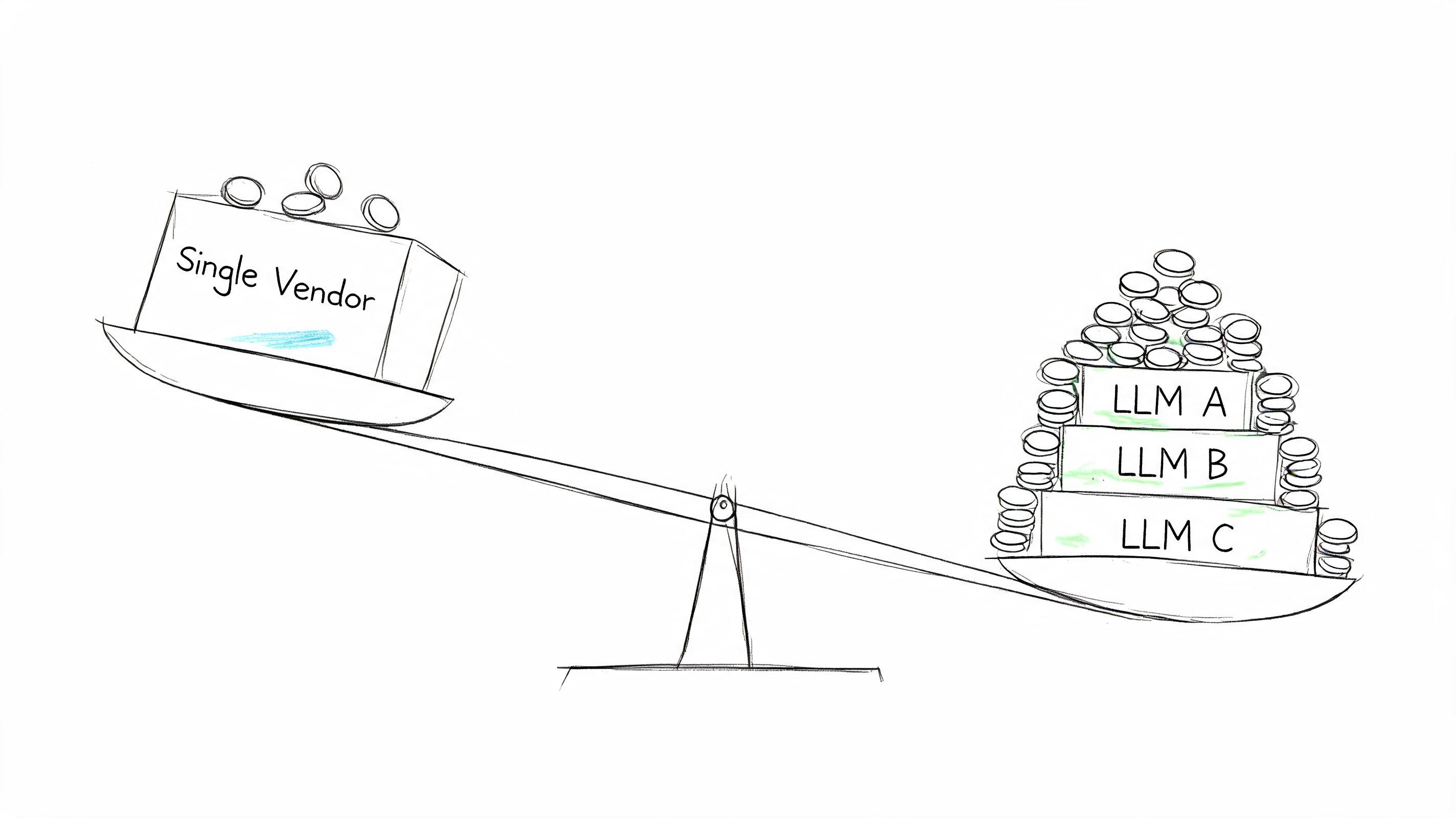
2. Cost-Effectiveness of Multi-LLM Platforms vs. Single Vendor Lock-In
Many users treat AI as if they must choose one model and stay loyal to it. That assumption is worth challenging. A sharp speech can argue that access to multiple large language models in one place gives students, freelancers, and small teams more flexibility than depending on a single vendor.
A sample thesis: People and small organizations should prefer multi-LLM platforms over single-vendor tools because comparison reduces dependence and improves fit across different tasks.
The strongest arguments on both sides
Supporters of the multi-model approach usually make a practical point. One model may write clearly, another may summarize documents better, and another may be stronger at coding or brainstorming. A startup team, marketing agency, or college student working across assignments might benefit from being able to switch tools instead of forcing every task through one system.
The opposing side can still make a strong case. A single-vendor setup may be simpler to train, easier to budget, and less confusing for less technical users. Some organizations value consistency more than optionality.
Use examples people can picture:
- Freelancer scenario: A solo consultant drafts proposals in one model, checks tone in another, and uses a third for research summaries.
- Agency scenario: A small content team compares outputs before sending client copy.
- Student scenario: A college user tests two explanations of the same concept to find the clearest one.
Research angle
This topic improves when you compare business logic, not just AI enthusiasm. Look at subscription design, export options, workspace features, and whether the platform makes switching easy or annoying by design.
You can also connect the topic to digital autonomy. A tool that makes leaving difficult may be convenient at first and costly later.
For outside context, review how product reviewers compare options for eLearning automation tools. Even if your speech isn't about education specifically, that comparison mindset helps you ask better questions about lock-in, features, and use-case fit.
3. Team Collaboration and Productivity Through Accessible AI Tools
What happens to a team when only one person has the key to the fastest tool in the room? That question gives this topic real argumentative force, especially for students, managers, and professionals speaking to modern audiences that already work with digital tools every day.
A debate-ready thesis could be: Organizations should give broad, guided access to AI tools because shared access improves collaboration, reduces bottlenecks, and helps teams build repeatable workflows instead of depending on one gatekeeper.
This topic stands out because it is not just about whether AI saves time. It asks a sharper question. Does accessible AI help groups think and work together better, or does it spread low-quality output faster?
A concrete case makes the argument easier to see. In a small marketing team, one person drafts campaign ideas, another summarizes client calls, and a third turns notes into a content calendar. If only one employee can use AI, that person becomes the filter for everyone else's work. The process starts to work like a single printer in a crowded library. People wait, priorities pile up, and small tasks stall the whole group.
Broad access changes the structure of the work:
- Shared prompt libraries: Teams keep useful prompts for meeting summaries, client emails, or first-draft outlines.
- Role-specific workflows: Sales staff, project managers, and writers use AI for different tasks instead of forcing one generic process on everyone.
- Review standards: Teams set rules for tone, fact-checking, citation, and approval so speed does not replace judgment.
That gives you a stronger speech because you can argue from systems, not gadget excitement. A team usually becomes more productive when good methods are distributed across the group, documented, and improved over time.
The opposing side has a serious point. Wider access can lead to uneven quality, confidential data mistakes, or overreliance on generated text. That is not a weak objection. It is the part your speech should address directly. The best rebuttal is that access alone is not the policy. Access plus training, clear limits, and human review is the policy.
You can also make this topic more current by tying collaboration to authorship and accountability. If several people use AI in shared projects, audiences may ask who produced the work and where assistance crosses a line. That question connects naturally to broader concerns about originality and attribution, including debates over whether using ChatGPT counts as plagiarism.
For research, gather examples from real group settings instead of relying on abstract claims. Interview a student project team, office administrator, nonprofit coordinator, or small business manager. Ask where work slows down now, which tasks are repetitive, and whether shared AI access would reduce delays or create more confusion. Those answers will help you build both the pro case and the counterargument with evidence that feels current and specific.
4. Academic Integrity and Responsible AI Use in Student Learning
Banning AI entirely is easy to say and hard to enforce. Encouraging responsible use is harder, but it's more realistic. That tension makes this one of the most useful argumentative speech topics for classrooms right now.
A sample thesis: Schools should teach responsible AI use instead of treating all AI assistance as cheating, because students need ethical habits for the tools they'll keep encountering.
A better debate than “AI is good” or “AI is bad”
The strongest version of this speech doesn't defend lazy shortcuts. It distinguishes between support and substitution. Using AI to brainstorm questions, clarify a reading, or propose an outline is different from copying a generated paper and submitting it as original work.
That gives you a balanced speech structure:
- Pro position: AI literacy helps students learn how to question, edit, verify, and disclose assistance.
- Con position: Easy access can blur authorship and tempt students to submit work they didn't meaningfully create.
- Middle ground: Schools should define acceptable use clearly instead of leaving students to guess.
A realistic example is a teacher allowing AI for idea generation but requiring students to submit handwritten planning notes, source annotations, or a reflection on how they revised the output. That creates accountability without pretending AI doesn't exist.
If your audience keeps asking where the plagiarism line is, this guide on whether using ChatGPT is plagiarism gives you a useful framework for distinguishing tool use from academic dishonesty.
Research angle
Research school honor codes, department policies, and assignment design. Look for language about attribution, drafting, feedback, and originality. You can also compare classes that ask students to show process versus classes that grade only the final product.
Coherent Market Insights reports that users on debate and essay platforms reported stronger outcomes when they embedded statistics from large-sample sources, and that visual graph explanations produced higher satisfaction than raw numbers alone (Coherent Market Insights on using data in persuasive writing). In a speech on academic integrity, that supports a useful principle: evidence works better when students explain it, not just paste it.
5. Environmental and Computational Efficiency of Optimized AI Platforms
AI conversations often focus on power, speed, and features. Fewer students ask whether all that computation is necessary for the task at hand. That blind spot makes this topic especially fresh.
A sample thesis: People and institutions should favor optimized AI use because matching the tool to the task reduces waste without sacrificing thoughtful work.
What makes this argument persuasive
You don't need to claim exact energy savings if you can't verify them. You can make the argument qualitatively and still sound rigorous. For example, generating ten versions of a simple email with a heavyweight model may be less responsible than using a smaller or more targeted tool for the same task.
That turns environmental concern into a decision-making habit. Students and teams can ask: does this job require the most advanced model available, or just a reliable one?
Consider these examples:
- Campus use: A university writing center adopts rules for when students should use AI image generation, PDF analysis, or simple text assistance.
- Office use: A small business chooses shorter prompts and fewer repeated generations during routine tasks.
- Developer use: A product team tests lightweight tools for classification or summarization instead of defaulting to the biggest model.
Use the most appropriate tool, not the most impressive one.
Research angle
This speech gets stronger when you define “efficiency” in ordinary language. Time, server demand, repeated queries, and unnecessary generation all count. You can also examine whether a platform encourages careful use or unlimited, thoughtless prompting.
The counterargument is that users shouldn't have to think about infrastructure at all. A fair response is that responsible technology use has always involved tradeoffs. People already think about battery life, cloud storage, printing waste, and device upgrades. AI belongs in that same conversation.
6. Accessibility and Democratization of AI Technology Across Socioeconomic Barriers
Technology often promises equal opportunity while rewarding people who can afford better tools. That tension gives you a strong argumentative speech topic with both ethical and economic force.
A sample thesis: Affordable AI access should be treated as an educational and economic opportunity issue, because high-cost tools can widen existing gaps between users who can pay and users who can't.
Why this topic matters to real audiences
A low-income student using a free or low-cost AI assistant for brainstorming may be competing against a peer with access to premium research, editing, and document tools. A rural entrepreneur may need help writing grant proposals, customer emails, or product descriptions but can't justify multiple subscriptions. A nonprofit may need AI support without enterprise pricing or technical overhead.
Those are concrete situations, not abstract fairness claims.
Shemmassian's analysis of topic selection points to a gap in how guides address neurodivergent learners and estimates that neurodivergent students make up roughly 15-20% of the student population (Shemmassian on persuasive speech topic selection). That idea can sharpen your speech. Accessibility isn't only about price. It's also about whether tools support different learners, processing styles, and communication needs.
How to build both sides fairly
Supporters argue that cheaper access lets more people practice AI literacy before it becomes a workplace expectation. Critics may respond that access without training can create dependence, low-quality work, or misinformation.
That's why the best version of this speech argues for access plus instruction.
- For schools: Offer guided use, not just open permission.
- For communities: Pair affordable tools with digital literacy workshops.
- For families: Choose platforms with moderation and age-appropriate design.
A good closing line for this speech is simple: if AI becomes normal in school and work, then unequal access becomes unequal preparation.
7. Content Moderation and Family Safety in AI Platforms
Some AI tools are built for open-ended experimentation. Others are designed for safer, more controlled use. That difference matters when children, teens, and family settings are involved.
A sharp thesis would be: AI platforms should include strong moderation and family safety features because minors need guardrails, not just access.
Why this topic lands well with audiences
The stakes are immediately clear. A child using an AI tool for homework can easily move from harmless questions to unsafe or age-inappropriate material if the platform has weak safeguards. Families and schools don't just need smart outputs. They need predictable boundaries.
A strong speech can compare two situations. In one, a student uses an unrestricted chatbot alone late at night. In the other, a parent or teacher selects a moderated platform with clearer controls and supervised accounts. The issue isn't whether AI exists. It's whether adults create a safer environment around it.
Counterarguments worth addressing
The other side will often say moderation can become censorship. That's a serious argument, especially in education. Your response should distinguish between suppressing disagreement and filtering harmful or inappropriate outputs for minors.
CollegeVine's discussion of persuasive speech topics highlights another useful gap: students are often told to avoid tired controversial subjects because audiences may already be desensitized, yet there's little real-time data on which topics now feel overworked (CollegeVine on good persuasive speech topics). Family AI safety avoids that problem. It's current, specific, and directly connected to daily use.
A family-safe platform doesn't eliminate hard questions. It decides that minors shouldn't have to navigate those questions without guardrails.
Research angle
Look at platform terms, age policies, reporting systems, and whether the company offers education-focused controls. You can also compare how a school would evaluate a search engine, social app, and AI chatbot. The same child-safety logic often applies across all three.
8. Transparency and Explainability of AI Decision-Making Processes
How much should you trust an answer if you cannot tell where it came from or why it sounds so certain? That question sits at the center of AI explainability, and it gives students a strong, current topic for an argumentative speech.
A sample thesis: AI systems should be more transparent about how they produce answers and where their limits are, because people make better decisions when they can see uncertainty, evidence, and risk.
Explainability can be discussed in simple terms. A useful comparison is a math teacher who shows the steps instead of writing only the final answer on the board. In AI, those "steps" might include cited sources, confidence language, stated limitations, or a brief explanation of why one response was generated instead of another.
This topic works especially well for a technology-focused speech because it connects abstract computer science ideas to real choices people make every day. A student using AI for research needs more than polished wording. A patient reading health guidance needs clear limits. A business team drafting policy needs to know whether the output reflects current information, a probable guess, or a missing piece of context.
You can build the speech around a clear pro and con structure:
- Pro transparency: Users can judge credibility, verify claims, and catch errors before acting on them.
- Con transparency: Companies may argue that full disclosure is difficult because models are complex and proprietary.
- Balanced position: Users do not need every technical detail. They do need meaningful explanations about sources, confidence, limits, and intended use.
That middle position is often the strongest. It sounds reasonable, and it gives you room to answer objections without overstating your case.
If you want to compare this speech topic with other focused, debate-ready ideas, this list of good argumentative essay topics for students can help you test whether your angle is specific enough.
Research tips
Look for product documentation, model cards, usage policies, and interface examples that show whether a tool cites sources, signals uncertainty, or warns users about sensitive subjects. You can also compare two AI systems side by side. If one gives a confident paragraph with no explanation and the other shows limits and supporting evidence, you have a concrete contrast for your speech.
A strong closing point is simple: accurate answers matter, but understandable reasoning matters too. In a modern AI debate, transparency is not just a technical feature. It is a trust issue.
9. Reducing Vendor Lock-In and Maintaining Competitive Alternatives in AI Markets
When one platform becomes the default, users often stop noticing the costs of dependence until they try to leave. That makes vendor lock-in a rich speech topic for business, technology, and policy classes.
A sample thesis: Users and institutions should avoid AI vendor lock-in because competition protects choice, portability, and long-term innovation.
Start with an everyday scenario
A school stores prompts, class materials, and shared workflows inside one proprietary system. A year later, prices change, features disappear, or policy terms tighten. Suddenly, switching becomes painful. That's not just a software inconvenience. It's a control issue.
The same logic applies to small businesses. A team that can't export history, move files, or test alternatives becomes dependent on one provider's roadmap.
How to argue both sides
There is a real case for standardization. One platform can simplify training, billing, and security review. But dependence has tradeoffs.
Build your speech around contrasts:
- Convenience now: One log-in, one system, one workflow.
- Risk later: Hard migration, weak bargaining power, fewer alternatives.
- Balanced solution: Choose tools with export options, interoperability, and room to adapt.
You can also connect this to debate strategy. A good argumentative speech doesn't claim every organization needs constant switching. It claims they should preserve the ability to switch.
The freedom to leave is often what keeps a vendor responsive.
Research angle
Review whether a platform supports open APIs, export features, workspace migration, or integrations with multiple models. You can also compare how schools and businesses evaluate lock-in differently. Schools may focus on student records and policy continuity. Businesses may care more about workflow disruption and data portability.
10. Quality, Accuracy, and Reliability Improvements Through Multi-Model Comparison
What should you do when two polished AI answers sound confident, but only one can be right?
That question makes this one of the strongest technology-focused argumentative speech topics in the list. It asks students to judge AI outputs the way a good editor, researcher, or debate coach would judge evidence. A smooth answer is not the same as a dependable one. Comparing multiple models helps speakers test quality instead of accepting the first response that sounds smart.
A debate-ready thesis could be: For high-stakes academic, professional, and public communication tasks, users should compare answers from multiple AI models because cross-checking improves accuracy, reveals weak reasoning, and produces more reliable final decisions.
This topic has clear relevance for modern audiences. A student can compare two model explanations of a chemistry process. A business team can test how different systems summarize meeting notes. A journalist or content creator can check whether key facts, tone, and missing context change from one model to another. The speech becomes stronger because the issue is easy to picture and easy to research.
How to argue both sides
The pro side is straightforward. Multi-model comparison works like asking several witnesses to describe the same event. If their accounts line up, confidence rises. If one answer leaves out a key fact, uses shaky logic, or states uncertain claims too boldly, the comparison exposes that weakness. In speech terms, this gives you a modern argument about verification, not just convenience.
The opposing side also deserves a fair hearing. Comparing several models can take more time, cost more money, and create a false sense of security. Three systems can repeat the same mistake if they were trained on similar patterns or weak source material. Agreement is helpful, but it is not proof.
You can organize the debate around three standards:
- Accuracy: Do the models give the same facts, or do they conflict on important points?
- Quality: Which answer is clearer, better structured, and more useful for the audience?
- Reliability: Does the model show caution, acknowledge uncertainty, and avoid overconfident claims?
That last point often confuses students, so it helps to state it plainly. Reliability does not mean an answer is always correct. It means the system behaves in a more dependable way across repeated tasks. In a speech, that distinction shows maturity.
Sample claim paths for your speech
If you want to argue in favor of comparison, say that using more than one model reduces single-source dependence and improves decision-making on important tasks.
If you want to argue against it, say that comparison can become performative. Users may collect several answers without checking any original sources, which only multiplies polished wording, not truth.
A balanced version is often strongest. Compare models first, then verify against human-reviewed sources when accuracy is paramount. That mirrors how strong debaters work. They do not stop at one piece of evidence, and they do not stop at surface agreement either.
Research tips
Run the same prompt through two or three AI models and score the responses with a simple rubric. Useful categories include clarity, completeness, factual caution, bias, organization, and source use if citations are provided.
Then choose one prompt type that fits your audience. For example, test a scientific explanation, a policy summary, or a speech outline. Show one focused comparison instead of dumping a wall of screenshots on the audience. A clean side-by-side example is easier to follow and makes your argument more persuasive.
This topic stands out because it is not just about AI tools. It is about judgment. That makes it a strong closing entry in a list of cutting-edge argumentative speech topics, especially for students who want a modern subject with a clear thesis, visible pro and con positions, and research they can perform themselves.
10-Topic Argumentative Speech Comparison
| Item | 🔄 Implementation Complexity | ⚡ Resource Requirements | 📊 Expected Outcomes | Ideal Use Cases | ⭐ Key Advantages & Tip |
| AI Privacy and Data Protection in Educational Settings | Moderate–High: policy, compliance and vendor evaluation | Moderate: IT, legal review, staff training | High student-data protection, increased trust, reduced liability | K‑12 districts, schools, family-focused deployments | ⭐ Strong privacy & compliance. 💡 Verify certifications and data retention policies. |
| Cost-Effectiveness of Multi-LLM Platforms vs. Single Vendor Lock-In | Low–Moderate: platform integration and testing | Low: consolidated billing; moderate testing effort | Significant cost savings and greater model flexibility | SMBs, startups, freelancers, teams on budgets | ⭐ Lower TCO and flexibility. 💡 Compare pricing models and test models for tasks. |
| Team Collaboration and Productivity Through Accessible AI Tools | Moderate: onboarding, permissions, change management | Moderate: shared workspace setup and training | Improved workflow speed, knowledge sharing, consistency | Content teams, customer service, cross‑functional teams | ⭐ Democratizes AI access across teams. 💡 Establish guidelines and templates. |
| Academic Integrity and Responsible AI Use in Student Learning | Moderate: policy creation and monitoring systems | Moderate: monitoring tools and educator training | Better academic honesty, AI literacy, institutional accountability | Schools, universities, educational programs | ⭐ Supports ethical student use. 💡 Develop clear AI use policies and attribution rules. |
| Environmental and Computational Efficiency of Optimized AI Platforms | Moderate: model selection and efficiency engineering | Low–Moderate: optimization tooling and monitoring | Reduced energy use and operational cost; sustainability gains | Sustainability-focused orgs, corporate CSR programs | ⭐ Lower carbon & cost footprint. 💡 Track energy metrics and match model complexity to tasks. |
| Accessibility and Democratization of AI Technology Across Socioeconomic Barriers | Low–Moderate: pricing strategy and subsidy programs | Low: freemium tiers; requires funding for subsidies | Broader access, reduced digital divide, workforce development | Non‑profits, low‑income students, small businesses | ⭐ Expands access and inclusion. 💡 Use educational discounts and freemium trials to pilot use. |
| Content Moderation and Family Safety in AI Platforms | High: moderation systems, policies and audits | High: moderation teams, safety tooling, audits | Safer environments for minors, regulatory compliance | Families, schools, child‑focused platforms | ⭐ Strong child protection and trust. 💡 Check independent safety audits and test family modes. |
| Transparency and Explainability of AI Decision‑Making Processes | High: documentation, explainability tooling and audit trails | Moderate–High: tooling and documentation effort | Increased trust, better decisions, regulatory alignment | Finance, healthcare, regulated industries, researchers | ⭐ Builds user trust and compliance. 💡 Request model docs, confidence scores and audit trails. |
| Reducing Vendor Lock‑In and Maintaining Competitive Alternatives in AI Markets | Moderate–High: interoperability, APIs and portability work | Moderate: integration and export/import tooling | Greater choice, market resilience, lower price risk | Enterprises, tech‑savvy orgs, open‑source advocates | ⭐ Protects choice and competition. 💡 Favor open APIs and test data portability. |
| Quality, Accuracy, and Reliability Improvements Through Multi‑Model Comparison | Moderate: comparison workflows and validation processes | High: extra compute, time and evaluation resources | Higher accuracy, fewer hallucinations, validated outputs | Legal, research, fact‑checking, high‑stakes decisions | ⭐ Improves accuracy via consensus. 💡 Define evaluation criteria and use consensus checks. |
Craft Your Argument and Deliver with Confidence
What turns a promising topic into a speech that persuades people?
The answer is usually not more passion or bigger claims. It is sharper framing. These 10 technology-focused argumentative speech topics give you a strong starting point because each one points to a live debate people already care about: student privacy, AI access, model reliability, family safety, market competition, and academic integrity. But a topic is only raw material. Your job is to shape it into an argument your audience can follow, test, and remember.
Start by narrowing the issue until it can fit into one clear sentence. Broad subjects sound impressive, but they are hard to defend. “AI in schools” is a field. “Schools should require privacy-first AI tools that limit student data collection” is an arguable thesis. “AI changes work” is a trend. “Organizations should avoid dependence on a single AI vendor because it raises costs and reduces flexibility” is a position.
That shift matters. A topic names the room. A thesis tells the audience where you stand in it.
Once you have a thesis, build it the way a debate coach would. Define the terms, show the stakes, present the best objection, and answer it with evidence. Many student speeches weaken because they skip one of those steps. If you use words like “accessible,” “transparent,” or “responsible,” explain what those standards look like in practice. If you claim multi-model comparison improves accuracy, spell out how. Does it reduce error by cross-checking answers, exposing contradictions, or helping users verify uncertain claims? Your audience should not have to guess.
A strong speech also treats disagreement with respect. That is especially important with modern AI topics because the tradeoffs are real. A speech on academic integrity should admit that AI can support learning and can also encourage shortcut behavior. A speech on content moderation should recognize safety concerns and free-expression concerns. A speech on accessibility should ask who benefits, who is excluded, and who pays. When you present the opposing view fairly, your rebuttal carries more weight.
Evidence needs interpretation, not decoration.
Students often collect quotes, studies, and examples the way someone piles groceries onto a counter without putting them into meals. Your audience does not need a heap of facts. They need help seeing what the evidence means. Instead of dropping in a statistic and moving on, explain the consequence. If a school platform stores student prompts, what risk follows from that policy? If a multi-LLM system lowers switching costs, how might that change budgeting, procurement, or innovation? The best research acts like a flashlight. It helps the listener see the argument more clearly.
A practical outline usually works better than a flashy one:
- Thesis: State your claim in one sentence.
- Context: Briefly explain why the issue matters now.
- Reason one: Give your strongest practical point.
- Reason two: Add an ethical, educational, technical, or economic point.
- Counterargument: Present the strongest objection fairly.
- Rebuttal: Answer that objection with evidence and reasoning.
- Conclusion: End with a specific judgment, recommendation, or call to action.
That structure fits almost every topic in this list. It works for AI privacy in classrooms, multi-LLM cost comparisons, explainability in decision systems, and reliability through model comparison. It also keeps your speech from drifting into summary when it should be making a case.
Modern tools like 1chat can help you compare responses from multiple models, review PDFs, test thesis wording, and refine a draft before you practice it aloud. Used well, that support is like having several practice partners in the room. You still have to make the argument. The tool helps you pressure-test it. If you want more help with delivery and organization, this guide to writing persuasive speeches is a useful next step.
Choose a topic with real tension. Write a thesis that makes a clear claim. Research both sides. Then practice until your evidence sounds connected to your own reasoning, not borrowed from a search result. That is how a debate-ready topic becomes a speech with force.