When it's time to write a termination letter, your goals are clarity, professionalism, and legal defensibility. This isn't just about formality; it's about creating a clear record. The letter needs to plainly state the effective date of termination, give a specific and objective reason for the separation, and outline all the details on final pay and benefits. All of this has to be done while maintaining a respectful, neutral tone.
The Anatomy of an Effective Termination Letter
It’s easy to think of a termination letter as just a final piece of paperwork, but that's a dangerous mindset. This document is the official, final record of the employment separation. If a legal challenge arises, this letter is your first line of defense. A letter that’s vague, emotionally charged, or contains subjective statements can be picked apart, opening the door to wrongful termination claims.
The financial risk is real and significant. In 2023 alone, U.S. employers paid out over $400 million in penalties and settlements for employment disputes, with many of those cases originating from poorly documented terminations. In fact, an estimated 58% of all termination-related lawsuits involve disputes over missing or unclear clauses in the letter. That number is a powerful reminder that every single word counts. You can find more insights about employment termination letters from AI Lawyer Pro.
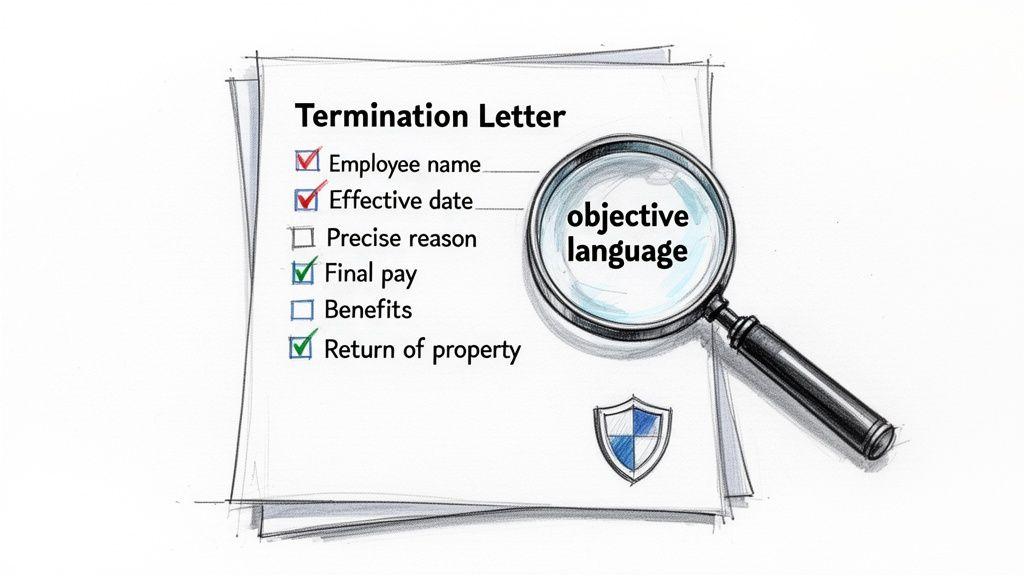
To ensure your letter is clear and legally sound, every component must be included. Think of it as a checklist of non-negotiable items.
Here’s a quick-reference table outlining the essentials:
Essential Components of a Termination Letter
| Component | Purpose | Example Snippet |
| Employee & Company Details | Officially identifies the parties involved in the separation. | "This letter confirms the termination of employment for John Doe, Senior Analyst, from [Company Name]." |
| Effective Termination Date | Sets a clear end date for employment, which impacts pay and benefits calculations. | "Your final day of employment will be Friday, October 27, 2023." |
| Reason for Termination | Provides a factual, objective basis for the decision, avoiding subjective language. | "This decision is based on your failure to meet the performance metrics outlined in the written warning issued on September 15, 2023." |
| Final Pay & Compensation | Explains when and how the final paycheck and any accrued paid time off will be disbursed. | "You will receive your final paycheck, including payment for 32 hours of accrued vacation time, on the next regular payday, November 3, 2023." |
| Benefits Information | Outlines the status of health insurance, COBRA eligibility, and retirement plans to guide the employee's transition. | "Information regarding your eligibility for COBRA continuation coverage will be mailed to your home address within 14 days." |
| Return of Company Property | Lists all company assets that must be returned and provides a clear deadline and process. | "Please return your company-issued laptop, security badge, and mobile phone to the HR department by 5:00 PM on your final day of employment." |
Including these elements consistently will make your termination process smoother and more defensible.
A great termination letter is objective and factual, not emotional or accusatory. It should read like a straightforward business record, clearly stating the decision and the logistical details that follow.
By building your letter around these core components, you create a document that meets legal standards and treats the departing employee with professionalism. This direct approach minimizes confusion, reduces your company's risk, and helps ensure the termination process is handled as cleanly as possible.
Tailoring Your Termination Letter to the Situation
Let's be clear: a termination letter is never a one-size-fits-all document. The "why" behind the separation completely changes what you say, how you say it, and the legal ground you're standing on. Getting this right is about more than just paperwork—it’s about protecting your business and treating someone with dignity, even in a difficult moment.
And the stakes are high. Wrongful termination lawsuits have been on a steady climb for the past 15 years in the U.S., especially as people become more savvy about their employment rights. We see this most often in high-turnover industries like retail, healthcare, and hospitality. Customizing each letter is one of your best defenses. If you want to dig deeper into the numbers, Leaders in Law offers some eye-opening wrongful termination statistics.
When You're Terminating for Cause
If you're letting someone go because of poor performance or misconduct, your letter needs to be direct, factual, and completely objective. Think of it as creating an undeniable paper trail that clearly shows the path to this decision. This isn't the time for vague language; you need to connect the dots to previous, documented warnings.
For instance, don't just say, "due to ongoing performance issues." That's an invitation for a dispute. Instead, get specific:
"This termination is a direct result of your failure to meet the performance standards outlined in the Performance Improvement Plan issued on October 5, 2023, and the subsequent written warning you received on November 10, 2023."
See the difference? This approach ties the termination to a clear history, showing you gave the employee a chance to course-correct. It strips out the emotion and subjectivity, grounding the decision in facts and previously communicated expectations. Keep the tone professional and neutral, avoiding any personal commentary.
Handling Layoffs and Restructuring
Layoffs are a different beast entirely. The tone here needs to shift from factual to empathetic. While it’s a business decision, you’re delivering news that will have a massive personal impact. The letter should reflect that understanding.
Be sure to cover these key points:
- State the Business Reason Clearly: Don't beat around the bush. Use phrases like "organizational restructuring," "a reduction in force," or "the elimination of your position."
- Show Genuine Respect: Acknowledge their work. A simple, heartfelt sentence like, "We want to thank you for your dedicated service and contributions to the company," can make a real difference.
- Shift to Practicalities: Focus on what's next for them. Clearly lay out the details of their severance package, any outplacement services you're offering, and how they can continue their benefits. The goal is to soften the landing.
Unlike a for-cause firing, a layoff letter is about communicating a tough business reality while preserving the person’s dignity.
Wrapping Up at the End of a Contract
When a contract or a temporary project comes to its natural end, the termination letter is more of a formal confirmation. It’s a clean, professional closing of the books. The tone should be appreciative and straightforward, confirming that both sides have fulfilled their obligations.
Your letter should simply state:
- The contract's official end date.
- How to handle final invoices or timesheets.
- The procedure for returning company property, like a laptop or ID badge.
This isn't about performance or problems; it's just good business hygiene. Keeping it positive and clear helps maintain a good relationship. You never know—you might want to bring that contractor back for another project down the road.
Drafting Compliant Letters for Remote and Global Teams
Terminating an employee is already a complex process. When your team is scattered across different states—or even different countries—that complexity multiplies. A standard termination letter that works perfectly in your home state could easily land you in legal hot water overseas.
Think about it this way: what’s standard practice in California might be a major compliance violation in Canada or Germany. This isn't a place for a one-size-fits-all approach.
The U.S. largely operates on the principle of at-will employment, which gives employers broad latitude to terminate an employee for almost any non-illegal reason. But here’s the crucial part: this concept is almost uniquely American. Most other countries have far stricter labor laws, with mandatory procedures and notice periods that you have to follow to the letter.
Navigating International Labor Laws
Ignoring local regulations is one of the fastest ways to find yourself facing a lawsuit. The differences can be staggering. For example, in China, you're generally looking at a 30-day written notice requirement.
Cross the globe to Europe, and the rules often get even more specific, frequently tying notice periods to an employee's tenure. In Sweden, an employee with four years of service gets two months' notice, and that scales all the way up to six months for someone with over ten years on the job. You can get a sense of just how varied these rules are by exploring the World Bank's data on global labor regulations.
These local requirements must be reflected directly in your termination letter. You have to clearly state the legally required notice period and the official termination date to prevent any ambiguity or potential disputes down the line.
Sample Notice Period Requirements By Country
To give you a clearer picture of how much these requirements can vary, here’s a quick comparison of statutory minimums in a few major markets.
| Country | Tenure (Example) | Required Notice Period |
| United Kingdom | 5 Years | 5 Weeks |
| Germany | 5 Years | 2 Months |
| Australia | 5 Years | 4 Weeks |
| Canada (Ontario) | 5 Years | 5 Weeks |
| France | 2+ Years | 2 Months |
As you can see, even for the same length of service, the legal minimums are all over the map. This table is just a starting point—always verify the specific rules for your employee's exact location and circumstances.
A Framework for Global Compliance
When you're preparing to terminate a remote or international team member, your process has to start with research. Before you even think about drafting the letter, you need solid answers to these questions:
- What are the statutory notice period requirements based on the employee's location and tenure?
- Are there specific, legally accepted reasons for termination that must be documented?
- Does local law mandate a severance payment? If so, how is it calculated?
- Are there any procedural hoops to jump through, like consulting with a works council or getting government approval?
This bar chart gives you an idea of which U.S. industries face the most termination-related lawsuits.
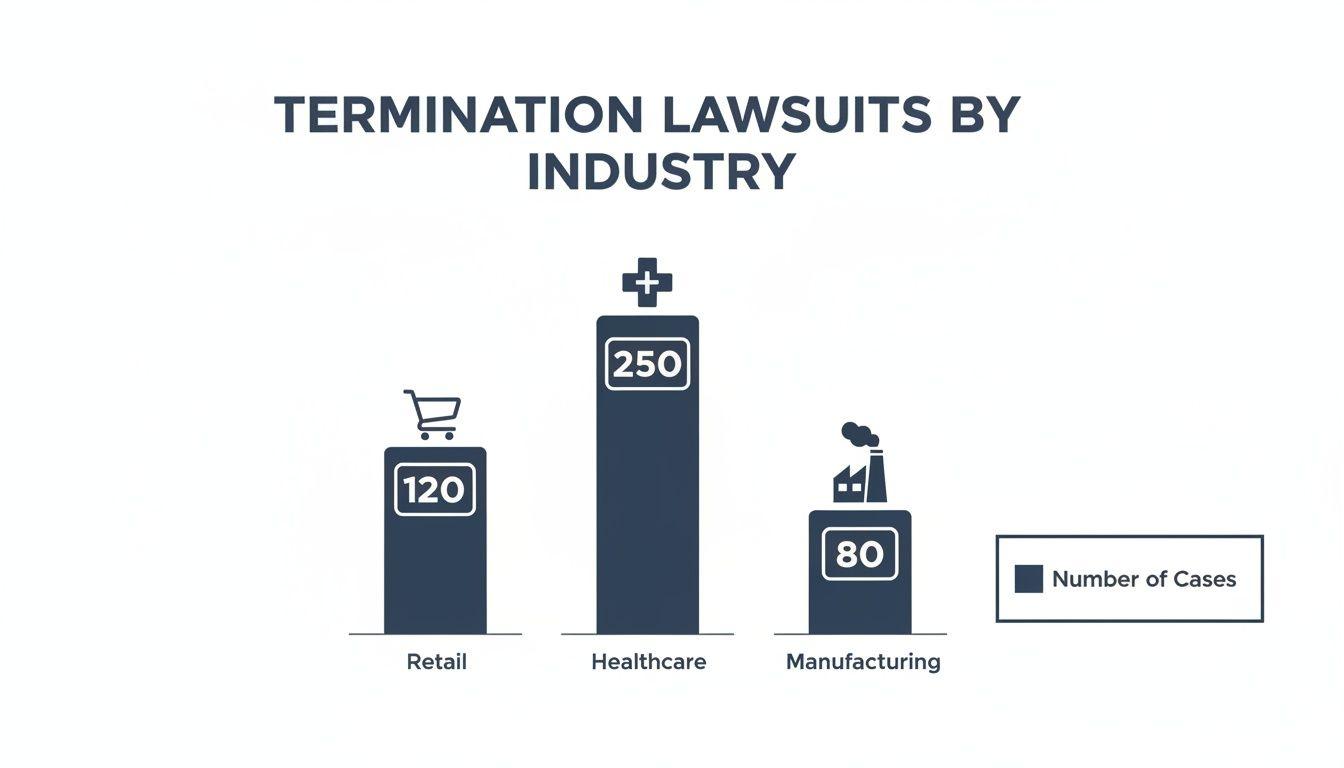
It’s no surprise that industries like healthcare and retail, with large and often distributed workforces, see a higher volume of legal challenges. This just reinforces how critical careful, compliant documentation is.
Key Takeaway: Never assume your domestic HR policies apply abroad. Always verify local labor laws before taking any action. For high-risk terminations, consulting with legal counsel specializing in international employment law isn't just a good idea—it's essential.
The sensitivity of cross-border terminations also means you have to be incredibly careful with how you handle documents. When sending official letters and legal paperwork, secure methods are non-negotiable. You can get up to speed by reading our guide on encrypted document sharing for business communications.
By taking a location-specific and legally-informed approach, you can draft letters that protect your organization, no matter where your employees call home.
Termination Letter Templates You Can Actually Use
Knowing what to write is one thing; actually putting the words on the page is another challenge entirely. To bridge that gap, I’ve put together three battle-tested templates for the most common termination scenarios you'll face.
These aren't just generic fill-in-the-blanks. They’re structured with realistic language and helpful annotations to guide you. Think of them as a solid starting point that saves you time and helps you sidestep those critical, easy-to-make mistakes. You'll still need to plug in the specifics, but the framework is professional, clear, and legally sound. For more advanced customization, you might consider using an app for letter writing to help you fine-tune the details.
Termination for Poor Performance Template
When you’re terminating for cause, your letter needs to be a fortress. It has to be factual, unemotional, and directly tied to the documented actions you’ve already taken. This template is designed to create a clear, undeniable record of that process.
[Your Company Letterhead]
Date: [Date] To: [Employee Name] From: [Your Name/Manager's Name] Subject: Termination of Employment
Dear [Employee Name],
This letter is to inform you that your employment with [Company Name] is terminated, effective immediately.
This decision is based on your failure to meet the performance standards required for your position as [Job Title]. Specifically, this action follows the formal warnings and Performance Improvement Plan (PIP) we have already discussed.
- Written Warning Issued: [Date of First Warning]
- Performance Improvement Plan Initiated: [Date of PIP]
- Final Written Warning Issued: [Date of Final Warning]
Despite these interventions, the required improvements in [mention a specific area, e.g., 'meeting sales quotas' or 'project completion deadlines'] have not been achieved.
Your final paycheck, which includes payment for all hours worked through today and [Number] hours of accrued but unused vacation time, will be issued on [Date of Final Paycheck].
Information regarding your eligibility for COBRA continuation health coverage and the status of your other benefits will be mailed to you separately within the next 14 business days.
Please return all company property, including your laptop, security badge, and mobile phone, to the HR department by the end of today.
We wish you the best in your future endeavors.
Sincerely, [Your Name] [Your Title]
Termination Due to Layoff Template
A layoff letter walks a fine line. It has to be direct and clear about the business reasons while also being empathetic to the person receiving the news. The key here is respect.
[Your Company Letterhead]
Date: [Date] To: [Employee Name] From: [Your Name/Manager's Name] Subject: Notification of Position Elimination
Dear [Employee Name],
I’m writing to inform you that your position as [Job Title] with [Company Name] is being eliminated as part of an organizational restructuring. Your final day of employment will be [Last Day of Employment].
Please know this decision is not a reflection of your performance. It is a necessary business step, and we are sincerely grateful for your contributions during your time with us.
You will receive a severance package, which is detailed in the attached Separation Agreement. Your final paycheck will be issued on [Date of Final Paycheck]. You will also receive information about COBRA and other benefits in a separate mailing.
To assist you in your transition, we are providing outplacement services. Our HR department will contact you shortly to schedule an appointment.
Thank you again for your hard work and dedication.
Sincerely, [Your Name] [Your Title]
End of Contract Notification Template
When a contract is ending as planned, the notification should be a simple, professional confirmation. There’s no need for drama or ambiguity—just a clear and courteous notice.
[Your Company Letterhead]
Date: [Date] To: [Contractor Name] From: [Your Name/Manager's Name] Subject: Conclusion of Your Contract
Dear [Contractor Name],
This letter serves as a formal confirmation that your contract with [Company Name] will conclude as scheduled on [Contract End Date]. We will not be renewing the contract at this time.
We appreciate the work you’ve done on the [Project Name]. Please be sure to submit your final invoice by [Date] so we can process it promptly. Also, please return any company property you may have by your final day.
Thank you for your contributions to the project.
Sincerely, [Your Name] [Your Title]
Best Practices for Delivering the Letter
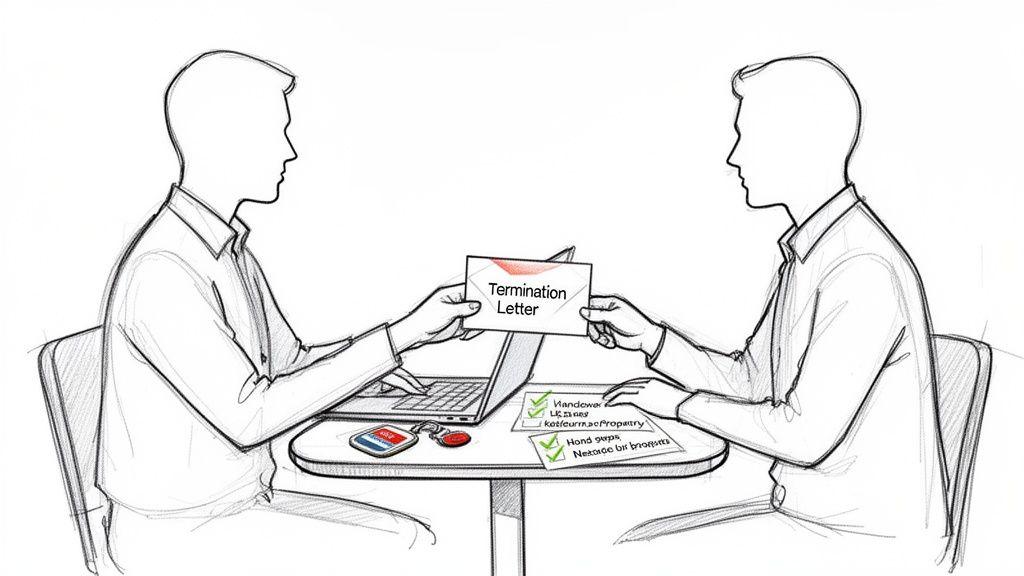
You can draft the most legally sound, carefully worded termination letter in the world, but if the delivery is clumsy, it can all fall apart. How you handle the final meeting—the setting, your tone, the logistics—is just as critical as the document itself. A poorly managed conversation can quickly turn a difficult situation into a legal or morale nightmare, undoing all your careful preparation.
The termination meeting itself needs to happen in a private, neutral location. This isn't a coffee shop conversation. Think conference room, not your office. The goal is to be brief and direct, aiming for a meeting that lasts no more than 10-15 minutes. Any longer, and you risk the conversation veering into arguments or confusion.
Conducting the Termination Meeting
The sole purpose of this meeting is to inform the employee of the decision, give them their official letter, and explain what happens next. It's not a negotiation. It's not a performance review. The decision is final.
I can't stress this enough: always have a witness present. The best combination is the employee's direct manager alongside someone from HR. This provides a layer of support for the manager and ensures there's an objective third party in the room.
Here's how to structure that brief conversation:
- Get straight to the point. Don't start with small talk. Open the meeting by clearly stating its purpose. Something like, "We've made the difficult decision to terminate your employment, effective immediately." It's tough to say, but ambiguity is your enemy here.
- Hand them the letter. After you’ve delivered the news verbally, present the physical copy of the termination letter. Explain that it contains all the important information they'll need regarding final pay, benefits, and returning company property.
- Stick to the facts. Don't get pulled into a debate about the why. If the employee asks for more details, gently guide them back to the reason stated in the letter. For instance, "As outlined in the letter, this decision is based on the company-wide restructuring." The communication skills needed here are crucial, and you can find more tips in our guide on how to write professional emails.
The key is to remain calm, professional, and compassionate without being weak. You can acknowledge that it's difficult news while still holding firm on the decision. Your job in that room is to manage the process, not to win an argument.
Managing Post-Meeting Logistics
As soon as the meeting ends, your focus needs to pivot to facilitating a respectful and orderly transition. This means collecting company property and tying up all the final administrative loose ends.
Have a clear, pre-planned process for the employee to return their laptop, keys, security badge, and any other company assets. In most cases, it’s best to handle this immediately following the meeting. It creates a clean, definitive break for everyone involved.
Finally, make sure a signed copy of the termination letter is added to the employee's official personnel file. This document is your official record of the termination. Proper record-keeping is your best defense against potential future disputes and is essential for legal compliance.
Common Questions About Termination Letters
Even with a solid template in hand, you’re bound to hit a few tricky spots when drafting a termination letter. These gray areas can be nerve-wracking, but getting them right is crucial for handling the process with confidence and staying on the right side of the law.
Let’s walk through some of the most common questions I hear from managers and HR pros who are in the thick of it.
Should I Include a Very Detailed Reason for Termination?
This is a classic case of finding the right balance. You absolutely need to be specific enough to justify the decision, but you want to be concise enough to avoid giving someone ammunition for a legal fight. Getting too detailed, emotional, or subjective is a huge risk—every extra word is something that can be picked apart later.
When it comes to performance issues, just stick to the facts and point back to the paper trail you've already created.
- What to say: "This decision follows your failure to meet the performance standards outlined in the Performance Improvement Plan you received on October 15, 2023."
- What to avoid: "We're letting you go because your attitude was consistently bad and you never seemed motivated, which brought the whole team down."
If it's a layoff, keep the reason squarely focused on the business. Something like, "Your position is being eliminated as part of a company-wide organizational restructuring" is perfect. The key takeaway is to provide a clear, factual reason that matches your internal records, and leave any personal opinions out of it entirely.
What Is the Difference Between a Termination Letter and a Severance Agreement?
It's really important not to mix these two up. They are completely separate documents that serve very different legal functions.
A termination letter is a formal, one-way notice. It’s the company officially stating that the employment relationship is over and laying out the logistics—final paycheck, benefits, and so on. Think of it as a record, not a negotiation.
On the other hand, a severance agreement is a legal contract. It's an offer. In it, you're giving the employee something of value (usually severance pay) in exchange for them agreeing to waive their right to sue the company. An employee never has to sign one. Your termination letter might mention that a severance package is available, but that agreement is its own distinct, legally binding document.
Can I Email a Termination Letter to a Remote Employee?
In a perfect world, this conversation always happens face-to-face. But with remote teams, that's often just not possible. If you have to use email, you need to handle it with extra care to make sure it’s done respectfully and professionally.
My go-to method for remote terminations is to start with a video call. You deliver the news directly, person-to-person. During that call, let them know a formal termination letter will be in their personal inbox immediately after you hang up.
After you send that email, it's a smart move to also send a physical copy of the letter via certified mail. This gives you a paper trail and proof of delivery for your records. And remember, always take a quick look at local and state labor laws—some places have specific rules about how official employment documents can be delivered electronically.
What Are the Biggest Mistakes to Avoid in a Termination Letter?
Beyond a simple typo, there are a few big-picture mistakes that can really ramp up your company’s legal risk. From my experience, these are the three that cause the most trouble:
- Using Emotional or Subjective Language: Steer clear of phrases like "you weren't a good cultural fit" or "you had a poor attitude." Stick to objective, measurable facts that you can prove.
- Being Inconsistent: The reason you put in the letter has to be the exact same reason you gave in the termination meeting and the same one documented in their personnel file. Any contradiction is a gift to a plaintiff’s attorney.
- Including Inaccurate Details: You have to get the numbers right. Double- and triple-check every date, the final pay calculation, and all the benefits information. An error in wages can quickly escalate into a costly legal claim.