Staring at a blank page and thinking, “I know what happened, so why can’t I make it sound like a real essay?” That’s the gap most narrative essay advice misses. It gives you finished samples to admire, but not a usable blueprint to follow when your own memory feels messy, too big, or not “important enough.”
A strong narrative essay example isn’t just a story on paper. It’s a carefully shaped experience. The writer chooses where to begin, which details to zoom in on, what voice fits the moment, and how the ending connects the event to a larger meaning. That’s why two students can write about the same kind of event, like moving schools or failing a test, and one essay lands while the other just summarizes.
Narrative essays are common in school writing. They’re assigned in over 70% of U.S. high school and introductory college composition classes, according to Scribbr’s overview of narrative essays. That matters because this isn’t a niche form. It’s a core writing skill you’ll use in class, applications, reflective writing, and sometimes even workplace storytelling.
Instead of handing you eight full essays and saying “write like this,” I’m going to break apart eight distinct narrative essay example types. You’ll get the structure, the tone, revision moves, and a prompt for each one. This is comparable to seeing the frame of a house before the walls go up. Once you understand the frame, the writing gets much easier.
1. Personal Experience Narrative Essay
What makes one ordinary memory feel powerful on the page, while another reads like a list of things that happened? Usually, it comes down to shape. A personal experience narrative essay works best when you treat the memory like a short film scene instead of a life summary.
This type is often the first narrative form students practice because it teaches control. You choose one event, narrow the time frame, and guide the reader toward a clear point of change. A first day at a new school, a missed opportunity, a conversation that stayed with you, a small success that changed how you saw yourself. Each can become a strong essay if you build it around one main moment.
Blueprint
A strong personal narrative usually starts close to the pressure point. If the essay is about learning to speak up, begin where speaking up becomes difficult. Your name is called. The room is quiet. You feel your notes shaking in your hand. That kind of opening gives the reader something to stand inside.
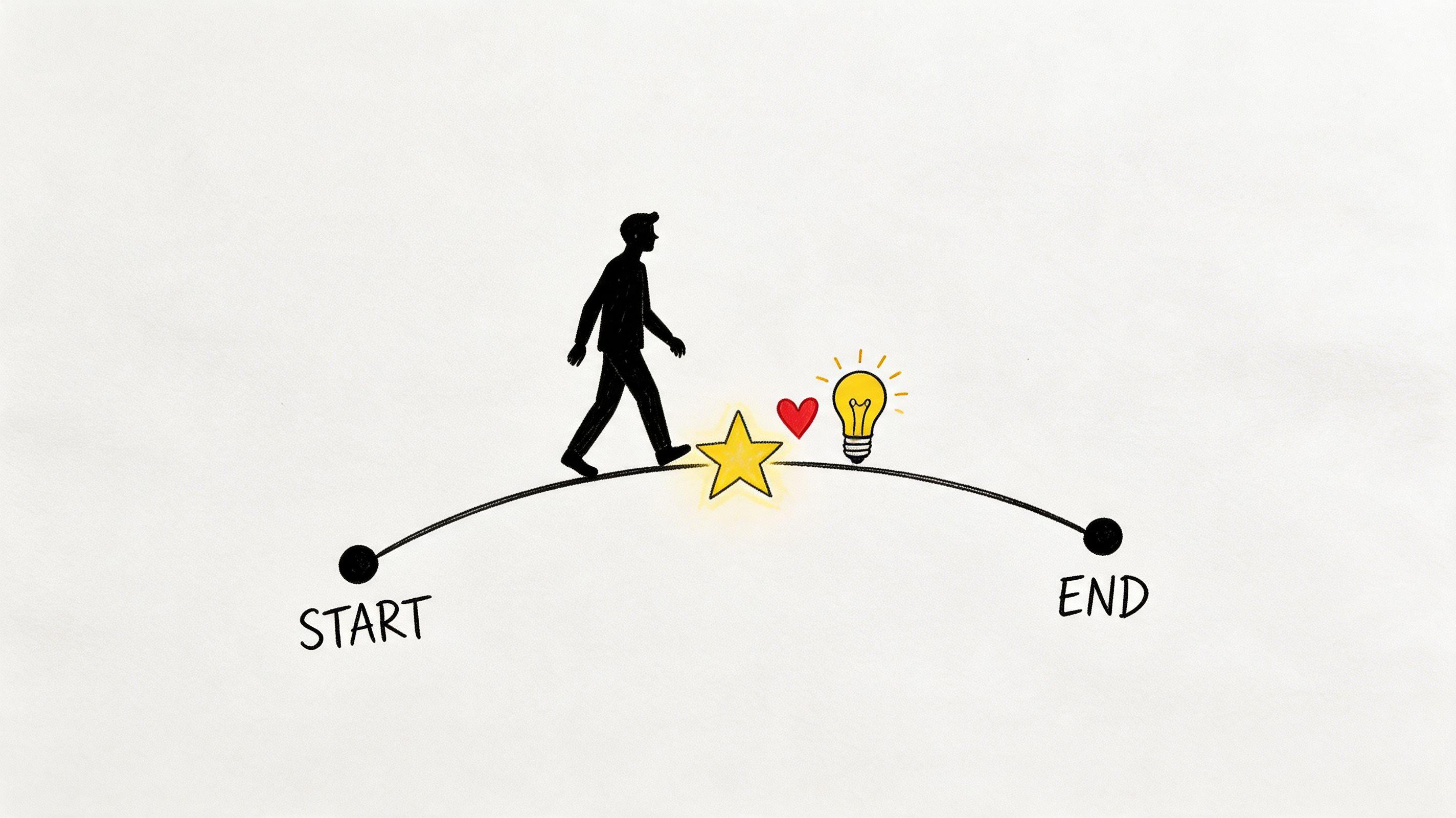
Use this structure as your frame:
- Opening scene: a specific moment that raises a question
- Context: only the background the reader needs
- Middle movement: the event unfolding in clear order
- Turning point: the choice, realization, or emotional shift
- Ending reflection: the meaning you see now
A useful test is simple. If your opening paragraph could belong to almost anyone, it is still too broad.
Voice and revision
Use a close first-person voice so the reader can hear your thinking as the event unfolds. The goal is honesty and clarity. Strong personal narratives do not depend on huge drama. They depend on precise detail, emotional movement, and reflection that feels earned.
Many students draft too wide at first. That is normal. Before you write, make a quick timeline of the event and cross out everything the reader does not need. If you need help gathering life details that matter, this guide on how to write a biography can help you spot the kinds of small facts that make a person feel real on the page.
For revision, check three things:
- Scene: Can the reader picture where the moment happens?
- Sequence: Does each paragraph move the event forward?
- Significance: Does the ending explain why this memory still matters?
Try this prompt: Write about a moment when you realized you were no longer the same person you had been a month earlier.
2. Cultural or Family Heritage Narrative Essay
Some essays don’t just tell what happened. They show where a person comes from. A cultural or family heritage narrative essay example often centers on a recipe, a holiday, a phrase repeated by a grandparent, a move between countries, or a family business shaped by tradition.
The personal story carries the essay, but the deeper layer is identity. You’re not writing a history report. You’re showing how culture lives inside ordinary moments.
Blueprint
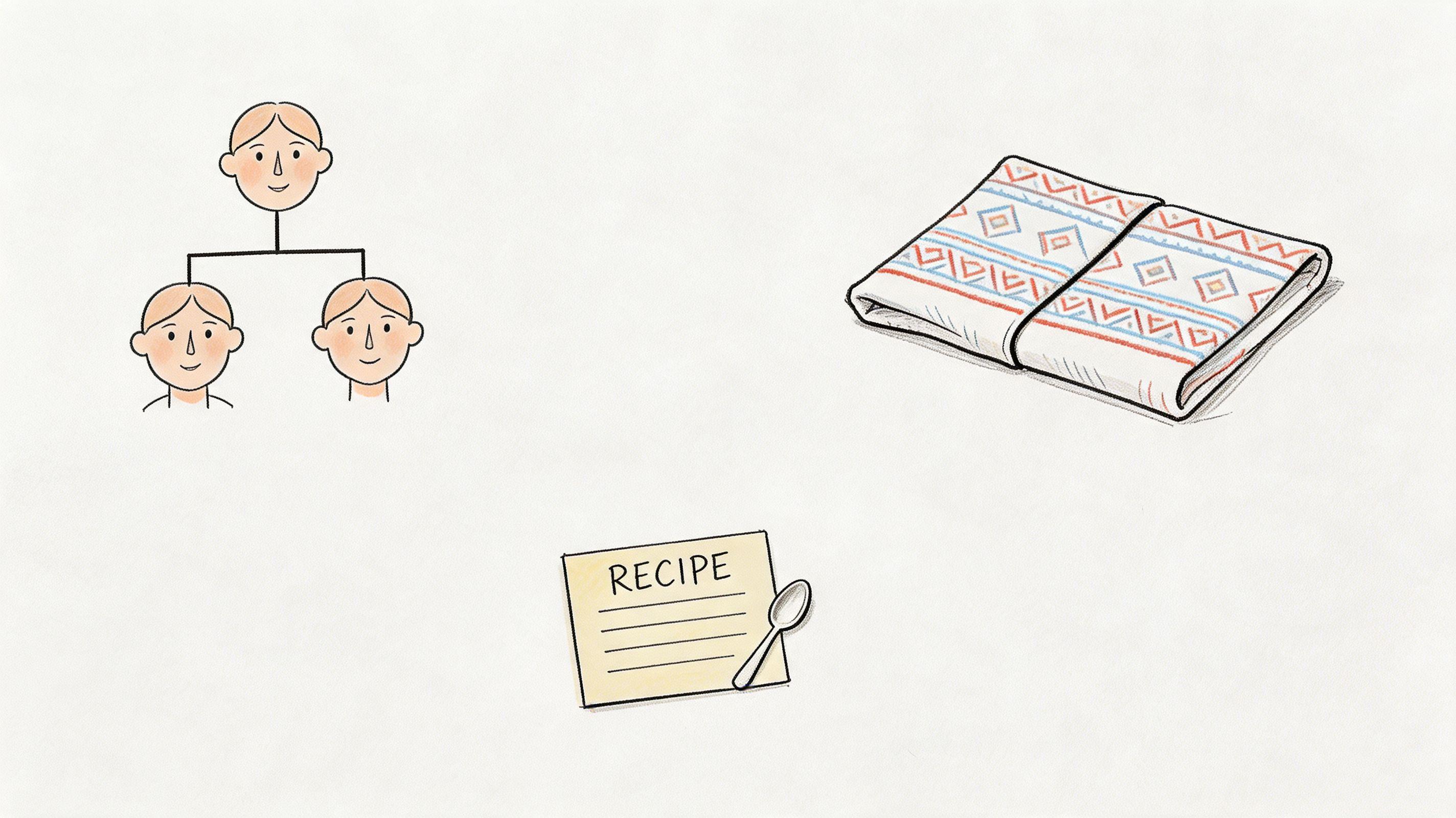
A strong version often begins with an object or ritual. The steam from a pot. The sound of a language at the dinner table. The way everyone removes shoes at the door without being told.
Then the essay widens:
- Anchor moment: a family or cultural scene
- Explanation through action: what the tradition means in practice
- Tension or change: embarrassment, distance, misunderstanding, pride, loss, or rediscovery
- Reflection: how that heritage shaped your values or self-understanding
One useful move is to think like a biographer for a few minutes. Gather names, phrases, settings, and family lore before drafting. A guide on how to write a biography can help you collect details without flattening people into simple descriptions.
Family heritage essays work best when they stay grounded in one lived moment instead of trying to explain an entire culture in one sitting.
Voice and revision
Use respectful specificity. Name foods, songs, sayings, clothing, routines, or gestures if they matter. If you include dialogue, make it sound natural and brief. A single line can reveal more than a paragraph of explanation.
Prompt: Write about a family tradition you didn’t fully understand when you were younger, but value differently now.
3. Academic Journey or Learning Experience Narrative Essay
Not every good story happens outside the classroom. Some of the strongest essays come from a learning shift. You thought you were “bad at math.” You hated reading aloud. You joined a project reluctantly, then discovered a new way to think. That’s narrative material.
This type works because it has a built-in before-and-after shape. The writer begins with confusion, resistance, or limitation, then moves toward understanding.
Blueprint
A good academic journey essay often uses contrast as its engine. Begin with the old version of yourself. Show the habit, fear, or belief that kept you stuck. Then focus on the moment that changed the pattern.
A simple structure looks like this:
- Before: what school or learning felt like
- Pressure point: a failed test, difficult assignment, mentor conversation, or group project
- Change in method: what you did differently
- After: how your thinking changed, not just your grade
In a narrative case study of two Chinese senior high school English teachers, tracked emotional reflections showed exhaustion and anxiety before a teaching improvement project, followed by stronger confidence and more positive emotional episodes after key teaching phases, according to Frontiers in Psychology. You don’t need to copy that research style, but you can borrow the logic: show the “before,” the intervention, and the changed state.
Voice and revision
Keep the tone reflective rather than boastful. Readers trust essays that admit struggle. If you only present success, the piece feels polished but thin.
Revision question: Have you clearly named the turning point, or are you just saying “I worked hard” in different ways?
Prompt: Write about a subject, skill, or class you once resisted, and the moment it started to make sense.
4. Workplace or Professional Achievement Narrative Essay
This type appears in career portfolios, team reflections, founder stories, and client-facing writing. It’s still a narrative essay example, but the voice is more controlled. The goal isn’t just self-expression. It’s to show judgment, effort, and outcome in a way other people can trust.
A student might use this format for an internship essay. A small business owner might use it to describe how the company started. A team lead might use it to document a project that nearly went off track.
Blueprint
Professional narratives usually work best when they follow a problem-solution-result arc. Horizon Peak Consulting describes narrative-style business case studies as beginning with the problem setup, moving through collaborative solution, and ending with results in an A/B-tested storytelling format across SMB case studies in their narrative-style case study guide.
That same structure can guide your essay:
- Beginning: what problem existed
- Middle: what actions you or the team took
- End: what changed and what you learned
If your story feels tangled, sketch it first with an essay outline example. Professional stories often fail because the writer remembers everything and includes too much of it.
Tone and revision
The best tone here is calm confidence. Don’t oversell. Let the sequence of events prove your competence.
Use concrete workplace scenes. The late meeting. The client objection. The first prototype that failed. These details make the essay credible.
A professional narrative gets stronger when it shows decision-making, not just achievement.
Prompt: Write about a project, job, volunteer role, or internship where your approach changed the outcome.
5. Challenge and Resilience Narrative Essay
This is the narrative essay example students often choose because it feels meaningful. It can be powerful, but it’s also easy to mishandle. If the essay only says “something hard happened and now I’m stronger,” it becomes predictable fast.
Strength stems from specificity. A challenge-and-resilience essay needs one clear difficulty and one believable response. That response might be persistence, asking for help, changing your mindset, rebuilding trust, or continuing when quitting would’ve been easier.
Blueprint
Start close to the hardest part. Not every detail of the backstory matters. Readers don’t need a full timeline of your life. They need the pressure point.
Useful structure:
- Crisis or obstacle: the challenge enters the story
- Emotional reality: what it felt like
- Response: what you did, even if the first attempt didn’t work
- Meaning: how the experience changed your habits, values, or identity
Voice and revision
Keep the language measured. Strong essays don’t force emotion. They let scenes do the work. A short sentence like “I stopped raising my hand after that day” can carry more weight than a dramatic paragraph.
Here are revision moves that help:
- Cut performance: Remove lines that sound written to impress.
- Keep one symbol: A brace, bus pass, report card, or text message can unify the essay.
- End forward: Close with changed perspective, not a speech about inspiration.
Don’t confuse pain with depth. Depth comes from insight.
Prompt: Write about a setback that changed how you handle pressure, failure, or uncertainty.
6. Travel or Adventure Narrative Essay
Why do so many travel essays sound like postcards with extra sentences? The writer lists beautiful places, memorable meals, and long bus rides, but the reader still cannot tell why the trip mattered. A strong travel or adventure narrative essay uses movement through a place to reveal movement in the writer.
That is the blueprint mindset that makes this article different from a simple set of sample essays. You are not copying a finished piece. You are learning how this type works, so you can build your own.
Maybe the actual story is not the destination at all. It might be the moment you missed a train, got caught in a storm, heard your family argue in a hotel room, or realized you felt calmer in an unfamiliar place than you did at home. Travel gives you built-in change of setting. Your job is to connect that outer journey to an inner one.
Blueprint
A travel essay works like a suitcase. If you pack everything, the important items get buried. Choose one clear thread to carry through the piece. That thread could be awe, fear, homesickness, independence, culture shock, or confusion.
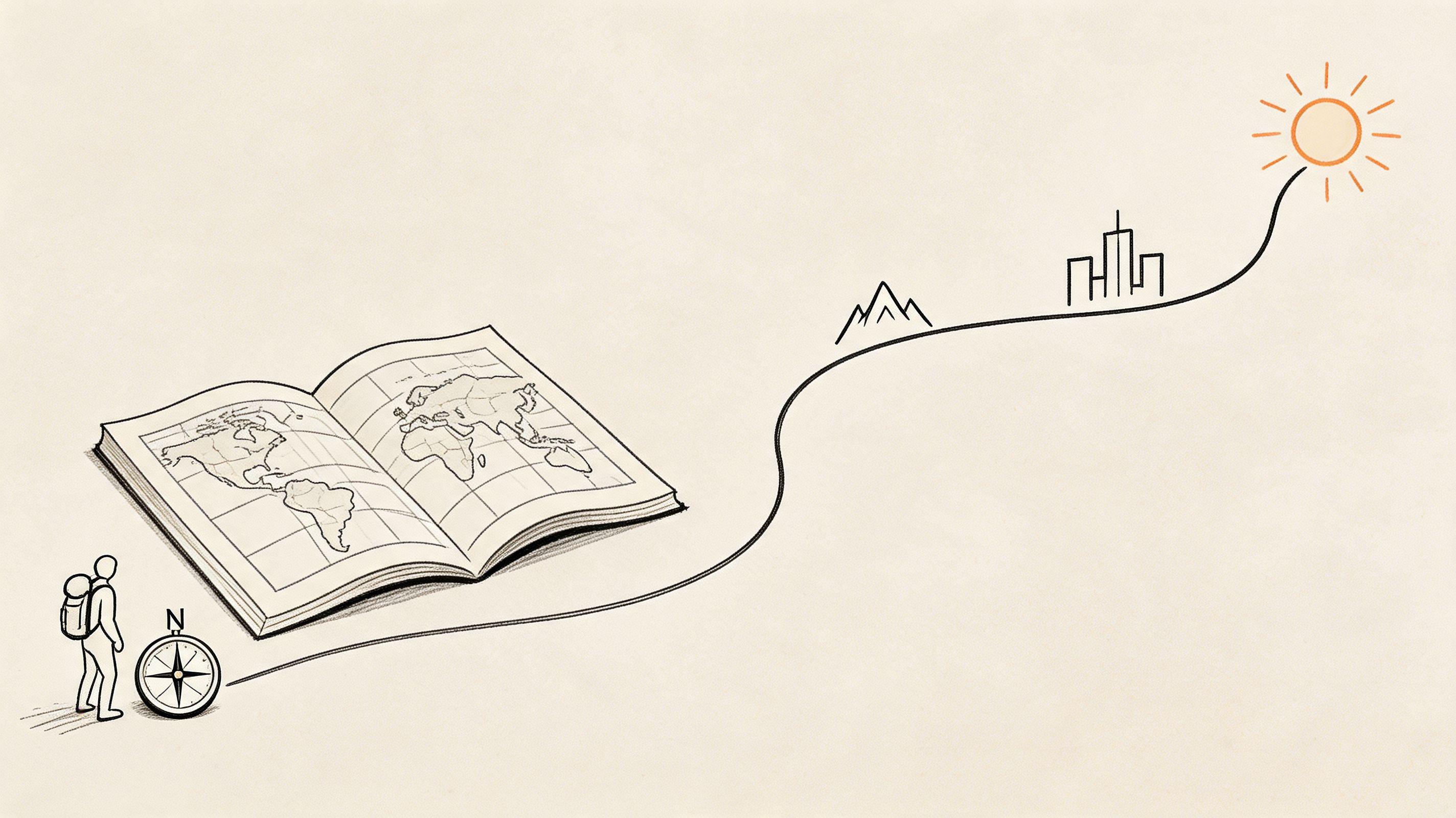
A useful structure looks like this:
- Departure or arrival: establish what feels unfamiliar or charged
- Disruption: introduce the problem, surprise, or tension that changes the trip
- Focused scene: zoom in on one encounter, mistake, discovery, or choice
- Shift in perspective: show what the experience taught you
- Return or reflection: end with what now looks different
Chronological order can help, but only if each step pushes the story toward meaning. A list of stops is a schedule. A narrative is a path with pressure on it.
Voice and revision
Use description the way a flashlight works. Shine it on what matters. One strong image often does more than a paragraph packed with details. The wet strap of a backpack, the burned smell of street food, the echo in a station before sunrise. Those details create place and mood at the same time.
Tone matters here too. Wonder is useful, but constant amazement can flatten the essay. Let the voice include discomfort, misreading, embarrassment, or quiet observation. That mix feels human.
Try these revision moves:
- Cut the itinerary: remove any stop or activity that does not change the story
- Anchor the lesson in a scene: attach insight to one concrete moment
- Check the balance: keep the place vivid, but keep yourself present in it
- Avoid the tourist summary: replace broad statements about a country or city with what you directly saw, heard, or felt
Prompt: Write about a trip, long or short, where the place challenged your assumptions and left you seeing something differently.
7. Relationship or Interpersonal Dynamics Narrative Essay
Some of the most memorable essays are built around another person. A grandparent, coach, friend, sibling, teacher, neighbor, or mentor can become the center of the story. But the essay still needs to be about change. The relationship should reveal something about you, not just praise someone else.
This kind of narrative works well because people create natural tension. Conversations shift, misunderstandings happen, trust forms slowly, and one small exchange can hold a lot of meaning.
Blueprint
Choose a relationship with movement in it. Maybe you clashed with a parent and later understood them better. Maybe a teacher saw your ability before you did. Maybe a friendship changed after one mistake.
A strong structure might look like this:
- First impression or early dynamic
- Scene that reveals the relationship
- Conflict, misunderstanding, or turning point
- New understanding
Voice and revision
Dialogue matters here, but keep it short and purposeful. Realistic dialogue doesn’t mean writing every word exactly as spoken. It means choosing the line that reveals character.
Try these revision checks:
- Sharpen the other person: Give them a habit, phrase, gesture, or value.
- Avoid idealizing: Even loving essays need texture.
- Show mutual influence: Explain how the relationship changed both the moment and your perspective.
A useful benchmark is authenticity. Many weak essays turn robotic when they flatten emotion into generic statements. Relationship essays improve when you replace labels like “supportive” or “strict” with moments that show those traits.
Prompt: Write about a relationship that taught you something you didn’t want to learn at first.
8. Decision and Consequence Narrative Essay
This type is excellent for older students, college writers, and professionals because it highlights judgment. The central event isn’t just what happened. It’s the choice you made, why you made it, and what followed.
Good topics include choosing honesty over convenience, switching majors, leaving a team, saying yes to a hard opportunity, or refusing to go along with a group decision. The tension comes from alternatives. If the decision was obvious, the essay won’t carry much weight.
Blueprint
Map the moment like a fork in the road. What options were in front of you? What pressures pushed one way? What value, fear, or hope pulled the other?
Build it like this:
- Context: what decision had to be made
- Alternatives: what your options were
- Choice: what you did
- Consequences: immediate and later
- Lesson: what the decision revealed about your character or values
Voice and revision
Be transparent about your reasoning. Readers trust essays that admit uncertainty. If you struggled, say so. If your choice caused a problem before it helped, include that too.
This format also works well when you want a more mature tone. It shows reflection, not just reaction.
The best ending for a decision essay doesn’t say “I chose correctly.” It says “I understand myself better because I had to choose.”
Prompt: Write about a decision that seemed small at the time but led to a lasting consequence.
Comparison of 8 Narrative Essay Types
Choosing a narrative type is a lot like choosing the right container for a story. A memory, a family tradition, and a career milestone can all be meaningful, but each one needs a different shape to hold it well. The chart below helps you compare the eight essay types as a writer, not just as a reader, so you can pick the format that fits your goal.
| Essay Type | Writing challenge 🔄 | What you need ⚡ | What it tends to do well ⭐📊 | Best fit 📊 | Strong moves and revision tips 💡 |
| Personal Experience Narrative Essay | Low to medium. Usually easier to organize because the timeline is clear | A specific memory, sensory details, time to reflect | Helps admissions readers or teachers hear your natural voice and see how you make meaning from experience | College applications, class assignments, personal portfolios | Choose one moment instead of a whole season of life. Add concrete details, then revise every paragraph to connect back to the takeaway |
| Cultural or Family Heritage Narrative Essay | Medium. You have to balance storytelling with context | Family stories, interviews, cultural details, fact-checking | Shows identity clearly and can teach readers something unfamiliar without sounding like a report | Heritage essays, multicultural classrooms, community writing projects | Center the essay on one ritual, object, meal, phrase, or gathering. Explain enough for an outsider to follow, and remove any broad generalizations |
| Academic Journey or Learning Experience Narrative | Medium. The challenge is showing change, not just listing school events | A before-and-after arc, examples of work, feedback, dates if useful | Helps scholarship committees and teachers see growth, persistence, and specific learning gains | Scholarship essays, school applications, reflective assignments | Focus on one learning shift. For example, move from confusion to competence, or from passive studying to an active method that worked |
| Workplace or Professional Achievement Narrative | Medium to high. Professional stories need clarity, restraint, and evidence | Project details, outcomes, permission to share sensitive information | Builds trust with hiring managers, supervisors, or clients by showing judgment and results | Job materials, leadership stories, internal recognition, professional bios | Keep the spotlight on one problem you helped solve. Use precise outcomes and cut jargon that hides the real action |
| Challenge and Resilience Narrative Essay | High. It takes care to write honestly without turning pain into spectacle | Reflection time, emotional distance, support if the topic is hard | Gives readers a strong sense of character, coping, and what changed in how you see yourself or the world | Admissions essays, personal reflection, counseling or healing contexts | Narrow the challenge to one part readers can follow. Focus on the response, the support you used, and the new capability or perspective you gained |
| Travel or Adventure Narrative Essay | Low to medium. Description is easy. Reflection is the harder part | Memories, photos, place details, a clear point | Keeps readers engaged and works best when the trip changes your thinking, not just your scenery | Study abroad essays, travel writing assignments, personal blogs | Treat the place as more than a backdrop. Show one encounter, mistake, surprise, or cultural shift that gave the trip meaning |
| Relationship or Interpersonal Dynamics Narrative Essay | Medium. People on the page need nuance and privacy | Dialogue, emotional detail, sensitivity to what should stay private | Shows emotional intelligence, conflict awareness, and how you understand other people | Friendship essays, family narratives, mentorship stories, school assignments | Let both people feel human. Revise for fairness, trim exaggerated dialogue, and make sure the conflict leads to insight rather than blame |
| Decision and Consequence Narrative Essay | Medium. Readers need to see the options, pressure, and result clearly | Context, honest reasoning, awareness of short-term and long-term effects | Shows maturity to admissions readers, instructors, or professional audiences because it highlights judgment | Applications, leadership essays, ethics reflections, career writing | Make the alternatives visible. Then trace what happened after the choice so the lesson grows from consequences, not from a moral stated too early |
A useful pattern appears here. Essays about experience, travel, and relationships often rise or fall on scene and detail. Essays about learning, work, challenge, and decisions depend more on analysis, because readers want to understand what changed and why it mattered.
If you feel stuck between two categories, ask a simpler question: what is carrying the weight of the story? If the center is a person, relationship may be the best frame. If the center is a turning point in your thinking, academic journey or decision and consequence may fit better. That small shift can save you from forcing a good story into the wrong structure.
Your Story, Your Structure
The most effective narrative essay example doesn’t succeed because the event was dramatic. It succeeds because the writer shaped the event with care. That’s an important shift in thinking. You don’t need the “most exciting” life experience in the room. You need a clear moment, a strong point of view, and a structure that helps the reader feel what changed.
That’s why blueprints matter. If you know you’re writing a personal experience essay, you can focus on scene and reflection. If you’re writing about heritage, you can center a ritual or object. If the essay is about resilience, you can narrow the challenge and show the response. Different story types need different frames, just like different buildings need different plans.
Narrative writing also becomes easier when you stop trying to sound literary and start trying to sound true. In most personal narratives, first-person voice carries the story because readers want direct access to the writer’s thoughts and feelings, a pattern noted in the 5StarEssays examples guide. Plain language usually beats inflated language. “My voice shook when I answered” is stronger than “I experienced a profound sensation of nervousness.”
If you’re stuck, break the process into three simple moves:
- Choose one core moment: not your whole life story, just one event with tension.
- Name the lesson early: you can revise it later, but know what the story points toward.
- Draft the scenes before the reflection: action often helps insight appear.
You can also use AI carefully as a writing partner rather than a replacement. Tools like 1chat can help you brainstorm angles, test different openings, organize a messy draft, or polish awkward sentences while you keep the personal voice and real experience at the center. That’s especially useful if you’re trying to turn rough notes into something readable without losing what made the story yours in the first place.
The best final test is simple. After reading your essay, could someone summarize both what happened and why it mattered? If yes, you’re close. If they only know the plot, add reflection. If they only know the lesson, add scenes.
Your story doesn’t need to imitate anyone else’s. It needs a shape that fits what you lived. Once you find that structure, the blank page stops looking empty and starts looking usable.