You're staring at a prompt that says “write an essay on leadership”, and your mind goes blank.
Most students make the same first mistake. They start with a broad definition, say leadership means guiding others, add a few polished phrases about teamwork, and end with “I learned a lot.” The result sounds respectable, but forgettable.
A strong leadership essay usually comes from a smaller place. A tense group project. A shift at a part-time job when nobody knew what to do. A family moment when someone had to stay calm, organize people, and make a decision. Those stories often reveal more about how you lead than any title ever could.
I've read plenty of essays where a student thought, “This story is too small.” It usually wasn't. What made the essay weak wasn't the size of the event. It was the lack of reflection. The best essays don't try to impress by sounding important. They show how a real person noticed a problem, acted with intention, and changed because of it.
What Makes a Great Leadership Essay
The prompt sounds simple, but it hides a harder question underneath: What does the reader want to learn about you?
Usually, they're not hunting for a perfect hero story. They want evidence of judgment, self-awareness, and growth. They want to know how you respond when people disagree, when plans fall apart, or when nobody gives you formal authority.

There's a practical reason this matters. While 83% of organizations recognize the importance of fostering leaders at every level, only 5% have successfully implemented complete leadership development across their entire organization, according to Zippia's leadership statistics roundup. That gap means people who can clearly describe their leadership potential stand out.
If you want a broader sense of what leadership skills look like in real settings, MyCulture.ai's guide to leadership is a useful companion read because it breaks leadership into visible behaviors rather than vague personality traits.
Leadership is action, not title
A title can help, but it doesn't carry an essay on its own.
“President of the club” is a position. “I noticed newer members stayed silent, so I changed the meeting format and invited them into smaller discussions first” is leadership. One is a label. The other is a decision.
That's why a smaller story can be stronger than a bigger one. A student who helped two classmates work through conflict may write a more compelling essay than a club officer who only lists duties.
A leadership essay gets stronger when the reader can point to a moment and say, “That's where the writer led.”
The three qualities readers remember
When I read a strong essay on leadership, I almost always see these three things:
- A specific situation: The writer anchors the essay in one real event, not a collection of general claims.
- A clear choice: The writer shows what they did, why they did it, and what risk or challenge they faced.
- A thoughtful takeaway: The writer doesn't stop at success. They explain what changed in their thinking.
Here's the shift I want students to make:
Weak approach: “I am a natural leader who enjoys helping others.”
Stronger approach: “When our presentation team split into two camps, I stopped arguing for my own plan and started asking each person what outcome they cared about most.”
The second version gives the reader something to trust.
What a great essay avoids
Many leadership essays fail for familiar reasons:
- They sound generic: “Leadership is important in every aspect of life.”
- They summarize duties instead of choices: “I managed the team and assigned tasks.”
- They skip reflection: The story ends, but the writer never explains what they learned.
- They confuse activity with impact: Being busy isn't the same as leading.
A memorable essay on leadership feels personal without becoming messy, polished without becoming stiff, and reflective without drifting into motivational speech.
Finding Your Leadership Story and Thesis
Most students don't struggle because they have no leadership experience. They struggle because they're looking in the wrong places.
They search for the biggest thing they've ever done. That usually leads to a flat story. A better approach is to look for a moment where your actions changed the direction, tone, or outcome of a situation.
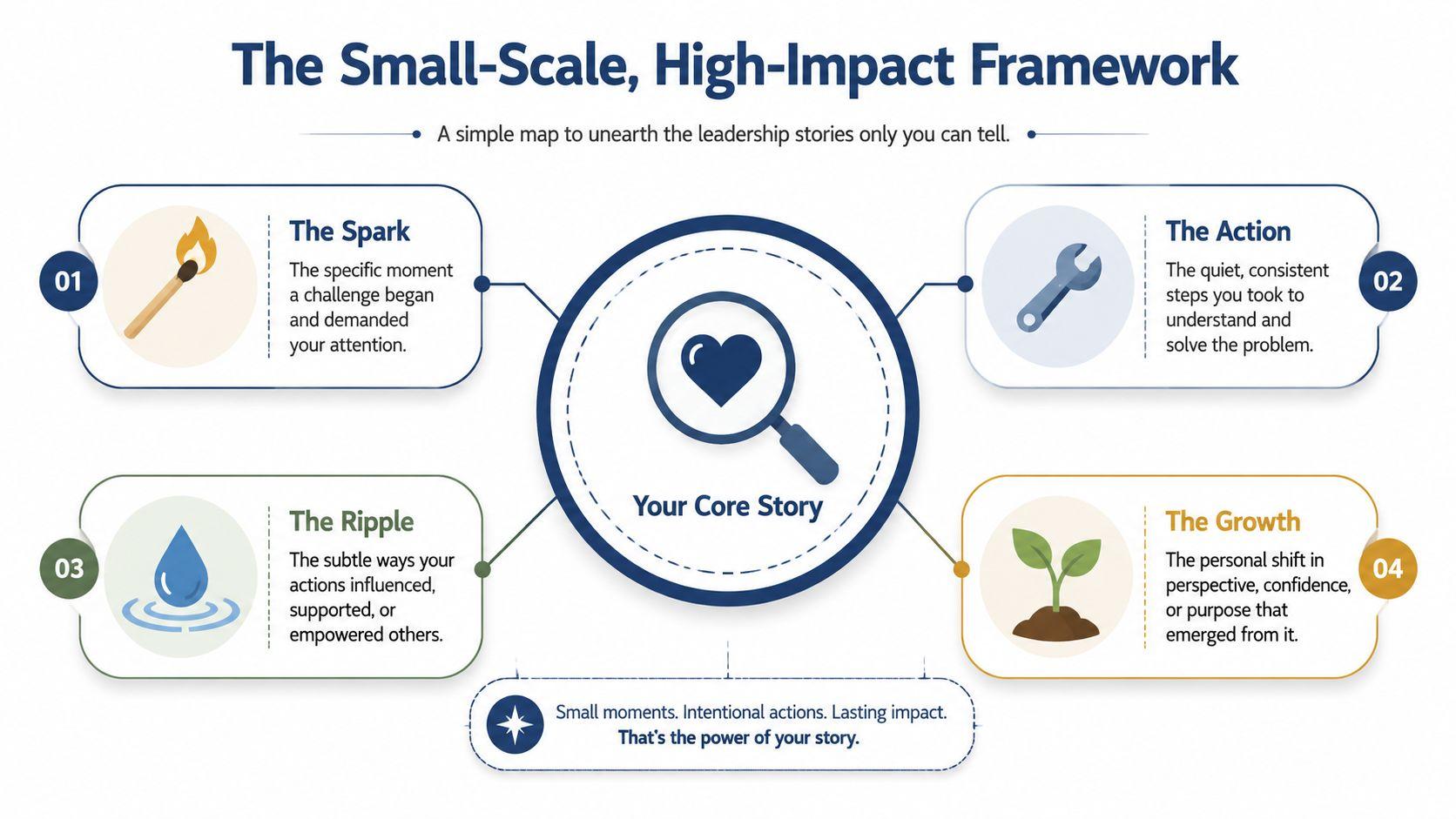
Use the small-scale, high-impact test
Ask yourself which of these moments feels real, specific, and revealing:
- At school: You kept a group project from falling apart when nobody was communicating.
- At work: You noticed confusion during a busy shift and created a simple system so tasks stopped being missed.
- At home: You helped siblings or relatives through a stressful situation by staying organized and calm.
- In a club or team: You helped quieter members contribute instead of letting one or two people dominate.
None of these requires an impressive title. Each can produce a strong essay because each contains a problem, a choice, and an effect on other people.
Look for pressure, not prestige
Students often say, “But it was just a small thing.” Small things are exactly where good essays live.
A useful brainstorming trick is to list moments when you felt one of these:
- Responsible
Not because someone gave you a title, but because you saw that somebody had to act. - Torn
You had to choose between being liked and doing what the situation needed. - Changed You came away with a new idea about what leadership is.
That third point matters. Expert commentary on leadership often overemphasizes outgoing, highly social leadership. A more interesting angle comes from DSG's discussion of undervalued leadership attributes, which highlights William Deresiewicz's argument that “solitude is the very essence of leadership.” That idea can sharpen your essay. Some of your most important leadership moments may have happened before you spoke, when you had to think alone and decide what mattered.
Turn the story into a thesis
Once you have the story, build a thesis that says what the experience taught you about leadership.
Weak thesis:
Leadership is important because it helps teams succeed.
Better thesis:
Leading my debate team through a messy preparation week taught me that leadership isn't commanding the loudest voice in the room. It's creating enough structure that other people can do their best work.
Notice what changed. The stronger thesis is specific, arguable, and connected to a lived experience.
If thesis writing is the part that slows you down, this guide on how to write a thesis statement can help you move from a topic to a claim.
A simple formula that works
Try this sentence pattern:
My experience [doing X] taught me that leadership is less about [common assumption] and more about [specific insight].
Examples:
- My experience training a new coworker taught me that leadership is less about authority and more about patience.
- Organizing a school fundraiser taught me that leadership is less about giving instructions and more about following up consistently.
- Helping my family during a stressful move taught me that leadership is less about confidence on the outside and more about staying steady when other people feel overwhelmed.
That sentence can become the backbone of your entire essay.
Outlining Your Essay for Maximum Impact
Once you've chosen your story and thesis, structure matters. A good idea can still feel weak if the essay wanders.
One reliable framework is STAR: Situation, Task, Action, Result. It works because it forces you to move from context to decision to consequence. That's also why this kind of structure performs well. Academic rubrics show that essays with a clear situational context, decisions, and metric-based outcomes score 15-25% higher, and limiting the conclusion to 10% of the word count boosts coherence, according to this leadership essay methodology reference.
If you want another clear breakdown of how to build an essay shape that readers can follow, AGrader's essay writing guide is a practical reference.
Use STAR as a narrative frame
You don't need to label each paragraph with STAR. Just let it guide your choices.
- Situation: What was happening?
- Task: What problem or responsibility emerged?
- Action: What did you specifically do?
- Result: What changed, and what did you learn?
Students often rush the Action paragraph because they're eager to get to the lesson. That's a mistake. The Action section usually carries the essay because it shows your thinking in motion.
Essay structure by word count
| Essay Section | Short Essay (500 words) | Long Essay (1500 words) |
| Introduction and thesis | 75 | 180 |
| Situation | 100 | 300 |
| Task or challenge | 75 | 180 |
| Action | 175 | 540 |
| Result and reflection | 75 | 210 |
| Conclusion | 0 to 50 | 90 |
The exact numbers don't have to be perfect. The pattern matters more. Short essays need speed and focus. Longer essays give you room for richer context and deeper reflection, but they still need proportion.
Two outline models
Short application essay
This version works when space is tight and every sentence must earn its place.
- Open inside the moment.
- Name the challenge fast.
- Show the action in concrete steps.
- End with the lesson and its lasting effect.
Practical rule: If your opening paragraph could fit into almost anyone's essay, it's too broad.
Longer academic essay
This version gives you room to analyze leadership, not just narrate it.
- Start with a sharp thesis tied to one story.
- Give enough context for the stakes to make sense.
- Slow down in the middle. Show decisions, tradeoffs, and interactions.
- Reflect in a fuller way. What did the experience reveal about your strengths, limits, or assumptions?
If outlining is where you tend to stall, this essay outline example can help you translate a rough idea into a usable draft plan.
Writing With Authority and Authenticity
Once the outline is done, the actual work begins. At this stage, many essays either become vivid or turn generic.
Strong writing on leadership sounds grounded. It doesn't announce greatness. It demonstrates it through choices, dialogue, details, and reflection.
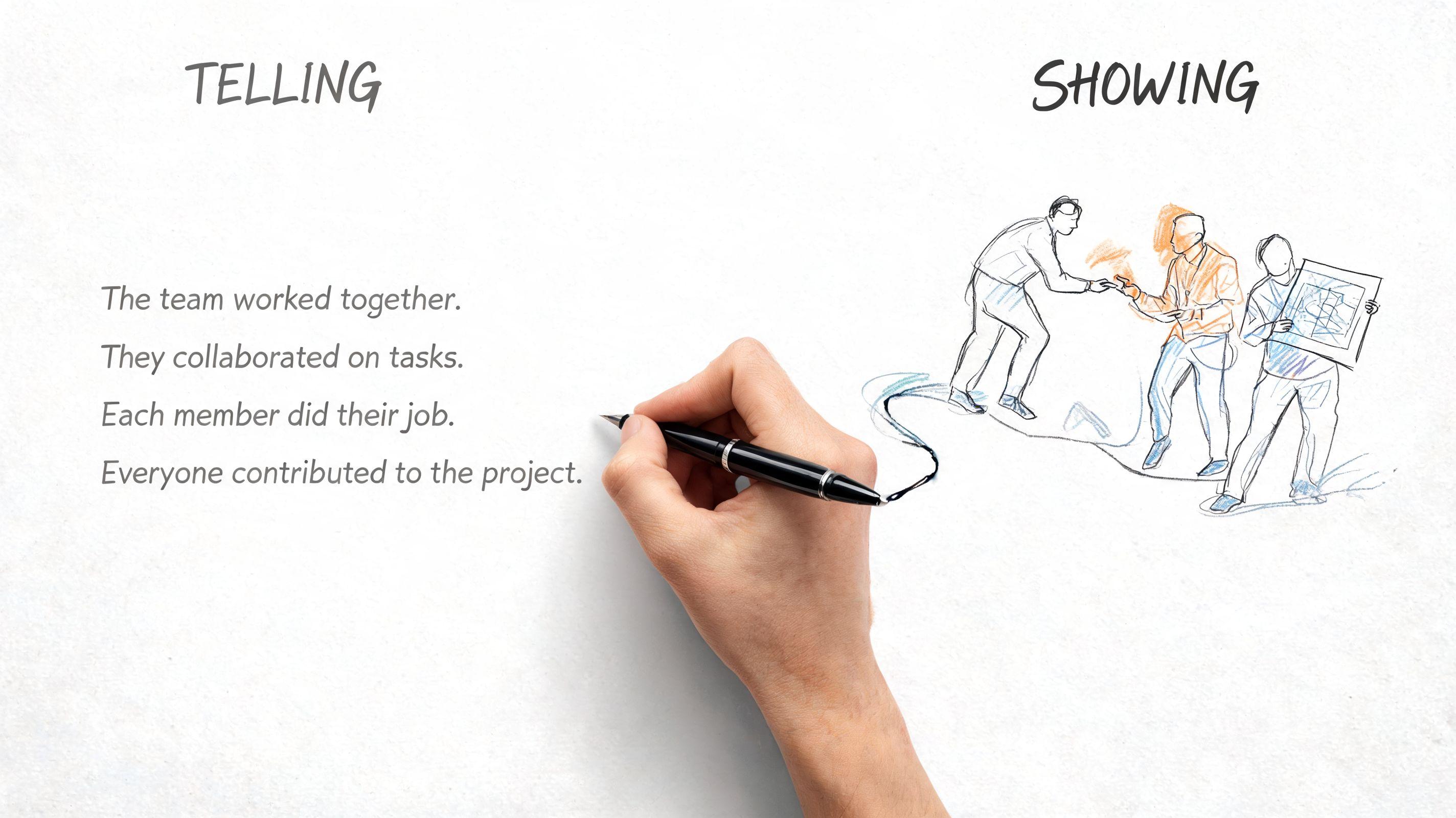
Replace claims with scenes
One of the fastest ways to improve an essay on leadership is to stop naming traits and start showing behavior.
Before: I was a good leader during our science project.
After: When two teammates stopped responding in the group chat, I asked each of them separately what was blocking their work, then divided the project into smaller deadlines we could actually meet.
The second version sounds more credible because the reader can see what happened.
That matters in grading too. Grader feedback analysis says 60% of evaluators will deduct up to 20% from a score because of vague examples, as noted in this discussion of leadership writing methods.
Use active verbs that place you in the scene
Weak essays lean on static phrases like “was responsible for” or “helped with.” Stronger essays use verbs that reveal movement and judgment.
Try verbs like these when they're accurate:
- organized
- asked
- noticed
- clarified
- reframed
- mediated
- drafted
- followed up
- listened
- adapted
Those verbs help your paragraphs feel lived-in rather than ceremonial.
Build paragraphs with a clear center
A useful paragraph pattern looks like this:
- Topic sentence with a point
- Concrete example from the story
- Reflection on why that moment mattered
Here's what that looks like in practice.
Before: I learned communication was important. Our group had many different opinions. In the end we did well.
After: The conflict forced me to treat communication as a leadership skill, not a personality trait. Instead of repeating my own plan, I asked each teammate to name one concern and one nonnegotiable. That small shift turned a vague disagreement into a solvable problem.
The second version does more than narrate. It interprets.
Sound mature without sounding fake
Students sometimes think formal writing means using bigger words. It usually doesn't. Clear language sounds more confident.
A few ways to keep your voice authentic:
- Name the awkward parts: If you were nervous, say so.
- Admit what you got wrong: Reflection gets stronger when you show limits, not just success.
- Give credit accurately: Leadership essays improve when they acknowledge other people's contributions.
- Avoid inspirational slogans: Readers trust grounded insight more than polished clichés.
You don't need to sound like a CEO. You need to sound like someone who paid attention.
Learning from Sample Leadership Essays
Examples help because they show what “specific and reflective” looks like on the page. Below are two short sample excerpts, both built from ordinary situations.
One comes from a school setting. The other comes from a part-time job. Neither depends on prestige. Both depend on choices.
Sample one from a group project
Three days before our history presentation, our slides were unfinished and two teammates had stopped replying. I wanted to complain, but that would have wasted time we didn't have. Instead, I sent one message with a simple plan: I would rebuild the outline, assign only two urgent tasks to each person, and stay online that evening to help. One classmate admitted she had fallen behind because she was embarrassed, not careless. That changed my approach. I stopped treating the problem as laziness and started treating it as confusion. By the next afternoon, everyone had contributed something usable. We earned a good grade, but the more important result was personal. I learned that leadership often begins when you replace frustration with clarity.
Why it works:
- It opens in motion. No broad introduction.
- The writer shows restraint. They felt annoyed but chose a useful response.
- The turning point is human. The embarrassed classmate changes the writer's understanding.
- The reflection is earned. The lesson grows out of the event.
There's another subtle strength here. The writer doesn't take all the credit. That matters because acknowledgment is part of real leadership. Research shows 69% of people report increased motivation when their contributions are acknowledged, according to Mark Baglow's leadership statistics summary. In sample essays, look for moments when the writer notices other people's effort rather than presenting themselves as the only capable person in the room.
Sample two from a part-time job
During a Saturday rush at the café where I work, drink stickers started printing faster than we could fill orders, and everyone became short with each other. I wasn't the shift lead, but I could see we were losing time every time someone asked the same question twice. I grabbed scrap paper, wrote a quick order queue for the counter, and asked one coworker to call out only the next three drinks instead of all of them. The pace steadied almost immediately. What stayed with me was not the fix itself, but the fact that leadership can look quiet. Nobody announced that I was in charge. I saw confusion, made one useful system, and helped the team breathe again.
Why it works:
- It avoids title-based thinking.
- It focuses on a small intervention.
- It ends with an insight, not a brag.
If you want to study how personal stories become strong essays, this narrative essay example guide can help you notice pacing, detail, and reflection.
What to imitate and what not to imitate
Use sample essays to study craft, not to borrow personality.
Notice these features:
- A clear thesis hidden inside the story
- Concrete actions instead of trait labels
- Reflection tied to one event
- Recognition of other people, not self-celebration
Don't copy someone else's emotional tone, sentence style, or “lesson.” Your own story will sound strongest when it keeps your natural rhythms and your actual perspective.
Common Mistakes and Your Final Checklist
Most weak leadership essays don't fail because the writer lacks experience. They fail because the draft stays too broad, too flattering, or too busy.
A common pattern goes like this: the student lists several leadership roles, explains what the group accomplished, and never isolates one meaningful decision. The result feels crowded and oddly distant.
Five mistakes that weaken the draft
- Starting with a dictionary definition
Readers already know what leadership means in general. They want to know what it meant in your situation. - Confusing a role with a story
“I was captain” is not yet an essay. You still need a scene, a challenge, and a lesson. - Making yourself flawless
Strong reflection usually includes uncertainty, misjudgment, or a change in perspective. - Hiding your specific contribution
If the essay says “we” in every sentence, the reader may never learn what you did. - Ending with a slogan
“This experience taught me to always believe in myself” sounds finished, but it doesn't say much.
Final check: Your conclusion should feel smaller and sharper than your draft instincts want. Don't introduce a new story there.
A final review checklist
Before you submit, read your essay and ask:
- Can I summarize my essay in one sentence?
If not, the thesis may still be blurry. - Does the essay center on one main story?
A side example is fine. A second full story often weakens focus. - Did I show what I did? Look for places where you named a trait but didn't demonstrate it.
- Did I reflect, not just report?
The reader should learn how your thinking changed. - Did I avoid clichés?
Cut phrases like “natural born leader,” “lead by example” if they stand alone without proof. - Did I give credit to others where appropriate?
Balanced essays often feel more trustworthy. - If this is an academic assignment, do I cite ideas properly?
Personal narrative usually doesn't need many sources, but academic leadership essays may require them when you reference theory or research.
For polishing and editing help beyond this article, articles for writers can be a useful place to browse practical writing advice.
A good essay on leadership doesn't need a dramatic title, a huge audience, or a perfect ending. It needs one real moment, one honest insight, and writing that helps the reader see how you think when leadership becomes necessary.
If you want help turning rough notes into a cleaner draft, 1chat can help you brainstorm, outline, and revise while keeping the process simple for students and small teams. You can explore it at 1chat.