To truly get a handle on employee burnout, you have to move beyond quick fixes and start looking at systemic solutions. This means taking a hard look at how you design workloads, putting supportive policies in place, and training your managers to spot the early warning signs. It's about building a workplace where well-being isn't an afterthought, but a core part of how you operate.
Why Burnout Is More Than Just a Buzzword for Your Business
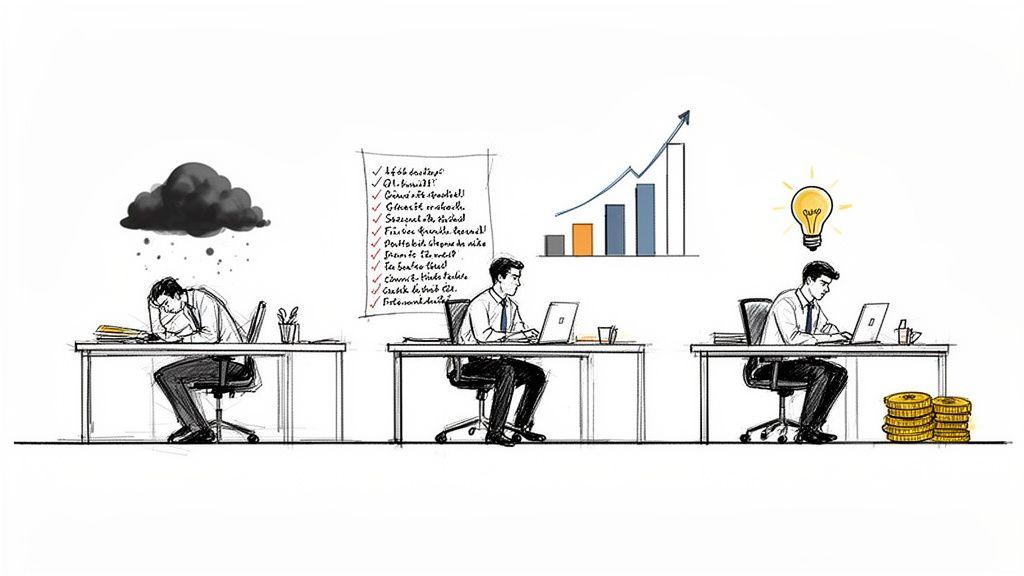
Let's be blunt: employee burnout isn't just a trendy topic for HR blogs. It's a real, tangible threat to your company’s health and your bottom line. The World Health Organization defines it as a syndrome that stems from chronic, unmanaged workplace stress. For small and midsize businesses, the fallout is often immediate and painful.
Burnout isn't an abstract concept; it has very real costs. When your best people are completely drained, productivity nose-dives, deadlines get missed, and the quality of your work inevitably suffers. It's also a primary reason people quit. Research consistently shows that burned-out employees are far more likely to be looking for a new job, which pushes you into costly and disruptive hiring cycles.
Understanding the Core Components of Burnout
Burnout isn't just one thing. It typically shows up in three distinct ways that can create a destructive cycle and poison team morale. Once you can spot these components, you start to see the problem for what it is: a complex issue, not just a case of someone being "tired."
- Exhaustion: This is way beyond feeling sleepy. It’s a deep, bone-weary sense of emotional and physical depletion. It’s the kind of tired that a good night's sleep just doesn't fix.
- Cynicism and Detachment: You'll notice employees becoming mentally distant from their jobs. The passion they once had is replaced by pessimism. That collaborative energy gives way to frustration and irritability.
- Reduced Efficacy: A sense of ineffectiveness starts to creep in. Your team members begin to doubt their own contributions and lose confidence in their ability to make a difference, which absolutely crushes motivation.
The real danger of burnout is that it’s contagious. One person’s cynicism can quickly spread, eroding trust and creating a toxic culture where disengagement becomes the norm. It’s a silent productivity killer that undermines your business from the inside out.
The Modern Workplace as a Breeding Ground
So why does it feel like burnout is everywhere these days? The modern work environment, with its 24/7 connectivity and relentless pressure for immediate results, is the perfect storm.
Things like unmanageable workloads, unclear communication from leadership, and a lack of real support aren't personal failings—they are systemic problems. This guide isn’t about blaming individuals for feeling overwhelmed. It’s about reframing burnout as an urgent business problem that you, as a leader, can and must solve. By focusing on practical, low-cost strategies, you can build a healthier, more resilient, and ultimately more profitable workplace.
Spotting The Early Warning Signs Of Burnout
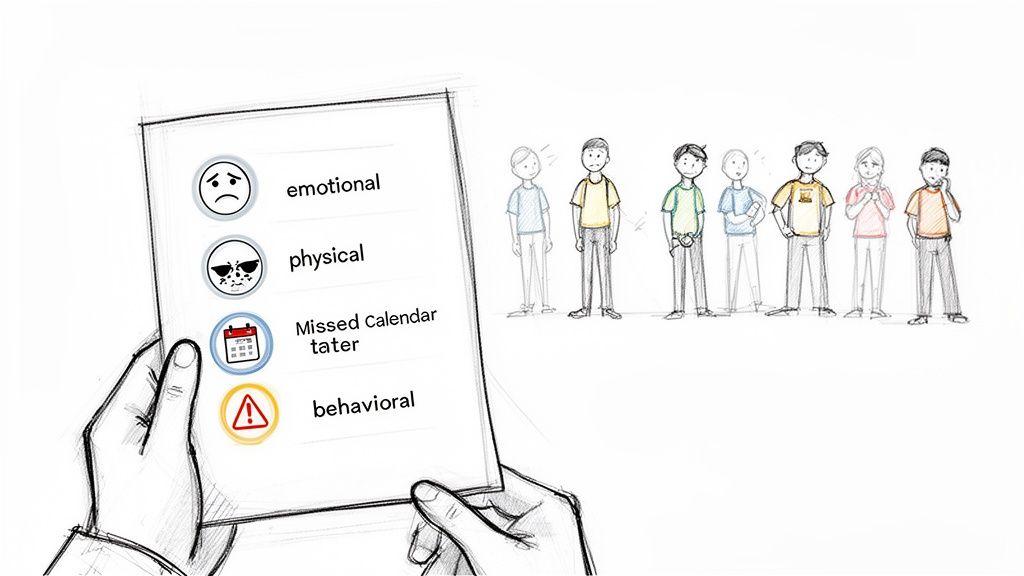
Before you can fix burnout, you have to get good at seeing it. It's a slow creep, not a sudden event. By the time someone is completely checked out, the damage has already been done. The key is to catch it early, when the problem is still a manageable ember, not a raging fire.
It's easy to write off the initial signs as just a "bad week." But when you see a consistent pattern of negative shifts, that’s your signal that something deeper is going on.
Look Beyond Just Being Tired
Yes, exhaustion is part of the story, but burnout is much more nuanced than someone just looking sleepy. It shows up in subtle changes to their behavior, attitude, and the quality of their work over time.
Think about that star performer who used to light up brainstorming sessions with ideas. Now, they're quiet, maybe offering a cynical comment here and there. This isn't just a mood swing. It’s a classic sign of detachment, a core symptom where employees mentally distance themselves from their job to cope.
Or consider the dependable team member who suddenly starts missing deadlines or submitting work that’s just not up to their usual standard. Before jumping to conclusions about their competence, pause. This could be a sign of diminished efficacy—the feeling that their work doesn't make a difference anymore. That feeling can absolutely crush a person's motivation.
Burnout often disguises itself as poor performance. Before you start a performance improvement plan, ask yourself: could chronic stress and an unsustainable workload be the real root cause here?
Employee Burnout Warning Signs Checklist
Knowing what to look for makes it easier to spot the trouble brewing beneath the surface. Use this checklist as a guide during one-on-ones and daily interactions to stay tuned in to your team’s well-being.
| Category | Warning Sign | Observable Behavior Example |
| Emotional | Cynicism & Negativity | A once-optimistic employee now makes frequent sarcastic remarks about company goals or shoots down new ideas immediately. |
| Emotional | Irritability & Frustration | They seem to have a short fuse, getting visibly annoyed by minor tech glitches or routine questions they used to handle calmly. |
| Emotional | Loss of Enthusiasm | They passively go through the motions on projects that once excited them, showing no passion or creative input. |
| Physical | Chronic Fatigue | They frequently mention being "so tired" or "running on fumes," even on Monday mornings. |
| Physical | Increased Physical Complaints | You overhear them talking more often about headaches, stomach issues, or trouble sleeping. |
| Behavioral | Social Withdrawal | They consistently skip virtual team lunches, stay quiet in group chats, or keep their camera off in every meeting. |
| Behavioral | Increased Absenteeism | You notice a pattern of them using sick days more often, coming in late, or leaving early without a clear reason. |
| Behavioral | Drop in Performance | Work quality declines, deadlines are missed, and they seem distracted or have trouble concentrating during discussions. |
This isn't about playing detective; it's about being an observant and supportive leader.
By keeping an eye out for these patterns, you can open a conversation and offer support before you lose a great employee. This proactive approach is the first and most critical step in building a resilient, burnout-proof team.
Fixing the System, Not Just the Symptoms
To make a real dent in employee burnout, you have to look past the individual and zoom in on the work environment itself. A wellness app or a mental health day is a fine gesture, but these are just bandages on a much deeper wound. Let's be honest: burnout is a workplace problem, not a personal failing. It’s a direct result of how work is designed, managed, and valued.
Fixing the system means taking a hard, honest look at what’s actually driving stress in your organization. It’s about shifting the question from "What's wrong with our people?" to "What's wrong with our processes?" This is where true, lasting change begins—by redesigning work to be sustainable and empowering from the ground up.
Confronting the Real Causes of Burnout
First things first, you have to acknowledge where the pressure is actually coming from. It’s rarely one single thing. It’s usually a nasty cocktail of systemic issues that create an environment of chronic stress, often disguised as "the way we do things here."
Research consistently points to a few key culprits. Unfair treatment, perpetually crushing workloads, and terrible communication from managers are the big three. In fact, a recent Gallup poll found that a staggering 77% of U.S. workers feel stress on the job, with 57% reporting negative impacts. We're talking about things like emotional exhaustion (31%) and a strong urge to quit (23%).
Tackling these root causes is the only path to building a resilient workplace.
Redesigning Workloads Before They Become Overloads
An impossible workload is the single fastest way to burn someone out. It’s that constant, nagging feeling of being behind, no matter how hard or how long you work. This isn't about employees lacking time management skills; it's about the sheer volume of work exceeding human capacity.
To get ahead of this, you need to be proactive about how you design and assign work. The best place to start is with a simple but powerful exercise: a workload audit.
How to Run a Quick Workload Audit:
- List Everything: Sit down with each team member and make a comprehensive list of all their primary duties and recurring tasks. Don't leave anything out.
- Estimate the Drain: For each task, estimate the time and mental energy it requires. You can use simple categories like "High Focus," "Routine," or "Admin."
- Spot the Bottlenecks: Look for the tasks that are disproportionately time-consuming, frustratingly repetitive, or just plain soul-crushing. These are your red flags.
- Ask the Big Question: "Is all of this work really necessary to hit our goals, or are we just spinning our wheels on 'busy work'?"
This audit gives you a clear, data-backed snapshot of where your team's energy is actually going. It turns vague complaints of "being swamped" into specific, solvable problems.
A workload audit isn't about micromanaging. It's about co-creating a sustainable pace of work. It’s a powerful signal to your team that you’re committed to setting them up for success, not exhaustion.
The Manager’s Crucial Role in Setting Clear Expectations
Managers are your first line of defense against burnout. Their ability to communicate clearly, set realistic goals, and provide genuine support can make or break a team's well-being. A manager who lobs a vague, high-stakes project over the fence with a tight deadline and then vanishes is basically engineering a burnout scenario.
On the flip side, a great manager acts as a buffer. They translate high-level company goals into achievable, step-by-step tasks that their team can actually execute without losing their minds.
Effective managers really shine in a few key areas:
- Clarity of Purpose: They make sure everyone on the team understands not just what they are doing, but why it matters. This connection to a bigger mission is a huge motivator.
- Realistic Goal Setting: They work with their team to set ambitious but achievable deadlines, breaking massive projects down into manageable chunks.
- Open Lines of Communication: They foster an environment where people feel safe enough to say, "I'm at my limit" or "I need help with this" without fearing judgment.
Investing in these skills is one of the highest-leverage things you can do. When managers are trained to be coaches, not just taskmasters, they create the psychological safety that is absolutely essential for preventing burnout. If you're looking for ways to shore up this area, our guide on how to improve team communication has some great, practical strategies.
Using AI to Automate the Draining Tasks
One of the most effective tools we have today for fighting unmanageable workloads is automation. So many of those repetitive, administrative, and energy-sucking tasks you uncovered in your workload audit can be handed off to AI assistants.
Just think about the daily friction that wears people down over time:
- Spending an hour trying to summarize meeting notes and pull out action items.
- Writing the same five types of follow-up emails every single day.
- Doing the initial, time-sucking research for a new project.
These aren't the strategic, creative activities where people thrive. They are cognitive drains that chip away at the energy your team needs for high-value work. AI tools, like 1chat, can handle these things in a fraction of the time, freeing up your team's mental horsepower.
For example, instead of someone manually transcribing a sales call, an AI can generate a perfect summary with key takeaways in seconds. This isn't about replacing people; it's about augmenting their capabilities and getting rid of the tedious grunt work that leads directly to exhaustion and cynicism. By strategically bringing AI into your workflows, you can directly attack the workload problem and make work more human, not less.
Policies That Actually Make a Difference
Systemic fixes like workload audits are a must, but let's be honest—sometimes your team needs relief right now. While pizza parties and ping-pong tables are fun, they're like putting a band-aid on a broken leg. They don't fix the real issues causing stress.
To genuinely tackle employee burnout, you need policies that prove you value your team’s well-being as much as their output.
Meaningful policies send a clear message: we see you, we support you, and we trust you. They aren't just lines in an employee handbook; they’re powerful tools for building psychological safety and giving people the breathing room they desperately need. Let’s look at two high-impact, low-cost policies you can roll out quickly.
Introduce Paid Mental Health Days
One of the most direct ways to fight burnout is to officially recognize that mental health is health. By creating a specific policy for paid mental health days, you’re not just offering a day off—you're actively destigmatizing the entire conversation around mental well-being in your workplace.
This simple act validates the invisible struggles so many people face. It tells them they don’t have to invent a cough or a migraine to justify taking a break from overwhelming stress. It’s a clear signal that their emotional and mental health are just as important as their physical health.
The data backs this up. A December 2023 HR Trends report found that paid mental health days are the single most effective workplace intervention for reducing burnout. With 69% of workers reporting they felt burnt out in 2023, this kind of leave directly targets the exhaustion at the heart of the problem. You can dig into more of the findings from the 2023 HR Trends report over at SupplyChainBrain.com.
Policy in Practice: Your policy doesn't need to be complicated. Just add a simple clause to your existing PTO or sick leave guidelines: "Employees are encouraged to use sick days to care for their mental and emotional well-being, just as they would for physical health. No doctor's note is required."
That small tweak in language can create a massive cultural shift. It chips away at the stigma and empowers people to take restorative breaks before they hit a crisis, which is key to building a more sustainable work environment.
Embrace Genuine Work Flexibility
For many, the old-school 9-to-5, in-office model is a primary source of burnout. The rigid structure, the soul-crushing commute, the constant interruptions—it all drains energy and makes balancing work with the rest of life feel impossible. This is where real flexibility becomes a game-changer.
Offering remote, hybrid, or flexible-hour options gives your employees a greater sense of control over their own lives. That feeling of autonomy is a powerful antidote to the helplessness that burnout feeds on. When people can build their day around their own energy levels and personal commitments, they're more engaged, more productive, and frankly, much happier.
Of course, you have to structure it thoughtfully. This isn't about letting everyone do whatever they want, whenever they want. It’s about creating a framework built on trust and crystal-clear expectations.
Here are a few ways I’ve seen this work well:
- Core Hours: You could establish a window, say from 10 a.m. to 2 p.m., when everyone needs to be available for meetings and collaboration. Outside of that, people have the flexibility to manage their own time.
- Hybrid Schedules: Set specific days for in-office collaboration and others for deep, focused remote work. This approach gives your team the best of both worlds.
- A Focus on Results: This is the big one. Shift your company culture from "hours logged" to "outcomes delivered." Judge performance on the quality and timeliness of the work, not on whether someone's status light is green.
Managing a distributed team definitely requires a different set of skills, but the payoff in reduced burnout and higher retention is more than worth it. If you're new to this model, our guide on how to manage remote teams effectively has some practical tips to get you started.
By implementing policies like these, you move past performative wellness and start making real changes that improve your employees' daily lives. These aren't just perks; they're strategic investments in the long-term health and success of your entire team.
Using AI and Asynchronous Work to Lighten the Load
Systemic fixes and supportive policies are the bedrock of a healthy workplace, but the day-to-day grind is where burnout really takes root. Think about it: the constant pings, the pressure for an instant reply, the mountain of small, mind-numbing tasks. This creates a state of chronic friction that drains even the most dedicated people.
If you really want to reduce employee burnout, you have to lighten that daily load.
This is where a fundamental shift in how your team works and communicates can be a game-changer. By pairing asynchronous workflows with smart AI automation, you can give your team back their most valuable assets: focus and energy.
Embrace Asynchronous Communication for Deep Work
At its core, asynchronous communication is about one simple thing: freeing your team from the expectation of an immediate response. It's a conscious move away from a culture of constant notifications and "got a quick question?" interruptions. Instead, it allows people to engage with messages on their own schedule.
This small shift has a powerful ripple effect. It carves out uninterrupted blocks of time for deep, focused work—the kind of work that actually drives progress and gives people a real sense of accomplishment. Instead of constantly reacting to a stream of notifications, your team can proactively manage their day, which is a massive factor in feeling in control and less overwhelmed.
The process below shows how this philosophy translates into concrete policies that directly fight burnout.
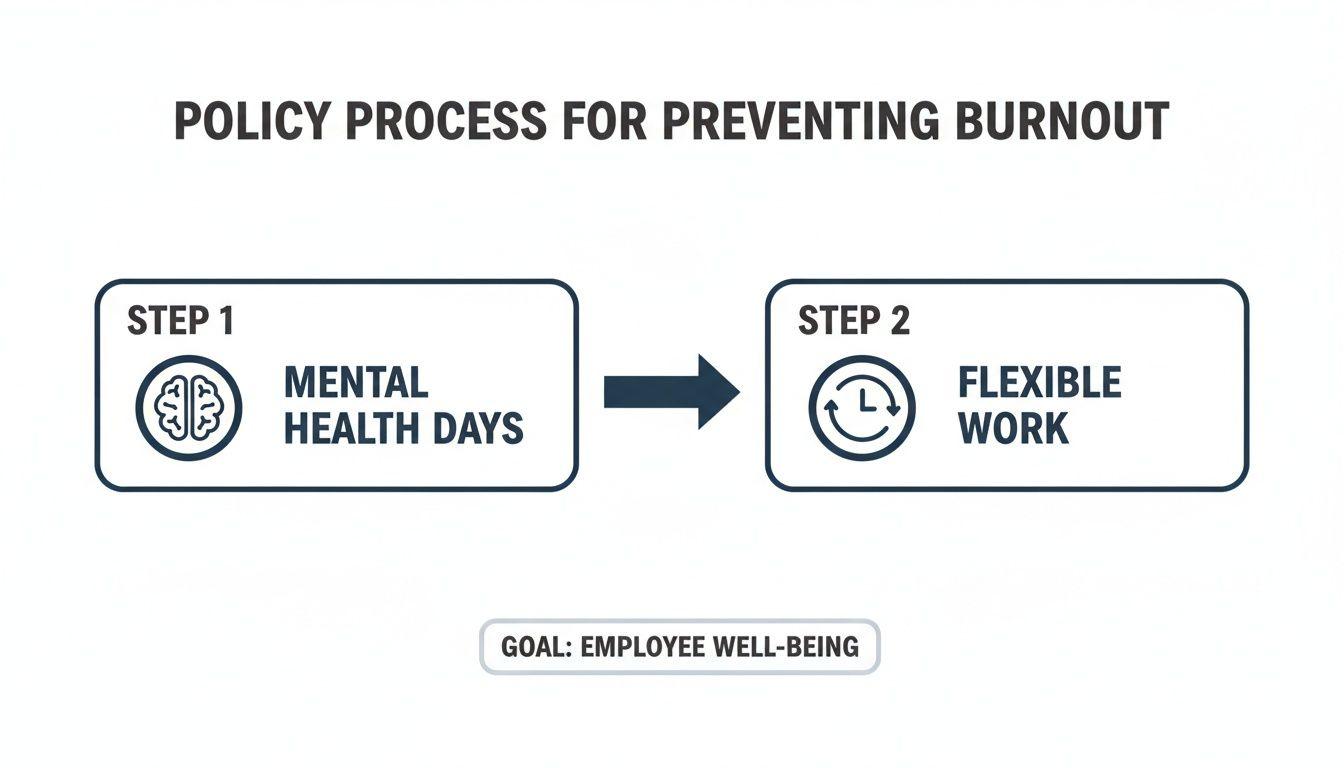
Policies like mental health days and flexible schedules are practical tools that empower employees, and they work best in an environment built on asynchronous principles.
AI is Your Ultimate Asynchronous Partner
AI assistants slot perfectly into this modern, flexible way of working. They are the ultimate tool for offloading the repetitive, time-sucking tasks that are prime fuel for burnout. This isn't about replacing people; it's about making their jobs more human by automating the robotic parts.
Just think about the daily tasks that drain mental energy but deliver little strategic value:
- Summarizing long reports: Instead of slogging through a 20-page document, an AI can spit out a bulleted summary of the key points in seconds.
- Drafting routine emails: An AI can handle the first draft for follow-ups, meeting requests, or standard client check-ins, saving huge amounts of time.
- Kicking off research: An AI can pull preliminary data and sources for a new project, letting your team jump straight into high-value analysis and strategy.
By automating these tasks, you're directly tackling the "unmanageable workload" problem. You’re not just saving time—you’re preserving your team’s focus. For more ideas on what you can offload, check out our guide on how to use AI for business.
AI acts as a force multiplier for asynchronous work. It handles the background noise, allowing your team to concentrate on the high-impact, creative problem-solving that keeps them engaged and motivated.
The data backs this up. The 2023 Global Life-Work Survey found a stark difference in burnout rates. Office workers reported burnout 41% of the time, while their remote counterparts—who often rely on async tools—reported it only 26% of the time. That’s a massive 41% reduction in burnout symptoms, highlighting the real-world impact of giving people more flexibility and control.
Transforming Workflows from Manual to AI-Assisted
To see how this works in practice, let's look at a common task—preparing a weekly report—and compare the old way with a modern, AI-assisted approach.
The table below breaks down the difference in workload and mental strain.
| Task Step | Traditional Manual Process (High Burnout Risk) | AI-Assisted Asynchronous Process (Low Burnout Risk) |
| Data Gathering | Manually pulling numbers from three different spreadsheets and cross-referencing them. (Est. Time: 45-60 mins) | An AI assistant is prompted to pull and consolidate the relevant data from all sources into a single table. (Est. Time: 5 mins) |
| Drafting Summary | Writing the initial report summary from scratch, trying to identify key trends and takeaways. (Est. Time: 30-45 mins) | The AI is asked to analyze the consolidated data and generate a draft summary highlighting the most important trends. (Est. Time: 2 mins) |
| Team Review | A 30-minute "urgent" meeting is called to review the draft, interrupting everyone's workflow. | The AI-generated draft is shared in a project channel with a clear deadline for feedback. Team members review and comment when they have a natural break. |
| Final Edits | Manually incorporating feedback from the meeting and finalizing the report. (Est. Time: 20-30 mins) | The project lead reviews asynchronous comments and uses an AI to help refine the language for the final version. (Est. Time: 10 mins) |
The contrast is pretty stark, isn't it?
The AI-assisted process isn't just faster; it's calmer, more focused, and respectful of everyone's time. By strategically offloading the repetitive parts of the workflow, you free up your team's mental horsepower for what truly matters, creating a more sustainable and less stressful environment for everyone.
Common Questions About Preventing Burnout
Even with a solid game plan, you're bound to hit some speed bumps when you start making real changes to fight burnout. Let's walk through some of the most common questions and concerns that pop up for managers and business owners trying to put these ideas into practice.
Think of this as your go-to guide for those tricky situations. The idea is to keep moving forward, even when the path isn't perfectly straight.
How Do I Start a Conversation About Burnout Without Being Intrusive?
This is a delicate one. When you see someone on your team struggling, your gut instinct is to help, but you have to approach it with care. It's not about diagnosing them—it's about opening a door for support.
Whatever you do, don't ask, "Are you burned out?" That question can feel like an accusation and immediately put someone on the defensive. Instead, ground the conversation in specific, observable things you've noticed.
- Lead with observation: "I've noticed you've been pretty quiet in our team meetings lately. Just wanted to check in and see how everything's going."
- Focus on support: "You've been putting in some serious hours to get that project over the line. I really appreciate it, but I also want to make sure your workload is manageable. What can I do to help?"
- Keep it open-ended: "How are you feeling about your current projects? Is there anything we can shift around to make your week a bit smoother?"
This approach shows you see them as a person, not just a producer of work. It creates a much safer space for them to open up about what’s really going on.
Your main job in this conversation is to listen—truly listen—more than you talk. You’re not there to solve everything in one chat. You’re there to understand their reality and figure out the next step together.
What If We Have a Limited Budget for These Initiatives?
I get this question all the time. The good news is that many of the most powerful burnout prevention strategies cost little to no money. Your biggest investment won't be in dollars, but in your time, attention, and willingness to rethink old habits.
You don’t need a fancy wellness app or catered lunches to make a real difference.
Focus on the low-cost, high-impact changes:
- Clarify roles and expectations: This costs absolutely nothing but provides a huge sense of psychological safety.
- Implement an asynchronous-first communication policy: This gives people their focus time back and cuts down on constant interruptions.
- Conduct simple workload audits: A quick review can help you spot who's drowning and redistribute the work before it becomes a crisis.
- Champion manager training: Helping managers get better at communication and setting clear goals pays for itself a hundred times over.
Burnout is usually a symptom of a broken system, not a lack of perks. Fixing the underlying processes will always be more effective than just treating the symptoms.